Yo, folks! As a supplier of ultrasonic tank level sensors, I get asked a ton of questions. One that pops up a lot is, "Can an ultrasonic tank level sensor work in a noisy environment?" Well, let’s dig into this and see what’s what. Ultrasonic Tank Level Sensor

First off, let’s talk about how these ultrasonic sensors work. They’re pretty cool devices. They send out ultrasonic waves, which are just sound waves at a frequency higher than what we humans can hear. These waves bounce off the surface of the liquid in the tank and then come back to the sensor. By measuring the time it takes for the waves to go out and come back, the sensor can figure out the distance to the liquid surface, and thus, the level of the liquid in the tank.
But what happens when there’s a lot of noise around? Noise can be a real pain in the you – know – what. It can come from all sorts of places, like machinery in a factory, pumps running, or even just general background chatter in a busy industrial area.
The main issue with noise is that it can interfere with the ultrasonic waves. You see, the sensor is designed to detect the echo of its own ultrasonic waves. But if there’s a bunch of other sound waves floating around due to the noise, the sensor might get confused. It could mistake some random noise for the echo it’s looking for, or it could miss the actual echo because the noise is drowning it out.
However, that doesn’t mean ultrasonic tank level sensors are completely useless in noisy environments. A lot of modern sensors are built with some pretty nifty features to deal with this kind of problem.
One of these features is signal filtering. The sensor has a built – in filter that can help it distinguish between the real ultrasonic echo and the background noise. It’s like having a super – smart ear that can pick out just the sound it’s interested in from a whole bunch of other sounds. For example, if the noise has a different frequency or pattern than the ultrasonic waves the sensor is using, the filter can block out the noise and focus on the relevant signal.
Another thing is the use of advanced algorithms. These algorithms analyze the incoming signals in a really sophisticated way. They can look at things like the strength of the signal, the time it arrives, and the shape of the wave to determine whether it’s a genuine echo or just noise. It’s kind of like a detective trying to figure out if a piece of evidence is real or fake.
But here’s the deal. While these features are great, they do have their limits. If the noise is really, really intense, it can still cause problems. For example, if there’s a big, loud machine right next to the tank that’s generating a ton of ultrasonic – like noise, it might be too much for the sensor to handle. The filter and the algorithms might not be able to separate the real echo from the noise effectively, and the sensor could give inaccurate readings.
So, how can you tell if an ultrasonic tank level sensor will work in your noisy environment? Well, it depends on a few factors.
First, you need to know what kind of noise you’re dealing with. Is it a constant, low – level hum? Or is it a sudden, loud burst of noise? Different types of noise can affect the sensor in different ways. For example, a constant, low – level noise might just cause a bit of interference, while a sudden, loud noise could completely throw off the sensor’s readings.
You also need to think about the distance between the sensor and the source of the noise. If the sensor is far away from the noisy machinery, it’s less likely to be affected. But if it’s right next to it, the noise is going to have a much bigger impact.
And then there’s the type of sensor you choose. Some sensors are better at handling noise than others. When you’re looking for a sensor, you should ask the supplier about its noise tolerance. A good supplier, like us, can give you all the details you need to make an informed decision.
Let me give you a couple of real – world examples. I had a customer who was using an ultrasonic tank level sensor in a factory where there were a lot of big pumps running. The pumps were making a lot of noise, and at first, the sensor was giving some wonky readings. But we worked with them to adjust the sensor’s settings. We increased the sensitivity of the filter and tweaked the algorithm a bit. After that, the sensor started working much better, and it was able to give accurate readings even in the noisy environment.
On the other hand, I also had a customer who had a sensor in a place where there was a really powerful ultrasonic cleaner nearby. The cleaner was generating so much ultrasonic noise that no matter what we tried, the sensor just couldn’t work properly. In that case, we had to recommend a different type of level sensor that wasn’t affected by ultrasonic noise.
So, to sum it up, an ultrasonic tank level sensor can work in a noisy environment, but it’s not a guarantee. It depends on the type and intensity of the noise, the design of the sensor, and how you set it up. If you’re in a situation where you need to measure the level of a liquid in a tank in a noisy place, don’t just give up on ultrasonic sensors right away. There’s a good chance that with the right sensor and the right setup, you can get accurate readings.
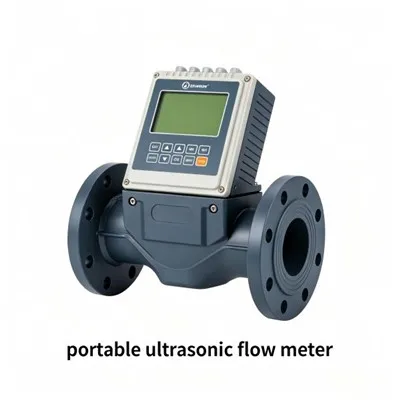
If you’re thinking about using an ultrasonic tank level sensor for your project, whether it’s in a noisy environment or not, we’re here to help. We’ve got a wide range of sensors with different features and capabilities. We can work with you to figure out the best sensor for your specific needs. Just drop us a line, and let’s have a chat about how we can make your tank – level measurement job easier and more accurate.
Leak Detector References:
- Industrial Sensor Technology Handbook
- Ultrasonic Sensor Application Guides
- Case studies from our own customer experiences
Shenzhen Fineherc Technology Co., Ltd.
As one of the most experienced ultrasonic tank level sensor suppliers in China, we’re featured by quality products and low price. Please feel free to buy discount ultrasonic tank level sensor made in China here from our factory. Welcome to view our website for more information.
Address: 5th Floor, Building D, No. 39, Keji East Road, Torch Development Zone, Zhongshan City,China
E-mail: fineherc@hotmail.com
WebSite: https://www.fineherc.com/
