If you’ve ever walked through a large-scale manufacturing facility that produces plastic components—think automotive door panels, consumer electronics housings, or disposable medical devices—you’ve likely seen rows of injection molding machines running nonstop. For decades, human operators have managed these machines, loading raw materials, removing finished parts, and performing routine checks. But today, more and more of these operations are being taken over by injection molding robot arms, and as a supplier of these robotic systems, I’ve seen firsthand how they transform production lines, boost efficiency, and cut costs for manufacturers. When I started in this business 12 years ago, most of my clients were hesitant to invest in robotics; now, they tell me these arms are the backbone of their scaling strategies. In this post, I’ll break down the concrete, science-backed advantages of using injection molding robot arms in large-scale production, from consistency and safety to scalability and long-term ROI. Injection Molding Robot Arm
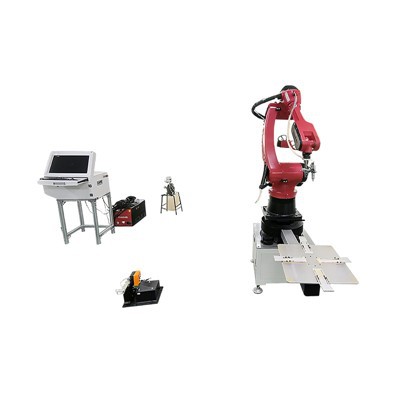
First, let’s talk about the biggest pain point for large-scale production: consistency. When you’re making 100,000 identical parts a month, even tiny variations in human performance can add up to massive waste and delays. A human operator might remove a molded part a fraction of a second too early, leading to incomplete curing, or hold a part at a slightly awkward angle, leaving unsightly ejector marks. Over a 12-hour shift, fatigue can set in: studies from the Society of Plastics Engineers (SPE) found that human error in part handling and machine operation contributes to 15-20% of defective parts in high-volume injection molding. Robot arms, by contrast, are programmed with precise, repeatable movements down to the millisecond and millimeter. For example, our standard model has a repeatability of ±0.02mm—meaning it grabs a hot part from the mold, places it in a cooling bin, and loads the next raw material shot with exactly the same timing and position every single cycle. This level of uniformity means fewer defective parts, less rework, and more finished goods that meet strict industry standards—critical for industries like medical devices or automotive parts, where even a minor flaw can lead to product recalls. One of my clients, a mid-sized automotive parts manufacturer, told us that after switching to our robot arms, their defect rate dropped from 8% to less than 1% in six months. That’s not a guess; that’s actual data from their production logs, and it’s the kind of consistency you can only get with automation.
Next, there’s safety, which is non-negotiable in large-scale production settings. Injection molding machines operate at extreme temperatures—molds reach up to 350°C (662°F), and melted plastic is even hotter—so handling finished parts exposes workers to severe burns. The machines also generate high clamping pressures (up to 2,000 tons in some large models), and human operators working near the mold during cycle changes face risks of crushing injuries or being hit by flying parts. OSHA data shows that over 1,200 serious injuries related to injection molding operations are reported in the U.S. each year, with handling hot parts accounting for nearly 60% of those incidents. Robot arms eliminate that risk entirely by handling all high-temperature and high-pressure tasks. Our robot arms are mounted outside the machine’s work area, separated by safety barriers with interlocked doors that prevent access during operation. They can also sense obstacles with built-in sensors, so if a tooling glitch occurs, they pause immediately rather than risking human injury. For large-scale plants that run 24/7, this is a game-changer: not only do you protect your workers, but you also reduce downtime from workplace accidents and workers’ comp claims. A medical device manufacturer I work with shared that since adding our robot arms, they haven’t had a single safety incident related to injection molding operations, and their workers now report lower stress levels because they no longer have to handle hot, sharp parts. That’s a win for both people and operations.
Third, robot arms boost production speed and cycle time, which is the lifeblood of large-scale manufacturing. Cycle time is the time it takes for an injection molding machine to complete one full part production cycle: from clamping the mold, injecting plastic, cooling, opening the mold, removing the part, and re-closing. Human operators typically take 5-10 seconds longer per cycle than a robot arm because they have to move between the machine’s work area, the raw material hopper, and the finished parts bin. Multiply that by 1,000 cycles per day, and that’s 5,000-10,000 lost seconds—enough to delay a production run by hours. Our robot arms are designed to work in sync with the molding machine, with high-speed axes that can move parts in 2-3 seconds per cycle, depending on part size. Even more importantly, they can perform multiple tasks at once: while the mold is cooling, the robot arm can unload a finished part, inspect it for defects, and load the next raw material shot, all without waiting for the machine to finish its cooling phase. This is called “parallel processing,” and it can reduce total cycle time by 15-25% per part. For a plant producing 1 million parts a year, that’s an extra 150,000-250,000 parts coming off the line annually—no additional machine hours or labor required. I’ve seen a consumer electronics client use this to meet a last-minute order for 500,000 phone cases: they added two robot arms to their existing 12 molding machines, didn’t have to add any extra operators, and hit the deadline two weeks early. That kind of flexibility is impossible with manual labor.
Scalability is another huge advantage for large-scale production, especially for companies that experience fluctuating demand or are expanding their product lines. When you rely on human operators, scaling up means hiring and training more workers—a process that can take weeks or even months, and is often complicated by labor shortages in manufacturing. According to the National Association of Manufacturers, 80% of U.S. manufacturing plants report difficulty finding skilled workers, and training a new injection molding operator can cost up to $15,000 per person, including lost productivity during the learning phase. Robot arms, on the other hand, can be reprogrammed in hours to handle new part designs, move to a different machine, or adjust to higher production volumes. We often provide our clients with modular robot systems that can be easily moved between molding machines as their needs change: if a client is running 10 machines today and needs 15 next quarter, they can add a few more robot arms (no need to rework their entire line) or move existing arms to the new machines. This adaptability is critical for large-scale producers that work on seasonal or project-based orders. For example, a toy manufacturer we partner with switches between producing action figures and puzzle pieces three times a year. Instead of hiring and training new operators for each product, they just adjust the robot arm’s program to match the new part’s size and shape—taking a day at most—and they’re back to full production. That flexibility translates to lower overhead, faster response to market changes, and the ability to scale without the headaches of manual labor management.
Let’s also talk about data and optimization, which are key to reducing long-term costs in large-scale production. Modern injection molding robot arms come with built-in IoT sensors and connectivity that let you track every cycle, every part, and every machine in real time. Our robot arms sync with cloud-based production management software, so you can monitor cycle time, defect rates, and machine uptime from a central dashboard. This data isn’t just for tracking—it’s for optimizing. For example, if the software notices that a robot arm is taking slightly longer to load a part on Tuesday mornings, it can alert your maintenance team to check for a minor component issue before it becomes a major breakdown. Over time, the data can also help you refine your production process: maybe you find that increasing the robot’s grip pressure by 5% reduces part dropping, or adjusting its movement speed shortens cycle time without increasing defects. For large-scale plants, even a 1% improvement in efficiency adds up to huge savings. One of our automotive clients used the data from our robot arms to adjust their cooling times: they found that they could cool parts 2 seconds faster without defects, adding 10,000 extra parts per month and saving over $20,000 in material and labor costs annually. Without that real-time data from a robot arm, they would never have noticed that small, impactful change.
Of course, some manufacturers worry about the upfront cost of robot arms, and it’s true that investing in automation requires an initial budget. But when you look at the total cost of ownership over 5-10 years, the ROI is clear. Let’s break it down: a single injection molding robot arm costs between $25,000 and $50,000, depending on its payload and capabilities. Compare that to the cost of a full-time operator: in the U.S., the average annual salary for an injection molding operator is around $38,000, plus benefits, overtime, and training. Over five years, that’s $190,000+ per operator. For a line with 8 molding machines, you’d need at least 4 operators working 2 shifts—so $760,000 in labor costs over five years. The robot arm’s upfront cost is a fraction of that, and it works 24/7 without breaks, overtime, or sick days. Add in the savings from lower defect rates, less safety-related downtime, and higher production speed, and the payback period for our robot arms is typically 18-24 months. That’s a solid return, especially for large-scale producers that run their lines year-round. I’ve had clients tell me that within two years of installing our robot arms, they’ve already earned back the entire cost of the system plus enough extra profit to fund an expansion of their production line.
Now, I want to be clear: I’m not saying robot arms replace all human workers. Our clients still have teams for maintenance, quality control, and process engineering—they just reallocate workers from repetitive, high-risk tasks to more skilled, high-value roles. That’s a big part of why manufacturers are adopting these systems: they reduce the burden of manual labor while freeing up workers to do jobs that require critical thinking, problem-solving, and creativity. For example, a worker who was previously removing hot parts all day can now monitor the entire line, adjust programs when needed, and troubleshoot small issues—work that’s more engaging and less physically taxing.
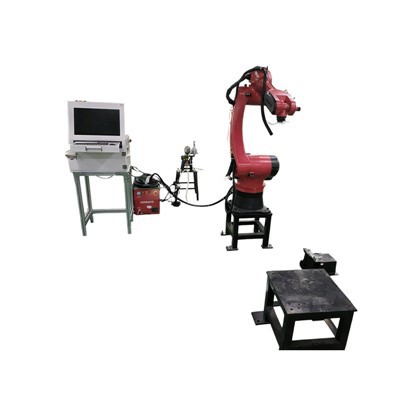
If you’re running a large-scale injection molding operation and are looking to improve efficiency, safety, and profitability, injection molding robot arms are a proven solution. Our team has worked with hundreds of manufacturers across industries to customize robot systems that fit their specific line needs, whether they need a small arm for 100-ton molding machines or a high-payload system for large automotive parts. We offer flexible programming, on-site training, and 24/7 support to make the transition as smooth as possible, so you don’t have to worry about downtime during installation. To learn more about how our robot arms can transform your production line, reach out to our team to discuss your project, review your current production data, and get a custom quote. We’re here to help you scale efficiently, safely, and profitably.
Nail Gun Robot References
Society of Plastics Engineers. (2022). Defect Reduction in High-Volume Injection Molding: Automation vs. Manual Labor. NAM Institute for Workplace Innovation. (2023). Manufacturing Labor Shortages and Automation Adoption. Occupational Safety and Health Administration (OSHA). (2021). Injury and Illness Prevention Program for Manufacturing Facilities. Plastics Technology. (2023). Parallel Processing with Robots Cuts Injection Molding Cycle Times.
Dongguan Chuanglida Intelligent Equipments Co., Ltd.
As one of the most professional injection molding robot arm manufacturers and suppliers in China, we also support customized service. Please feel free to buy discount injection molding robot arm in stock here from our factory. For price consultation, contact us.
Address: Room 201, Building 2, No. 61, Shachang 1st Road, Dalang Town, Dongguan City, Guangdong Province
E-mail: haoguangli001@outlook.com
WebSite: https://www.boruntestech.com/
