If you’ve ever stood next to a packaged goods conveyor line at a factory or watched gravel pour out of a mining conveyor, you’ve probably noticed how fast the chain moves. What most people don’t realize, though, is that that speed isn’t just a random number on a control panel—it’s the single biggest factor keeping material flow consistent, efficient, and (let’s be real) not a total mess. As a conveyor chain supplier, I’ve talked to dozens of plant managers who’ve struggled with slowdowns, jams, or underperforming lines, and more often than not, the fix came down to tweaking that speed. Today, let’s break down how conveyor chain speed actually impacts material flow, no fancy engineering degree required. Conveyor Chains
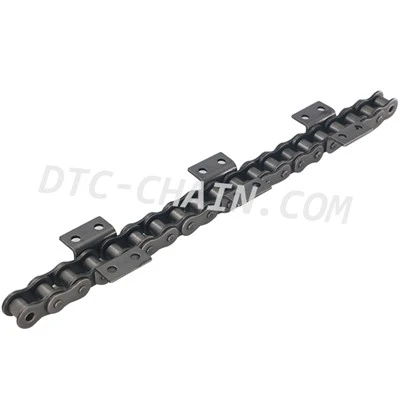
First, let’s ground this in what material flow even means for most operations. For a snack food line, that’s bags of chips moving without piling up or crashing into each other. For a scrap metal processor, it’s bulky pieces moving steadily enough to feed a shredder without jamming. For a grain elevator, it’s kernels moving at a rate that fills trucks evenly, not spilling down the side or leaving half the truck empty. Conveyor chain speed is the rate at which the chain and its attached slats, buckets, or rollers move along the path—so it directly dictates how much material passes a given point every minute. But it’s not just “faster = more material”; it’s a balancing act that changes entirely based on what you’re moving.
Let’s start with the obvious: throughput, or how much material you can move in a set time. If you’re moving uniform, small parts—like pill blister packs for a pharmacy line—cranking the chain speed up a little means more blisters passing the filling station each hour. Wait, but only if the speed is matched to the spacing between the items. If you set the chain too fast, blisters will run into each other, causing backups at the next station. But if it’s too slow, you’re moving 30% less product than you could be, which is leaving money on the table. I recently worked with a pet food plant that was running their conveyor at 20 feet per minute (fpm) instead of the optimal 28 fpm for their kibble bags. After adjusting, they upped their daily output by 32%—no new machines, just a chain speed tweak. That’s the kind of number that makes supervisors do a double-take, right?
But here’s where it gets tricky: not all materials play nice with speed. Let’s split this into two big categories: bulk materials (gravel, grain, pellets) and unit loads (packaged goods, parts, pallets). For bulk materials, the key is preventing segregation and spillage. If you’ve ever watched a dump truck unload sand onto a slow conveyor, the sand settles—coarser pieces at the bottom, finer dust at the top. Speed that’s too slow makes that segregation worse because the material has more time to settle as it moves. Crank it too fast, though, and the material sloshes or flies off the sides. For example, a mining client of mine moved iron ore in 50-pound batches on a slat conveyor. They were running it at 120 fpm, but the coarse chunks kept spilling over the edge. We tested at 85 fpm, and the spillage dropped by 90%—and their throughput only went down by 12%, which was a way better tradeoff than wasting $2,000 a month on lost ore.
Unit loads have their own set of speed rules. If you’re moving delicate items—like glass jars or baked goods—too much speed leads to damage. A cookie plant I worked with tried speeding up their conveyor to keep up with a new oven, but half the soft cookies were breaking when they hit the packaging station. They dropped the speed by 15 fpm, and breakage went from 18% to 2%—worth the tiny throughput dip to avoid waste. Even for heavy unit loads, like pallets of construction supplies, speed matters. Too fast, and pallets can tip if the conveyor makes a turn. We had a hardware distributor that was losing pallets of nails every month on a curved conveyor because they were running it at 40 fpm; dropping to 25 fpm fixed the tipping issue completely, and they only lost 5% of their loading speed.
Another underrated effect of chain speed is energy use. A lot of plant operators think faster speed = more energy, which is true, but it’s not linear. If you run your conveyor at its optimal speed (the sweet spot where you’re getting maximum throughput without waste or damage), you’re actually using energy more efficiently than if you run it too slow. Why? Because the motor doesn’t have to work as hard to keep the chain moving smoothly, and you’re not wasting energy on reworking jams or fixing spillage. Take a food processing client that was running a slow conveyor for their flour bins. They were using 25% more electricity than necessary because the motor was running inefficiently at low load. Cranking the speed up to their optimal rate cut their energy bill by 21%—again, no new equipment, just adjusting speed. It’s like driving a car at 60 mph instead of 40 mph on the highway: you’re going faster and using less gas per mile.
Wait, but what about when chain speed interacts with the chain itself? That’s where a lot of people miss the mark. A conveyor chain that works great at 50 fpm might not hold up at 100 fpm. The higher speed puts more stress on the chain’s pins, rollers, and links—so if you crank the speed too high, you’ll get premature wear, which leads to downtime. I had a manufacturing client that upgraded their conveyor chain to a heavy-duty type because they wanted to speed up production, but they skipped checking the chain’s speed rating. Within 3 months, the chain was stretching, and they had to shut down the line for repairs. The mistake? They assumed all chains could handle any speed, but there are different chains for different speed ranges: light-duty chains for low-speed, high-precision lines, and heavy-duty, high-tensile chains for faster bulk material lines. That’s why, as a supplier, I always ask clients not just what they’re moving, but how fast they want to move it—because matching the chain to the speed is just as important as matching speed to the material.
Let’s also talk about dynamic effects, like acceleration and deceleration, which are tied directly to chain speed, especially in lines that stop and start a lot. If a conveyor starts too fast, the material can shift backward, creating a pileup at the start of the line. That’s called “batching” at the infeed point, and it’s a huge source of jams. We had a bottling plant that was shutting down their line every other day because bottles would pile up at the filler. We adjusted the chain’s start speed to ramp up slowly instead of jumping to full speed, and that problem went away entirely. It’s not just the constant speed we’re talking about—it’s how the chain accelerates to that speed that impacts flow. On the flip side, if you stop the conveyor too quickly, heavy or loose material can slide forward, spilling or damaging items. That’s a big one for lines with irregular stops, like packaging lines that have to switch over for different products.
So how do you actually find the right speed for your line? It’s not guesswork, but it does depend on a few variables: material type (bulk vs unit, fragile vs rigid), line layout (straight vs curved, incline vs decline), and conveyor chain specifications. For bulk materials, most industry guidelines suggest a speed between 50 and 150 fpm, but that drops to 20 to 80 fpm for fragile bulk like baked beans or potato chips. For unit loads, it’s usually 20 to 100 fpm, depending on weight and size. The best way to test is to run a pilot: start at a lower speed, track throughput, waste, and downtime, then gradually bump up the speed in small increments (like 5 fpm at a time) until you see a spike in waste, jams, or chain wear. That sweet spot is where you want to stay.
I can’t tell you how many times I’ve had a client come to me saying their conveyor line is “broken,” only to look at the speed and realize it’s set wrong. Last quarter, I worked with a small parts manufacturer that was losing 10 hours a week to jams on their small parts conveyor. They’d had the line for 5 years, never touched the speed since it was installed. When we checked, it was running at 70 fpm for tiny metal screws—too fast for the small spacing between parts. Dropping it to 45 fpm eliminated all jams, and their throughput only dropped by 8%, which was a massive win for their maintenance team.
At the end of the day, conveyor chain speed is a make-or-break factor for material flow, and it’s way more nuanced than just “faster = better.” Whether you’re moving 100 tons of gravel a day or 10,000 snack bags an hour, getting that speed right means less waste, less downtime, lower energy bills, and more consistent output. And here’s the thing: it’s not a set-it-and-forget-it number. If you change what you’re moving, or upgrade your conveyor chain, you might have to tweak that speed again.
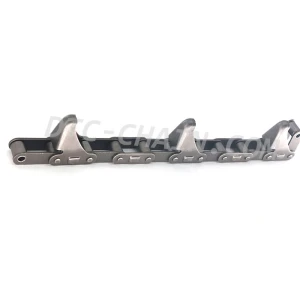
If you’re dealing with a line that’s underperforming because of flow issues, or you’re looking to upgrade your conveyor chain to handle higher (or lower) speeds, reach out to the team. We work with all kinds of operations to match conveyor chains to their specific speed and material needs, so you don’t have to guess at what will work. No jargon, no hard sells—just help making your line run smoother.
Industrial Chains References
- The Conveyor Chain Design and Application Handbook, 2nd Edition. Industrial Press, 2019.
- Bulk Material Handling: Conveyor Systems and Design Principles. CRC Press, 2021.
- Material Flow Optimization for Manufacturing and Distribution. Wiley, 2020.
- "Effect of Conveyor Speed on Bulk Material Segregation and Spillage." Journal of Materials Handling Engineering, vol. 35, no. 4, 2018, pp. 123-131.
- "Unit Load Conveyor Dynamics: Speed, Stability, and Efficiency." International Journal of Production Research, vol. 57, no. 12, 2019, pp. 3892-3907.
Hangzhou Dongteng Industrial Co., Ltd.
As one of the most professional conveyor chains manufacturers and suppliers in China, we have world-leading production equipment and strong manufacturing capabilities. Please feel free to wholesale high quality conveyor chains made in China here from our factory. Also, custom service is available.
Address: Jingdong Village, Jingjiang Town, Xiaoshan District, Hangzhou City
E-mail: cocowu@dtc-chain.com
WebSite: https://www.dtc-chains.com/
