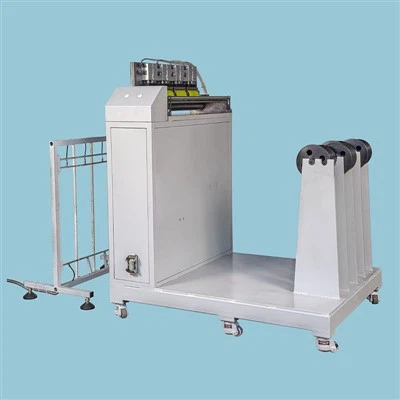
As a supplier of radiator fin forming machines, I’ve often been asked whether our machines can produce fins with complex geometries. This question is not only relevant to the technical capabilities of our equipment but also to the evolving needs of the market. In this blog, I’ll delve into the intricacies of radiator fin forming and explain how our machines can handle complex fin geometries. Radiator Fin Forming Machine
Understanding Radiator Fins and Their Geometries
Radiator fins play a crucial role in heat transfer systems. They increase the surface area of the radiator, allowing for more efficient heat dissipation. The geometry of the fins significantly impacts their performance. Simple geometries, such as straight or corrugated fins, are commonly used and relatively easy to produce. However, as technology advances and the demand for more compact and efficient radiators grows, there is an increasing need for fins with complex geometries.
Complex fin geometries can include shapes like louvered fins, offset strip fins, and pin fins. These geometries are designed to enhance heat transfer by promoting turbulence in the fluid flow over the fins. Turbulence disrupts the boundary layer of the fluid, reducing thermal resistance and increasing the rate of heat transfer. Additionally, complex geometries can help to optimize the use of space, making radiators more compact and lightweight.
The Capabilities of Our Radiator Fin Forming Machines
Our radiator fin forming machines are equipped with advanced technology and precision engineering, enabling them to produce fins with a wide range of complex geometries. Here are some of the key features that allow our machines to handle complex fin designs:
1. Advanced Tooling
The tooling of our fin forming machines is designed to be highly flexible and customizable. We use state-of-the-art manufacturing techniques to create dies and punches that can accurately shape the fins into the desired geometries. Our tooling can be easily adjusted to accommodate different fin sizes, shapes, and pitches, allowing for the production of a variety of complex fin designs.
2. Computer Numerical Control (CNC) Technology
Our machines are equipped with CNC technology, which provides precise control over the forming process. CNC allows for the programming of complex motion paths, ensuring that the fins are formed with high accuracy and repeatability. This technology also enables us to make real-time adjustments to the forming parameters, such as speed, pressure, and feed rate, to optimize the production process and ensure the quality of the fins.
3. High-Speed Forming
Our fin forming machines are capable of high-speed forming, which is essential for mass production. The high-speed operation allows us to produce fins quickly and efficiently, reducing production time and costs. Despite the high speed, our machines maintain a high level of precision, ensuring that the fins are formed with the desired geometries and dimensions.
4. Quality Control Systems
We have implemented comprehensive quality control systems in our fin forming process. These systems include in-line inspection and monitoring of the fins during production. We use advanced sensors and cameras to detect any defects or deviations from the desired specifications. If a defect is detected, the machine can automatically adjust the forming parameters or stop the production process to prevent the production of defective fins.
Examples of Complex Fin Geometries Produced by Our Machines
To illustrate the capabilities of our radiator fin forming machines, let’s take a look at some examples of complex fin geometries that we have successfully produced:
1. Louvered Fins
Louvered fins are a popular type of fin geometry that features a series of small, angled slits or louvers. These louvers disrupt the fluid flow over the fins, creating turbulence and enhancing heat transfer. Our machines can produce louvered fins with precise louver angles, pitches, and heights, ensuring optimal performance.
2. Offset Strip Fins
Offset strip fins consist of a series of thin, rectangular strips that are offset from each other. This geometry creates a zigzag pattern in the fluid flow, increasing the contact area between the fluid and the fins and improving heat transfer. Our machines can accurately form offset strip fins with consistent strip widths, lengths, and offsets.
3. Pin Fins
Pin fins are cylindrical or conical pins that are attached to the surface of the radiator. They provide a large surface area for heat transfer and are particularly effective in applications where high heat transfer rates are required. Our machines can produce pin fins with different diameters, lengths, and densities, allowing for the customization of the fin design to meet specific application requirements.
Challenges and Solutions in Producing Complex Fin Geometries
While our radiator fin forming machines are capable of producing fins with complex geometries, there are some challenges that we need to overcome. Here are some of the common challenges and the solutions we have implemented:
1. Material Selection
The choice of material for the fins is crucial in determining the success of the forming process. Some materials may be more difficult to form into complex geometries due to their hardness, ductility, or other properties. We work closely with our customers to select the most suitable material for their specific application. We also conduct extensive material testing to ensure that the material can be formed into the desired geometries without cracking or other defects.
2. Tool Wear
The tooling used in the fin forming process is subject to wear and tear, especially when producing complex fin geometries. To minimize tool wear, we use high-quality tool materials and coatings. We also implement regular tool maintenance and replacement schedules to ensure that the tools are in good condition and can produce high-quality fins consistently.
3. Process Optimization
Producing fins with complex geometries requires careful process optimization. The forming parameters, such as speed, pressure, and feed rate, need to be carefully adjusted to ensure that the fins are formed with the desired geometries and dimensions. We use advanced simulation software to optimize the forming process and reduce the number of trial runs. We also conduct extensive testing and experimentation to fine-tune the process parameters and ensure the quality of the fins.
The Benefits of Using Our Radiator Fin Forming Machines for Complex Fin Geometries
Using our radiator fin forming machines to produce fins with complex geometries offers several benefits:
1. Improved Heat Transfer Performance
Complex fin geometries are designed to enhance heat transfer by promoting turbulence in the fluid flow over the fins. By using our machines to produce fins with these geometries, you can significantly improve the heat transfer performance of your radiators, resulting in more efficient cooling systems.
2. Space Optimization
Complex fin geometries can help to optimize the use of space in radiators. By increasing the surface area of the fins without significantly increasing the size of the radiator, you can make your radiators more compact and lightweight. This is particularly important in applications where space is limited, such as in automotive and aerospace industries.
3. Customization
Our machines offer a high degree of customization, allowing you to produce fins with the exact geometries and dimensions that you need. Whether you require louvered fins, offset strip fins, or pin fins, we can work with you to develop a solution that meets your specific requirements.
4. Cost-Effectiveness
Our high-speed forming capabilities and efficient production processes allow us to produce fins with complex geometries at a competitive cost. By using our machines, you can reduce your production costs and improve your overall profitability.
Conclusion
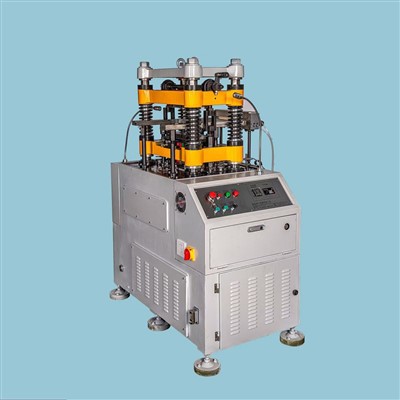
In conclusion, our radiator fin forming machines are capable of producing fins with complex geometries. With advanced tooling, CNC technology, high-speed forming, and comprehensive quality control systems, we can meet the evolving needs of the market and provide our customers with high-quality fins that offer improved heat transfer performance, space optimization, customization, and cost-effectiveness.
Stamping Die If you are interested in learning more about our radiator fin forming machines or would like to discuss your specific requirements, please feel free to contact us. We look forward to working with you to develop a solution that meets your needs.
References
- Incropera, F. P., & DeWitt, D. P. (2002). Fundamentals of heat and mass transfer. John Wiley & Sons.
- Kays, W. M., & London, A. L. (1998). Compact heat exchangers. McGraw-Hill.
- Shah, R. K., & Sekulic, D. P. (2003). Fundamentals of heat exchanger design. John Wiley & Sons.
Suichang Lvye Machinery Co., Ltd.
We are one of the most professional radiator fin forming machine manufacturers in China, also support customized service with low price. We warmly welcome you to buy discount radiator fin forming machine for sale here from our factory. If you have any enquiry about quotation, please feel free to email us.
Address: No. 402, Mudanting East Road, Miaogao Street, Suichang County, Lishui City, Zhejiang Province
E-mail: L528753@outlook.com
WebSite: https://www.suichanglvye.com/
