Hey everyone, I’m Jake, and for the last 7 years, I’ve been running this little plastic dropper supply shop—you’d be surprised how many random questions I get from clients. Lately, one I’ve been hearing nonstop is, “What’s the hardness of a plastic dropper, anyway?” It’s not like we’re measuring concrete or diamond here, so a lot of people assume it’s just… basic plastic hardness. But trust me, there’s way more to it, especially when you’re actually using these droppers for things like essential oils, lab reagents, or even skincare serums (oh yeah, we supply a ton for small beauty brands). Plastic Dropper

First off, let’s keep it real—when people talk about “hardness” for plastics, they’re not usually pulling out a fancy lab tool. Most of the time, they mean how resistant the dropper is to squishing, scratching, or deforming when you squeeze that rubber bulb. If your dropper squishes every time you use it and lets air leak in? That’s a soft, low-hardness plastic, and it’s useless. If it’s so rigid it won’t squeeze at all? That’s too hard—you’ll end up breaking the tip or cracking the plastic trying to get liquid out. So it’s a balance, not just a number.
Now, let’s get into the actual science behind it, but keep it casual, I promise. The standard way we measure plastic hardness is with the Shore Durometer test—like, everyone in the packaging game uses this. Shore has two main scales: Shore A and Shore D. Shore A is for softer, rubbery plastics (think bike tires or pencil erasers), and Shore D is for harder, stiffer stuff (like hard hats or plastic cutting boards). For plastic droppers, we almost always use Shore A, because these aren’t rigid plastic containers—they’re flexible tools, but not floppy.
Wait, but what’s the actual number we work with? From our side, right now our most popular droppers fall around Shore A 55 to Shore A 70. Let me translate that for you: Shore A 55 is pretty flexible—good if you’re making droppers for kids’ craft paint, where you need a super gentle squeeze. But if you’re using it for something viscous, like a thick serum or a lab reagent that needs precise measurement? You want it closer to Shore A 65 to 70. That’s the sweet spot. It squeezes easily enough to get liquid in and out, but it doesn’t bend out of shape mid-use.
Why does this number matter so much? Let’s talk about what we hear from clients. Last month, a small skincare brand came to us super frustrated—their previous droppers were Shore A 45, which is way softer. By the time their factory sealed the serum into the bottles, the droppers had deformed, so when customers squeezed them, all the liquid came out in a gush instead of a drop. They had to throw out 2,000 bottles. That’s a huge loss, and all because they picked a hardness that was too low. On the flip side, I had a lab client who tried a dropper at Shore A 75—way too hard. Their technicians kept breaking the tips because they couldn’t get a good grip to squeeze without putting too much pressure. Total headache for them.
Now, let’s get into what actually determines that Shore A number. Most plastic droppers are made from polyethylene, right? Either low-density polyethylene (LDPE) or linear low-density polyethylene (LLDPE). Wait, is there a difference? Yeah, a big one. LDPE is softer, more flexible, and cheaper—usually comes in around Shore A 50 to 60. That’s why you see it in those cheap condiment bottles you get at a fast food place. LLDPE is a bit more rigid, has better resistance to tearing, and clocks in at Shore A 60 to 75. That’s our go-to material for most professional clients. Sometimes we mix in a little of another material, like polypropylene (PP), if the client needs extra chemical resistance, but PP is stiffer, so we adjust the ratio to keep it in that dropper-friendly range.
Wait, also, it’s not just the base material. How the dropper is made—like the extrusion process, how thick the walls are—affects hardness too. A thicker wall dropper will feel harder than a thinner one, even if they’re made from the same material. That’s why when a client tells me “I need a softer or harder dropper,” I don’t just reach for a material chart. I ask them a bunch of questions: What are you putting in the bottle? Is it thick or watery? Do you need precise drop counts? How often are people going to squeeze this? All that changes what hardness we need.
Oh, and one thing people forget: hardness isn’t static. If your plastic dropper is exposed to certain chemicals (like essential oils with citrus, or harsh lab cleaners), it can swell or soften over time. I’ve had a client use a regular LDPE dropper for lemon essential oil, and after a month, the tip was so soft it would collapse when they tried to use it. That’s why we suggest a slightly higher Shore A number—like Shore A 65—for any application with harsher contents, because that extra hardness gives it better chemical resistance.
Let me also clear up a common misconception: higher hardness doesn’t mean better. Some clients think “Shore A 80 is harder, so it’s more durable,” but that’s not true for droppers. A dropper that’s too hard won’t function properly. The whole point of a plastic dropper is that it’s squeezable. If it’s so rigid you can’t squeeze it, it’s just a fancy plastic straw. We test every batch we send out—we use a Shore A durometer to spot-check each production run, so we know exactly where it falls. Last week I was talking to a beauty buyer, and she said that their customers care about how the dropper feels—they want it to squeeze smoothly, not feel like they’re fighting it. That’s exactly why we land in that 55 to 70 range.
Another thing: temperature. If you’re storing or using your dropper in a really hot place, the plastic can soften. We had a client who was sending droppers to a customer in a desert climate, and their droppers arrived a little squishy. So we adjusted the hardness to Shore A 68 instead of 65, so it holds up better in heat. Small tweak, but it made all the difference.
Now, for anyone out there thinking about ordering plastic droppers, here’s my takeaway: don’t just pick a random dropper because it’s cheap. Ask the supplier about the Shore A hardness. Tell them what you’re using it for, and they’ll be able to match you to the right one. If you need something super soft for kids’ stuff, go lower. If it’s for lab or skincare, aim for 60 to 70. Don’t get tricked into thinking “harder is better”—for droppers, function is way more important than a number on a scale.
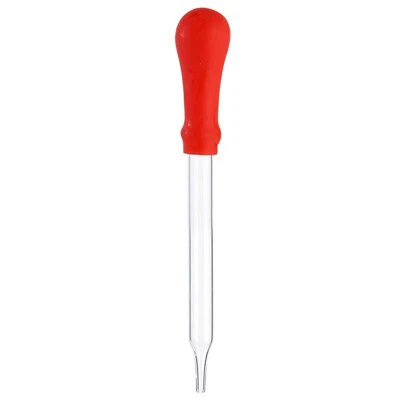
I’ve been doing this long enough that I can tell you, 9 times out of 10, the problems clients have with their droppers come down to hardness being wrong. It’s not that the plastic is “bad”—it’s just not calibrated for what they need. So if you’re in the market for plastic droppers, or you’ve been struggling with ones that work poorly, hit me up. I don’t do high-pressure sales—just straight answers about what works for your specific use case. We can talk through your needs, send samples, and make sure you get droppers that work every single time.
Pasteur Pipette References:
- Brandrup, J., Immergut, E. H., & Grulke, E. A. (2003). Polymer Handbook (4th ed.). Wiley-Interscience.
- ASTM D2240-15e1, Standard Test Method for Rubber Property—Durometer Hardness.
- Rosato, D. V., & Rosato, M. G. (2000). Plastics Materials and Processes: A Concise Encyclopedia. Hanser Gardner Publications.
- Crawford, R. J. (1998). Plastics Engineering. Pergamon Press.
- Harper, C. A. (2002). Modern Plastics Handbook (4th ed.). McGraw-Hill.
Taizhou Yukang Medical Devices Co., Ltd.
As one of the leading plastic dropper manufacturers and suppliers in China, we warmly welcome you to buy customized plastic dropper at competitive price from our factory. If you have any enquiry about quotation, please feel free to email us.
Address: Heheng Village, Shengao Town, Jiangyan District, Taizhou City
E-mail: taizhouyukang@163.com
WebSite: https://www.tzykylqx.com/
