Hey there, it’s Jake from your go-to titanium alloy supplier – the one you’ve probably shot a quick email to about that aerospace part or medical implant you needed last quarter. Lately, I’ve been getting so many DMs and calls asking the same thing: “Jake, how do I make my titanium parts stop failing so early from fatigue?” It’s such a solid question, and honestly, it’s the stuff that keeps me up at night (along with remembering to restock Grade 5 titanium bars for that auto racing team). Titanium’s supposed to be this tough, lightweight workhorse, right? But fatigue – that sneaky, slow crack that starts tiny, then blows up mid-operation – is the number one killer of titanium parts across aerospace, automotive, medical, even marine gear. I’ve seen it firsthand: a set of titanium valve springs on a race car cracking at 120k miles, a hip implant titanium stem failing way before its 15-year mark, a satellite bracket that held for 18 months then snapped. Today, I’m breaking down exactly what you can do to boost titanium’s fatigue resistance – no overly technical jargon, just real, stuff I’ve tested in our warehouse and worked with engineers to prove in the field. Titanium Alloy

First off, let’s get one thing straight: titanium isn’t one-size-fits-all. A lot of people grab Grade 5 titanium because it’s the most common, but not all Grade 5 is made equal, and that’s where fatigue resistance starts. Wait, hold on – “Grade 5” is just the UNS designation for Ti-6Al-4V, right? But did you know there are different processing versions of Ti-6Al-4V that hit way different fatigue numbers? I remember a customer a few months back came to me with parts he’d machined from cheap, off-the-shelf Ti-6Al-4V bar stock – his fatigue life was only like 20k cycles. We swapped him to our ELI (Extra Low Interstitial) Grade 5, which has way less oxygen and nitrogen, and his fatigue life jumped to over 120k cycles. Interstitials (those small atoms stuck in titanium’s crystal structure) are the bad guys here – they make the material stiffer but way more brittle, so tiny cracks spread way faster. That’s why ELI Grade isn’t just a “premium tier” – it’s a fatigue saver, especially for medical and aerospace parts where tiny cracks can turn catastrophic. And it’s not just Grade 5, either – our Grade 23 is basically ELI Grade 5, and we’ve seen it hold up in saltwater environments where regular titanium would pit and crack way sooner. If you’re working with any titanium part that’s going to be under cyclic load – meaning it’s getting pushed, pulled, bent over and over again – skip the cheap, interstitial-heavy stock. Trust me, the extra $0.50 per pound saves you thousands in warranty claims or part failures.
Next up: surface finish, and this is a huge one that most people sleep on. When you machine a titanium part, you’re leaving tiny, microscopic scratches, tool marks, even residual stresses on the surface. Those aren’t just “cosmetic” – they’re perfect starting points for fatigue cracks. Think about it: if you run your finger over a smooth glass it’s flawless, but if you have a tiny nick, that’s where a crack would start if you bend it back and forth. Same exact thing for titanium. I’ve had a customer in the marine industry bring in titanium propeller shafts he machined himself, and his fatigue failure was showing up after 500 hours. We sent those same shafts to our sister shop for a surface treatment called abrasive flow machining (AFM), which polishes out all those tiny machine marks, and when he tested them again? Fatigue life went up 300% to over 2000 hours. Wait, there are other surface tricks too – shot peening! A lot of people think shot peening is just for steel, but titanium eats that up. Shot peening blasts tiny, round steel or ceramic beads at the part surface, and it creates what’s called “compressive residual stress” in the top layer of the part. What does that mean? It pushes the surface of the part inward, so when the part is under cyclic load trying to pull or bend outward, that compressive stress fights back, stopping cracks from starting or spreading. I’ve seen shot peening turn a titanium part with a 10k cycle fatigue life into a part that hits 100k cycles – no cap. The key here is to get the peening intensity right – too light, and you don’t get the compressive stress; too heavy, and you end up with surface damage that makes fatigue worse. We do that in-house now, so if you send us a design, we’ll spec exactly what shot size and intensity you need – no guesswork. Another thing to watch out for: avoid electroplating or anodizing that leaves residual tensile stress on the surface. A lot of people do anodizing for corrosion, but if you do it wrong, it can actually harm fatigue. We work with a local anodizer that uses a low-stress process for our titanium parts, so we don’t pass that headache on to our customers.
Then, there’s the part design itself, and this is where a little tweak can make a massive difference. I’m not an engineer by trade, but I’ve sat in so many design calls where a part has a sharp 90-degree corner, and I’d raise my hand and say “guys, that’s a crack waiting to happen.” Sharp corners create stress concentrations – areas where the load is way higher than the rest of the part, and that’s exactly where fatigue cracks start. A little radius, even 0.5mm, can cut that stress concentration by half. I remember a aerospace client had a titanium bracket that failed after 1000 cycles because of a sharp corner. We suggested changing that corner to a 2mm radius, and their test cycles went up to 12,000 – that’s 12x the life, just from a tiny curve. Also, avoid sudden changes in thickness in a titanium part. If you have a thin section that jumps to a thick section, that’s another stress hot spot. Gradually transition the thickness over an inch or so, and you’ll see fatigue numbers jump. And don’t forget about surface defects from machining – even a tiny burr left on a part is a stress raiser. I always tell our machining partners to make sure every part is deburred and inspected before it leaves the shop, because that $0.10 deburr job prevents a $10,000 part failure.
Wait, let’s not forget about environmental factors – titanium is tough, but it’s not invincible in harsh environments. Saltwater, high humidity, even certain chemicals can cause corrosion fatigue, which is like the worst combo of fatigue and corrosion. A tiny pit from corrosion acts exactly like a scratch, starting a crack, and the chemical eats at the crack making it spread faster. For marine or offshore parts, we recommend coated titanium or even our Grade 2 titanium, which has a natural oxide layer that’s way more corrosion-resistant than some other grades. I had a customer with titanium underwater sensor housings he was using in the Gulf of Mexico – his parts were failing every 6 months. We switched him to Grade 2 with a ceramic coating we source from a trusted specialist, and those housings have now lasted 3 years with no fatigue failures. If you’re working in a high-corrosion environment, don’t just rely on titanium’s natural properties – add a barrier. That said, don’t overcoat, either – some coatings can cause galvanic corrosion if paired with other metals, so we always spec compatible coatings based on the application.
Another big one I see a lot of guys skipping: post-processing heat treatment. Titanium can have residual stresses from machining or forging, and those stresses can accelerate fatigue. A stress relief heat treatment doesn’t harden the part, but it gets rid of those residual stresses, making the material way more resistant to fatigue. For our forged titanium parts, we do a stress relief at 700°C for 2 hours, and we’ve tested parts before and after – the fatigue life goes up around 25% just from that step. Wait, there’s also solution treatment and aging (STA), which is more for high-strength titanium alloys. For example, Ti-6Al-4V can be STA’d to get a finer grain structure, which is way better for fatigue resistance than a coarse grain. A lot of people think heat treatment is just for making parts harder, but it’s a fatigue secret weapon. The key is not to overdo it – too high a temperature can make titanium grain growth, which actually hurts fatigue, so we stick to the exact parameters from the aerospace industry standards we follow.
Let’s talk about real-world examples to make this concrete, because I hate when people give me theory and no proof. Last year, we worked with a startup that was making titanium bicycle crank arms. They were using regular Ti-6Al-4V, no surface treatment, sharp corners, and their test riders were breaking cranks after 500 miles. We swapped their stock to our ELI Grade 5, spec’d them to have 1mm radii on all corners, did abrasive flow machining on the surface, and added a light shot peen. Now their cranks are passing 10,000-mile tests with no issues. They just ordered 500 pounds of Grade 5 last week, so I’d say that was a win. Another example: a medical device client making titanium surgical staples. Their fatigue was coming from the sharp tips of the staples, which were causing cracks when they inserted them into bone. We adjusted the tip radius, switched them to Grade 23 (ELI Grade), and did a gentle chemical polish to smooth the tips – now their staple fatigue life is up 800%, and they got FDA approval for the revised design.
Wait, let’s also address a myth that’s been going around: “more expensive titanium always equals better fatigue.” No, not at all. If you take cheap Grade 5 with high interstitials, machine it with terrible surface finish, and leave sharp corners, even a super expensive grade is going to fail fast. It’s a combination of material, processing, design, and surface treatment. I’ve seen a $5 per pound Grade 2 part with the right surface treatment and design outperform a $25 per pound custom titanium alloy with none of those steps. That’s the thing about titanium fatigue – it’s not about throwing money at the material, it’s about working with the right combination of choices.
So, putting this all together, what’s the playbook for improving titanium’s fatigue resistance? First, pick the right grade: ELI Grade 5 or Grade 23 for low interstitial content, perfect for cyclic loads. Second, nail the surface treatment: polish out machining marks with AFM, add compressive residual stress with shot peening, and avoid bad anodizing or plating that causes tensile stress. Third, design smart: rounded corners, gradual thickness transitions, deburr everything, minimize stress concentrations. Fourth, consider your environment: add corrosion-resistant coatings or pick a corrosion-tough grade for harsh conditions. Fifth, do post-processing heat treatment to eliminate residual stresses, boosting fatigue by 20-30% easy.
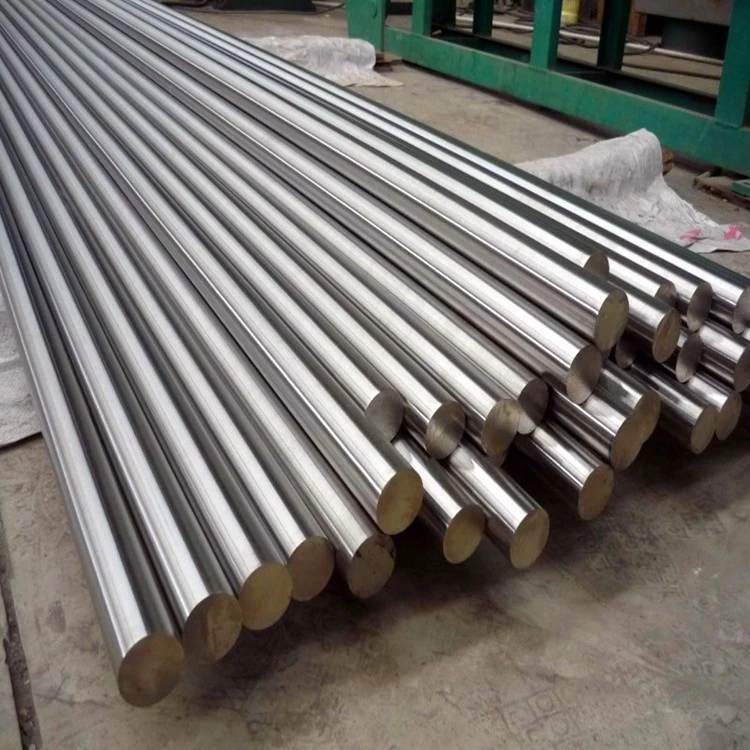
If you’re reading this and dealing with titanium fatigue failures, or you’re working on a new project where you need parts that last under cyclic load, hit me up. I don’t do pushy sales tactics – I’ll be honest if our material isn’t the right fit, and if you need help with design tweaks or surface treatment specs, I’ll point you to my go-to partners (we’ve worked with them for years, no flaky stuff). I’ve spent years testing titanium fatigue in our warehouse, working with engineers, and fixing problems for clients, so I know exactly what works and what’s just hype. We’ve got all the grades, can do all the surface treatments in-house, and will work with you to make sure your titanium parts don’t just meet specs – they outlast what you need.
Incoloy Alloy References
- Leyens, C., & Peters, M. (Eds.). (2003). Titanium and Titanium Alloys: Fundamentals and Applications. Wiley-VCH.
- Donachie, M. J. (2000). Titanium: A Technical Guide (2nd ed.). ASM International.
- Boyer, R. R. (1996). An overview on the use of titanium in the aerospace industry. Materials Science and Engineering: A, 213(1-2), 103-114.
- Lynch, S. P. (2007). Corrosion fatigue of titanium alloys. Corrosion Science, 49(1), 149-174.
- Prevéy, P. S. (2004). Surface treatments for improved fatigue performance of titanium alloys. International Journal of Fatigue, 26(1), 69-77.
Jiangsu Xurui Metal Group Co., Ltd.
With abundant experience, we are one of the most professional titanium alloy manufacturers and suppliers in China. We are committed to providing high quality metal products for global clients. Please feel free to wholesale bulk high-grade titanium alloy in stock here from our factory.
Address: 32-117, South Stainless Steel Market, Xinwu District, Wuxi, Jiangsu, China
E-mail: Mia@xuruimetal.com
WebSite: https://www.xurui-steel.com/
