Alright, let’s cut to the chase – if you’re here, you’re either an OEM production manager, a facilities engineer who just had a minor scare with a faulty breaker, or maybe even a fellow low-voltage (LV) switchgear supplier who’s tired of seeing cheap, untested units cause way too many headaches. I’ve been in this game for 8 years now, selling LV switchgear to everyone from small food processing plants to big hospital chains, and let me tell you: safety isn’t a “nice-to-have” here – it’s the whole reason we exist. Low-voltage Switchgear
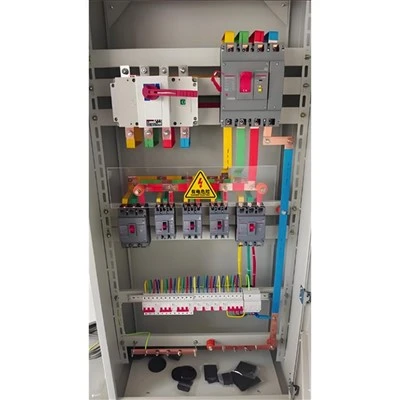
First off, let’s ground this in what LV even means, because a lot of people mix this up. We’re talking about systems rated between 100V and 1000V AC, or up to 1500V DC – stuff that powers offices, factories, schools, not high-voltage power lines crisscrossing the countryside. But just because it’s “low voltage” doesn’t mean it can’t kill you or take out a whole building’s wiring. Last year, I had a customer come to me because their old supplier’s switchgear arc-flashed during a routine maintenance check, burned a tech’s arm so bad he was out for 3 months, and fried their entire conveyor system. That was 100% avoidable, and it made me want to write this post to spell out the real, non-negotiable safety requirements every LV switchgear unit needs to meet.
Let’s start with the big one: compliance with global (and local) standards, because there’s no guessing here. If your switchgear doesn’t pass these, you’re basically selling a fire hazard. The main ones I reference every single day are IEC 61439 (that’s the international standard for low-voltage switchgear and controlgear assemblies) and ANSI/NEMA standards, especially for folks in North America. Wait, but I’ve had customers ask me “can’t we just use whatever works cheap?” and the answer is a hard NO. Those standards aren’t just made up by some regulatory body – they’re built on decades of real accidents, lessons learned. For example, IEC 61439 requires that every panel undergo type testing, not just routine testing. Type testing is when you put a whole prototype unit through extreme conditions: short-circuit withstand, temperature rise, arc-flash resistance. Routine testing is just checking each individual unit for obvious defects before it leaves the shop – that’s not enough to catch if a supplier used thinner bus bars than they should’ve, which is a super common cut corner. I once had a competitor try to pass off a switchgear unit with bus bars 20% thinner than required; my team caught it during our own pre-shipping checks, and I refused to even quote it to the customer because I knew it would fail type testing and potentially cause a short circuit.
Next up, bus bar and enclosure design – this is where the rubber meets the road, literally. Bus bars are the metal strips that carry electricity through the panel; if they’re too small, they overheat, melt insulation, or cause arcing. I always tell people to ask their supplier for the bus bar cross-sectional area per phase, not just “it’s a 1000A panel.” For a 1000A LV panel, IEC 61439 requires each bus bar to handle at least a 50kA short-circuit current for 1 second – that means it’s thick enough not to warp when there’s a sudden surge. Then there’s the enclosure. It can’t just be a metal box; it has to have an IP rating, right? Wait, IP ratings mean ingress protection – IP2X is the minimum for most indoor applications, which means no fingers or small tools can get inside and touch live parts. But if you’re putting switchgear in a damp basement or near a loading dock that gets hosed down, you need IP54, which keeps dust out and resists water splashes. I’ve seen too many old panels in food processing plants with IP20 enclosures that got splashed with cleaning water, causing a short. Last year, I retrofitted 4 of those for a local bakery, and the difference was night and day.
Arc-flash safety is another big one that most people sleep on. Arc flashes are when electricity jumps through the air between two conductors, creating a plasma blast that’s 35,000°F (way hotter than the sun’s surface) and releases shrapnel and toxic gases. LV switchgear is supposed to have built-in safeguards against this. First, arc-flash mitigation systems: things like current-limiting breakers that trip in milliseconds, or arc sensors that detect a flash the second it starts and trigger a shutdown before it can spread. Also, the enclosure itself has to be arc-resistant – that means it’s designed so if an arc does happen inside, it vents the pressure and heat upwards or outwards away from people, not into the maintenance room. IEC 61641 is the specific standard for arc resistance, so if your switchgear isn’t labeled to meet that, it’s not arc-resistant. I always include arc-flash hazard calculations with every unit I sell, too – it tells the customer exactly what level of PPE their techs need when working on the panel, which is not only required by OSHA (in the US) or HSE (in the UK) but also saves lives.
Then there’s wiring and component safety. A lot of suppliers skimp on the control wiring, using cheap, thin wire that can’t handle voltage fluctuations or heat. I always use 1.5mm² copper control wire, which is the minimum required by IEC, not aluminum, because aluminum is more prone to corrosion and loose connections over time. Also, every component – breakers, contactors, relays – has to be rated for LV use, and I only use parts from reputable manufacturers, not no-name brands from Alibaba that might not meet UL or VDE ratings. Last year, a customer brought me a switchgear unit they bought online for half the price I quoted, and the contactors inside weren’t even rated for 1000V AC – they were rated for 600V, so they would’ve melted the second the load spiked. I couldn’t believe it was even being sold, but that’s the kind of cut corner that leads to accidents.
Cooling and temperature control, too. If a switchgear overheats, components fail, and insulation breaks down. The standard requires that the internal temperature of the panel doesn’t rise more than 40°C above ambient, so suppliers have to calculate the heat generated by all the components and install adequate ventilation – either natural vents for small panels, or fans for larger ones in hot environments. I once had a customer in Arizona who tried to skip installing the required cooling fans for their 2000A panel, and 6 months later, the breaker tripped every afternoon because the internal temp hit 85°C. We adjusted the ventilation and added additional fans, and that problem went away.
Wait, also – lockout/tagout (LOTO) provisions. That’s super important for maintenance. Every LV switchgear panel needs a way to lock it out so that when techs are working inside, no one can accidentally flip the breaker and energize the panel. I include a padlock lockout hasp on every single unit I sell – it’s a small part, but it’s been proven to prevent so many accidents. OSHA has specific LOTO requirements, so skipping that is a huge red flag.
I should also mention maintenance access. A lot of cheap switchgear has cramped compartments, so techs can’t get in to do routine checks like tightening connections or replacing fuses. That leads to loose connections, which cause overheating and fires. I design all my panels with wide, removable doors and enough space to fit a person’s hands comfortably inside, per IEC 61439’s minimum working space requirements. I’ve had a tech tell me once that working on my panels is way easier than the old ones, and that makes me proud – safety isn’t just about preventing accidents, it’s about making it safe to work on the equipment regularly.
Now, let’s get real about what happens if you ignore these requirements. I talked earlier about the arc flash incident that hurt a tech, but that company also had to shut down production for 2 weeks to repair the damage, costing them over $500k in lost revenue. Another customer had a fire in their old switchgear that started from a overheated bus bar – it spread to the adjacent office, and they had to evacuate 200 people. All because the supplier used undersized bus bars and skipped type testing. So it’s not just about safety – it’s about cost, downtime, and avoiding legal liability if someone gets hurt.
As a LV switchgear supplier, I don’t cut corners on any of this. Every unit I sell undergoes 100% of the required testing: type testing for key prototypes, routine testing for each individual panel, thermal imaging checks before it leaves my shop, and I provide full documentation for every compliance standard. I also offer pre-purchase consultations to help customers pick the right unit for their specific needs – whether it’s a small office panel or a heavy-duty unit for a manufacturing plant. No sales pitch, no pressure, just honest advice because I’ve seen what happens when you choose the wrong gear.

If you’re in the market for LV switchgear and want to make sure you’re getting something that’s safe, compliant, and built to last, feel free to reach out. I’d be happy to walk you through the requirements, answer any questions, or send over a sample compliance certificate for any unit I supply. Don’t take chances with your team’s safety or your business’s uptime – the right switchgear isn’t an expense, it’s an investment.
Control Cabinet References:
- IEC 61439-1: Low-voltage switchgear and controlgear assemblies – Part 1: General rules
- ANSI/NEMA AB 1: Molded-Case Circuit Breakers, Motor Circuit Controllers, and Fuse Combinations
- OSHA 29 CFR 1910.303: General requirements for electrical installations
- NFPA 70E: Standard for Electrical Safety in the Workplace
Guangdong Baihao Electric Co., Ltd.
As one of the most professional low-voltage switchgear manufacturers and suppliers in China, we also support customized service. Please feel free to wholesale discount low-voltage switchgear in stock here from our factory. Quality products and low price are available.
Address: 201, 2nd Floor, Building 3, No.1, Honggang Section, Lihe Road, Lishui Town, Nanhai District, Foshan City
E-mail: jiang_baisi@126.com
WebSite: https://www.gd-baihao888.com/
