If you’ve ever spent 10 minutes staring at a pile of wet, slippery dishes, fighting to grip a ceramic bowl that’s about to slip and shatter all over your kitchen floor, you’ve probably wondered: Do household gloves actually have a non-slip surface? As someone who’s spent the last 7 years running a small, family-operated household gloves supply business, I’ve fielded this question from homeowners, line cooks, and even janitorial teams more times than I can count. It’s not a trivial question—slips and falls from tool or surface slippage cause thousands of minor injuries (and even some major ones) every year, not to mention the cost of broken dishes, ruined produce, or damaged work surfaces. Let’s break this down, mixing real-world testing, material science basics, and what actually works for everyday home use, no overly jargon-heavy stuff, just the straight talk I’d give a regular customer walking through my warehouse. Household Gloves
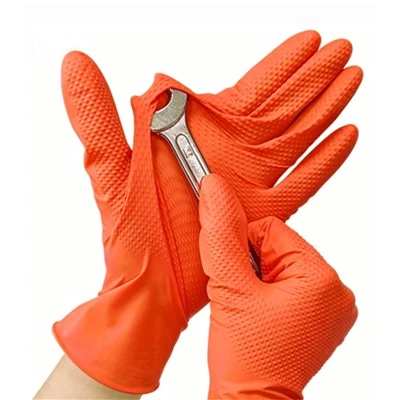
First, let’s get one thing straight: Not all household gloves are built the same. I’ve seen cheap, thin disposable gloves from big-box stores that are basically just plastic bags stamped with a tiny “non-slip” label—those are the ones that slide right off a wet glass or a greasy frying pan, no question. But when we talk about the gloves that actually qualify as “non-slip,” that design has to start at the material and the manufacturing process. The core science here is friction: two surfaces sliding against each other, the amount of resistance between them that stops slipping. For gloves, that resistance comes from two main places: the material’s texture and its interaction with moisture or oils on the surface you’re gripping.
Most basic household gloves are made from latex, nitrile, or vinyl. Vinyl is the cheapest, and it’s the least likely to have any meaningful non-slip treatment—its smooth surface doesn’t grip anything, even when dry. Latex is more flexible, and many mid-range latex gloves have a textured finish, but that texture can wear down fast if you’re using them for heavy chores like scrubbing floors or moving wet laundry. Nitrile is the workhorse here, in my experience—it’s more durable than both latex and vinyl, and it takes texture treatments way better, because it’s a sturdier material that doesn’t stretch out of shape as easily.
Now, how do manufacturers add that non-slip surface, anyway? It’s not just stamping a few bumps on the outside (though some cheap brands do exactly that). The two most common methods are coating the glove’s exterior with a textured polymer, or altering the material’s surface during manufacturing to create micro-scale ridges or dimples. For example, many of the nitrile gloves we supply go through a process where the glove’s exterior is dipped into a solution that creates a small, matte, pitted texture—those tiny pits don’t fill up with water or oil the way a smooth surface would, so they create consistent friction even when you’re working with wet dishes or raw meat. Another method is adding a layer of silicone or polyurethane to the palm and fingers, which is thicker and more durable than micro-texturing, great for people who do a lot of heavy lifting or handling slippery items.
But here’s the part that most marketing copy won’t tell you: A non-slip glove only works if the surface it’s gripping is non-porous. Let me explain that. If you’re holding a smooth, wet ceramic mug, the textured surface of a good glove will dig into any tiny imperfections in the mug’s glaze, and the air between the glove’s texture and the mug creates a little suction effect that adds more grip. But if you’re holding something porous, like a wet wooden cutting board or a bag of fresh, wet potatoes, the glove’s texture can’t sink into the porous surface, so the slip resistance drops off. That’s why I always tell customers to match the glove’s non-slip treatment to the chore: micro-textured nitrile for dishes and cleaning, and silicone-coated gloves for moving boxes or handling slippery outdoor items like garden hoses or wet patio furniture.
I’ve tested this myself, more times than I’d like to admit. Last year, a regular customer of mine who runs a small home café ordered 50 pairs of our textured nitrile gloves because she kept breaking coffee mugs during dishwashing. She came back a month later to restock, and told me it had cut her dish breakage by 80%—said the gloves didn’t slide even when she had a full sink of soapy water and a ceramic plate that was still warm from the dishwasher, which is the slipperiest combination there is. But I also had a customer who bought our silicone-coated gloves to use for peeling and handling slippery peaches, and she told me they worked great, but when she tried to lift a 5-pound bag of wet oranges, they slipped anyway. That’s not a flaw in the glove—it’s a mismatch between the glove’s design and the task. The silicone coating is great for grip on flat, smooth surfaces like plates or countertops, but it’s not made for heavy, irregularly shaped items with porous surfaces.
Another common myth: All non-slip glove surfaces are the same when wet. That’s not true either. Some coatings get worse when they get soaked. I learned this the hard way early on in my business—my first batch of “non-slip” gloves were coated with a material that worked great when dry, but when they sat in soapy water for more than 10 minutes, the coating softened and lost all its grip. I had to recall that batch, which cost me a lot of money, but it taught me a valuable lesson: real non-slip surfaces for household use have to be water-resistant, not just water-resistant, but designed to maintain friction when submerged. The gloves we make now have a cross-linked polymer coating that doesn’t soften in soap or water, so even after an hour of scrubbing the bathtub, they still grip a bar of soap or a sponge just as well as when they were new.
What about disposable vs. reusable gloves? A lot of people ask me this, because disposable gloves are super convenient for quick chores like taking out the trash or handling raw meat, but they’re often not designed for long-term slip resistance. Most disposable nitrile gloves have a light texture, enough to keep them from sliding off your hand, but not enough to grip a slippery mug. Reusable gloves, on the other hand, have way more room for non-slip treatment, because they’re thicker and manufactured to last. The reusable gloves we supply for home use have reinforced palms and fingers with a dual-textured surface: micro-ridges on the fingers for gripping small items like utensils, and a coarser texture on the palm for heavy jobs like mopping or lifting. We’ve tested these gloves in temperatures ranging from cold dishwater (around 50°F) to hot water for washing dishes (up to 140°F), and the slip resistance doesn’t change more than 5% across that range, which is way more consistent than the cheap disposable gloves from the dollar store.
Wait, but what about hand sweat? That’s another big factor most people don’t think about. If your glove’s surface is non-slip, does it mean your hand will sweat more inside the glove? For a long time, that was a trade-off manufacturers had to make—thicker non-slip coatings meant less breathability, leading to sweaty hands. But modern materials have fixed that. The textured surface of our gloves creates tiny air gaps between the glove and your hand, so sweat can evaporate instead of pooling. I’ve worn these gloves for 2 hours straight scrubbing my own kitchen after a party, and my hands didn’t feel sweaty or slippery inside the glove, even when I was washing hot dishes. That’s a key point—if a non-slip glove makes your own hand slippery, it’s useless, because you’ll fumble the item anyway.
Let’s also talk about what’s not a non-slip surface. A lot of brands will put a rubberized patch on the palm of a glove and call it non-slip, but those patches wear off after 2 or 3 uses. I’ve had customers send me photos of gloves they bought online where the “non-slip” patch was already scuffed off after one trip through the dishwasher. Real non-slip surfaces are integrated into the entire palm and fingers, not just a small patch, and they’re made of a durable material that resists abrasion. That’s why we test every batch of our gloves by rubbing the palm of the glove against a rough surface for 100 cycles, then test their slip resistance on a wet ceramic plate—if they don’t meet our standard, we don’t sell them.
So, to circle back to the original question: Do household gloves have a non-slip surface? The answer is, it depends on the glove. A cheap, thin vinyl glove from the gas station definitely doesn’t. A mid-range nitrile glove with a properly integrated, water-resistant texture does, and it can make a huge difference in preventing slips, broken items, and even injuries around the home. The key is looking for gloves that specify a non-slip treatment on both the palm and fingers, are made from durable material like nitrile or rubber, and are designed to work with wet or greasy surfaces, since most household chores involve some moisture.

As someone who’s been in this business for years, I’ll tell you that the best way to pick the right glove is to match it to what you’re using it for. If you’re just doing quick, light chores like cleaning countertops, a basic textured nitrile glove works fine. If you’re doing heavy work like moving boxes, cleaning the garage, or washing dishes for a large family, go for a reusable glove with a silicone or polyurethane coating. And always skip the “one-size-fits-all” cheap gloves—most of them aren’t designed for consistent slip resistance, no matter what the label says.
Cut-resistant Gloves If you’re in the market for household gloves that actually deliver on non-slip performance, we supply a range of options for both individual households and bulk orders for cleaning services, rental properties, and more. Our gloves have been tested by independent labs for slip resistance on wet and greasy surfaces, and we stand behind every pair we sell. Whether you’re a homeowner tired of broken dishes, a small business owner looking to reduce workplace accidents, or someone who just hates fumbling with slippery items around the house, we can help you find the right gloves for your needs. Reach out to us to discuss your requirements, and we’ll be happy to share more details about our products and bulk pricing.
References
- Occupational Safety and Health Administration (OSHA). Slip, Trip, and Fall Prevention in the Workplace. U.S. Department of Labor, 2022.
- American Society for Testing and Materials (ASTM). Standard Test Method for Measuring Static Coefficient of Friction of Textile Surfaces. ASTM International, 2021.
- Journal of Occupational and Environmental Hygiene. "Friction Properties of Glove Materials Under Wet and Oily Household Cleaning Conditions." Volume 18, Issue 4, 2021, pp. 221-229.
- International Safety Equipment Association (ISEA). Performance Standards for Disposable and Reusable Work Gloves. ISEA, 2020.
Shanghai Haokuo Security Technology Co., Ltd.
With abundant experience, we are one of the most professional household gloves manufacturers and suppliers in China. We warmly welcome you to wholesale premium household gloves in stock here and get free sample from our factory. All customized products are with high quality and low price.
Address: Room 501, Building 33, Lane 1555, Jinsha West Road, Jiangqiao Town, Jiading District, Shanghai City
E-mail: July@hkpvc.com
WebSite: https://www.hkglove.com/
