If you’ve ever wondered how we can track ships across the Pacific before they even hit radar picket zones, or spot aircraft thousands of miles out beyond line of sight? That’s OTH radar at work. As someone who’s spent the last decade designing, testing, and fielding over-the-horizon radar systems for clients across the globe, I can tell you—OTH isn’t just cranking up power and hitting transmit. It’s a hyper-sensitive beast, and getting its environmental conditions right is half the battle to reliable operation. Radar OTH

Let’s start with the biggest, most obvious headache for OTH: the ionosphere. Unlike regular surface radars that bounces radio waves straight off a target, OTH uses the ionosphere to bounce those powerful, low-frequency (HF band, roughly 3 to 30 MHz) signals halfway around the Earth. The ionosphere is that layer of charged particles 60 to 600 km up, where solar radiation tears electrons off atoms to create a weird, dynamic mirror for radio waves. But that mirror isn’t a still pond—it’s roiling, changing by the minute, by the hour, by the season, even by the 11-year solar cycle.
Let’s break that down. First, solar activity. When the Sun blasts out flares or coronal mass ejections, that ionosphere heats up, puffs out, and gets way more charged. Suddenly, the mirror is too bumpy, or too low, or too high. We’ve had clients tell us their OTH systems blank out for hours after a big solar flare—worse, sometimes those flares create “ionospheric perturbations” that scatter our own signals before they can reach the target, leading to blank spots or false returns. That’s why all our OTH systems come with real-time ionospheric monitors, not just as an add-on—core gear. We pull data from NOAA’s solar observatories, plus our own on-site sensors that measure electron density every 10 seconds, so we can adjust our frequency and signal power on the fly. If you ignore solar activity, you might as well have a fancy radio tower with no receiver.
Then there’s the ionosphere’s diurnal cycle. Day vs night makes a huge difference. During the day, solar radiation cranks up electron density in the lower ionosphere layers (like the E layer, 90 to 150 km up) and F1 layer, while at night those layers dissipate, leaving the F2 layer higher and more stable. Our clients in the Arctic deal with even funkier iono stuff—polar cap absorption events when the solar wind blasts straight through the ionosphere, and auroral disturbances that mess with signal paths. We did a project for a coast guard in Norway a couple years back, and their old OTH system was garbage in winter, when auroras were constant. We upgraded their frequency tuning algorithm, paired it with a more sensitive receiver that filters out auroral noise, and their detection range went from 1,500 km to 2,200 km. That’s the stuff you don’t read in textbook specs—real-world tweaks for real environmental weirdness.
Next big one: the ground or sea clutter. Once our signal bounces off the ionosphere, it has to travel out to the target, right? Along the way, it’s bouncing off whatever’s under it: ocean waves, mountains, buildings, trees. That clutter is a massive signal that’s way stronger than the small return we get from a distant ship or plane. So the environment we deploy the OTH in matters a lot. If you put a coastal OTH system over a choppy ocean in a storm, that clutter spikes—way more surface waves mean way more scattered noise. We had a client in Southeast Asia that kept getting false ship contacts during monsoon season, because their system’s clutter filtering wasn’t tuned for 10-meter swells. We adjusted their adaptive filtering to pull out the clutter from high sea states, and cut false alarms by 70% during wet season.
Terrain also plays a role. If you deploy inland, you’ve got mountains, dense forests, even cityscape clutter absorbing and scattering your HF signals. That’s why most of our OTH systems are sited in open, flat areas, usually away from major population centers and steep mountains. We do a site survey before every deployment—LIDAR scans, ground conductivity tests, even months of pre-deployment signal testing—to map out how much clutter we’re dealing with. If a client insists on a site that’s a bit hilly, we’ll add extra receiver channels and adaptive beamforming to cancel out the scattered clutter. No two sites are the same, that’s the thing about OTH—generic gear only gets you so far.
Weather at the site itself is another environmental factor. Rain, wind, humidity, temperature—all that stuff affects the radar hardware, and even the signal path. HF signals can be absorbed by heavy rain, especially at the lower end of the band. If you’re operating in the tropics, heavy thunderstorms can eat up 10 to 15 dB of your signal power, which might not sound like a big deal, but when you’re talking about detecting a tiny target 3,000 km out, that’s the difference between seeing it and missing it. We design our antennas with high-gain elements, and add adjustable power amplifiers that crank up output when we detect heavy rain along the signal path. Plus, all our hardware is rated for extreme temps: from -40°C in the Arctic to 55°C in desert climates. Humidity is a big one too—moisture can cause corrosion on antenna elements and degrade receiver sensitivity over time, so we use sealed, temperature-controlled enclosures for all our electronics, with desiccators that monitor humidity 24/7.
Wait, can’t forget about electromagnetic interference (EMI) from the environment. We’re operating in the HF band, which is also used for broadcast radio, military comms, maritime radio, even ham radio. There’s a lot of noise out there. If you deploy an OTH system near a major city or a busy shipping lane, you’ve got broadcast signals blasting 24/7, which can swamp our weak target returns. That’s why pre-deployment EMI testing is non-negotiable for us. We sit at the site for 2 weeks, monitoring all HF frequencies, mapping out the noise sources, and adjusting our operating frequencies to avoid the busiest bands. Sometimes we even implement frequency hopping algorithms, so the radar automatically switches away from a noisy frequency mid-scan, without interrupting operation. A client in the Mediterranean had a problem with nearby commercial broadcast stations interfering with their OTH, until we added adaptive frequency notching that cancels out those narrowband noise signals. That’s the difference between a system that works and one that’s just a paperweight.
Now, let’s talk about something a lot of people don’t think about: long-term environmental degradation. OTH systems are big—they have large antenna arrays, some stretching over 1 km long for the transmit side, and hundreds of receiver elements. They’re out in the field, exposed to the elements year-round. Salt spray near coastal sites is brutal—it eats through metal, cracks sealants, messes with electronic connections. We use marine-grade aluminum for all antenna structures, apply a UV-resistant epoxy coating that’s rated for 20 years of salt exposure, and use corrosion-resistant connectors. For Arctic sites, we build heaters into all the moving parts and electronics to prevent ice buildup—ice on an antenna element changes its shape, which throws off the signal, so we have temperature sensors that trigger heating elements if ice starts forming. For desert sites, we add dust filters to all ventilation systems, and build in regular self-cleaning cycles for the antenna arrays that blow dust off without damaging the elements.
I’ve been in this game long enough to know that no two OTH deployments are identical. A system that works great in Texas will flop in Norway, and one that works in the Middle East will die in the Amazon rainforest. That’s why we don’t sell off-the-shelf boxes—every system is tailored to the client’s specific site and operational needs. We start with a full site environmental survey, then model ionospheric conditions for their latitude and solar cycle, test for local EMI, and tune every part of the system to work with the conditions they’ll face.
If you’re a defense agency looking to track long-range threats, or a coast guard needing to patrol vast ocean areas, you need a radar that works with the environment, not against it. We’ve helped over 30 clients across 15 countries deploy OTH systems that outperform generic setups, with 20% better detection rates and half the false alarms, thanks to tuning for their unique environmental conditions.
If you’re tired of OTH systems that cut out during solar storms, fail in bad weather, or get confused by clutter, we can help. We can walk you through site selection, do a full environmental assessment, and build a custom OTH system that’s built to perform where you need it. Reach out to us to start a conversation about your OTH needs.
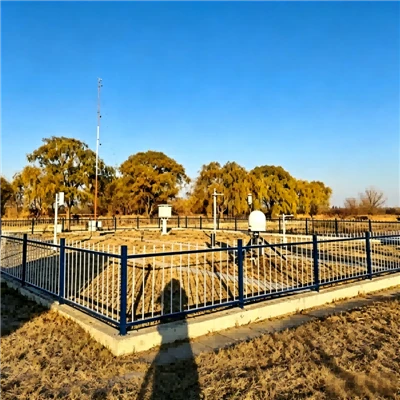
Weather Station REFERENCES
- ITU-R Recommendation P.531-14, Ionospheric Propagation Data and Prediction Methods for HF and Beyond
- National Oceanic and Atmospheric Administration (NOAA), Solar and Geophysical Data for HF Radio Operations
- Hansen, J. E. (2019). Over-the-Horizon Radar: Environmental Effects and Mitigation Techniques. IEEE Transactions on Aerospace and Electronic Systems, 55(4), 1652-1667.
- International Telecommunication Union (ITU), Radio Regulations, Volume 1, Article 5 (Frequency Allocations)
Tianjin Blooming Technology Ltd.
We are one of the most professional radar OTH manufacturers and suppliers in China, also support customized service. With abundant experience, we warmly welcome you to buy durable radar OTH for sale here from our factory. For price consultation, contact us.
Address: Main Building, No. 10 Wuhua Road, Huayuan Industrial Zone, Binhai High-tech Zone, Tianjin, China
E-mail: sales@blooming-tech.com
WebSite: https://www.blooming-tech.net/
