If you’ve ever worked in dental implantology—whether you’re a general dentist, oral surgeon, or dental lab technician—you know that even the smallest misstep in the restorative process can derail months of careful planning and surgical work. I’ve spent the last 12 years supplying implant impression copings and analogs to clinics and labs across North America, and the question I get asked most often isn’t about material pricing or shipping timelines: it’s about why two separate components exist when one could (theoretically) do the same job. Today, I want to break down exactly what an implant analog with impression coping does, why they’re non-negotiable for accurate implant restorations, and how choosing the right pair can save you time, money, and patient frustration. Implant Impression Coping
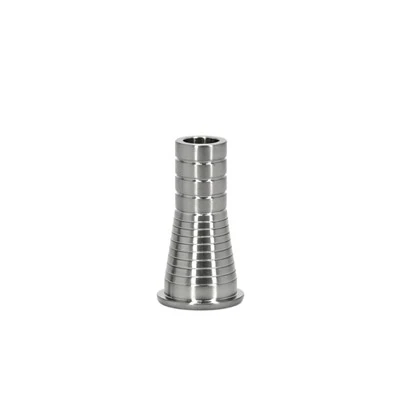
Let’s start with the basics. When you place a dental implant, you’re not just screwing a metal post into the jawbone—you’re creating a foundation that has to align perfectly with the gum tissue, the adjacent natural teeth, and the final crown or bridge. The surgical step only gives you a physical post in the bone, but to build a restoration that fits, you need a precise 3D replica of that post’s exact position, angulation, and depth in the patient’s mouth. That’s where impression copings come in, right? Well, yes—sort of—but they only do half the job. Here’s the full workflow, the one we’ve helped thousands of partners execute flawlessly, to make this make sense.
After the implant is osseointegrated (that 3–6 month period where the bone fuses to the implant post), your next step is to uncover the post and attach the impression coping. The coping is a small, rigid, metal (or sometimes plastic, for single-use cases) component that screws directly onto the top of the implant post. It has a small flat edge or indentation that sits above the gum line, so when you take an impression of the patient’s teeth and gums, it gets captured in the material alongside the surrounding soft tissue and natural teeth. The impression itself is a mold of the mouth, but it only has a plastic or metal protrusion where the coping was—no actual implant post there. That’s the gap the implant analog fills.
Wait, so what is an implant analog? If the impression coping is the “copy” of the implant in the patient’s mouth, the analog is the “master copy” that connects the impression to the lab model. It’s a small, stainless steel or titanium component that matches the exact size, shape, and threading of the actual implant post. When you pour the dental stone into the impression, you screw the analog into the coping’s captured protrusion, and that bonds the analog to the freshly poured model. Now, the lab has a physical replica of the implant post, positioned exactly where it was in the patient’s mouth, set into a model that mirrors the rest of the dentition and gum tissue. Without the analog, you’d have a lump where the coping was in the impression, and the lab wouldn’t know where to place the replacement post to make the crown line up.
But let’s go deeper than just the “what” to the “why this matters so much.” I’ve seen too many clinics skip analogs, or use cheap, mismatched copings and analogs, leading to restorations that rock, that impinge on the gum tissue, that don’t line up with the bite. A bad fit here doesn’t just mean a patient has to have a crown adjusted—it means they might have to go back to the clinic, the lab might have to scrap a whole custom crown, and everyone loses. The analog and coping pair work together to eliminate guesswork at every stage, and here’s how, step by step.
First, accuracy of implant position. Implants are placed at specific angles for occlusion (the way the upper and lower teeth meet) and for aesthetic appeal. If the impression coping is loose when you take the impression, it can shift slightly in the soft tissue, and even a 0.5-degree error in angulation when taking the mold becomes a 2mm error at the top of the final crown—enough to make it look crooked when the patient smiles. The analog’s precise threading ensures that when it’s attached to the coping in the impression, the lab model replicates that exact angle, so the lab technician doesn’t have to estimate where the post should be. At our company, we manufacture copings and analogs to match the most common implant brands (straumann, Nobel Biocare, Zimmer, and many more) to eliminate brand mismatch errors—another common pain point.
Second, preserving bone and gum health during the restorative phase. When you use a coping and analog that fit perfectly, the final restoration seats evenly on the implant. If a crown is too tight on one side, it can put excessive pressure on the implant, which can lead to bone resorption over time—something that could make the implant fail years down the line. I remember a case from 2019 where a clinic called us panicking: a patient had a dental implant in the front of their mouth, and their crown kept falling off after a week. They had used a generic coping and a cheap analog from a different brand, and the threading didn’t align. We sent them a pair matched to their implant, and the lab was able to adjust the crown to seat evenly on the correctly positioned analog, and the crown hasn’t come loose since. That’s the kind of small component that has big, long-term effects on a patient’s oral health.
Third, consistency across multiple implants. When you’re doing a full-arch restoration—replacing all upper or lower teeth with implants—you need multiple copings and analogs, all perfectly aligned. Each implant has its own depth and angulation, and the pair of coping and analog captures that individual data for every post. Without this, you might end up with a restoration that’s flat, where the implants curve or angle in different directions, leading to an uneven bite and even TMJ issues. We’ve worked with labs that do 10+ full-arch cases a month, and they tell us that using our brand’s matched copings and analogs cuts their model fabrication time by almost 30%, because they don’t have to spend time adjusting mismatched parts.
Now, let’s talk about something that’s specific to our role as a supplier: the common mistakes we see customers make that make these components less effective. A lot of people think “all copings and analogs are the same,” but that’s far from true. Single-use copings, for example, are great for small practices that do one or two implant cases a month, because they’re pre-sterilized and don’t require cleaning between uses. But if you’re a high-volume clinic, reusable metal copings are more cost-effective, as long as you sterilize them correctly (we provide a care guide with every order to prevent thread damage). Another mistake is using an analog that doesn’t match the coping or the implant brand. Even a 1mm difference in threading can lead to a loose model or a misaligned post—we once had a customer send back a batch of impressions because they used a generic analog with a Nobel Biocare coping, and the threads cross-threaded, ruining the impression entirely. We don’t sell generic pairs for that exact reason; every pair we manufacture is precision-machined to OEM specifications, so you don’t have to worry about that error.
Wait, but what about digital dentistry? I know a lot of people are moving to digital impressions with intraoral scanners these days, and some are asking if analogs are still necessary. Let’s address that, because it’s a valid question. Digital scans are great for many cases, but they have limitations. If the scanner picks up soft tissue noise, or if the implant post is deep and hard to reach with the scanner tip, you might get a distorted digital model. Analog-based impressions are still the gold standard for cases with complex anatomy, posterior implants (where the scanner has a hard time reaching), or full-arch restorations. In fact, many digital labs still use analogs to verify their digital models, as a quality control step. At our company, we supply copings and analogs for both traditional and digital workflows—so whether you’re pouring stone models or working with scan data, our components fit seamlessly.
Let’s circle back to the purpose, to make sure we’re clear: the implant analog with impression coping isn’t just a tiny metal part—it’s a critical link between the patient’s mouth, the clinical team, and the dental lab. It translates the temporary, visible implant post (via the coping) into a permanent, measurable replica (via the analog) that the lab can use to build a restoration that fits, functions, and looks like natural teeth. Without them, you’re working with incomplete data, which leads to more adjustments, more rework, and more unhappy patients.
Over the years, we’ve built our reputation on being more than just a supplier—we’re a partner to clinics and labs, helping them troubleshoot coping and analog issues, provide guidance on sterilization and use, and stock parts for all the major implant systems. If you’re currently sourcing copings and analogs, or if you’re tired of dealing with parts that don’t fit or delay your workflow, we’d love to hear from you. Whether you’re a small general practice doing a handful of implant cases a month, a large oral surgery clinic, or a full-service dental lab, we can provide precision-machined components tailored to your needs, with fast shipping and support to get you the parts you need when you need them.

Don’t let small component errors derail your implant cases. A coping and analog pair might seem insignificant, but they’re the foundation of a successful, long-lasting implant restoration. Reach out to our team to discuss your needs, and let’s make sure your next implant case is as accurate and stress-free as possible.
Multi-unit Abutments References
Goodacre CJ, Bernal G, Rungcharassaeng K, Kan JY. Clinical complications in implant dentistry. J Prosthet Dent. 2003;90(1):31-41.
Sutton DV. Implant impression techniques: a review. J Prosthodont. 2006;15(4):255-262.
Taurodontis A, Kotsakis G, Hilger P. Accuracy of digital vs. conventional implant impressions: a systematic review and meta-analysis. J Dent. 2018;77:1-10.
Wismeijer D, Visscher CM, Raghoebar GM, Meijer HJ. Accuracy of implant impressions for fixed prostheses: a systematic review. Clin Oral Implants Res. 2012;23(10):1139-1148.
Dongguan Denreal Devices Co., Ltd.
As one of the most professional implant impression coping manufacturers and suppliers in China, we’re featured by quality products and low price. Please rest assured to buy bulk customized implant impression coping made in China here from our factory. For free sample, contact us now.
Address: NO.622, Baoshi Road, Qishi town, Dongguan, Guangdong, China
E-mail: Chason.Yeh@Gmail.com
WebSite: https://www.denreal.com/
