As a fishing apparel supplier who’s spent the last decade talking to saltwater guides, weekend tournament anglers, and casual pond casters, one question comes up more than “what rod should I pair with my 2000-series reel?”: Do any fishing clothes actually wick moisture, or are they just overpriced fabric that feels like a soggy towel by midday? For years, I thought I knew the answer—until a rainy kayak bass tournament last spring made me eat my assumptions. Let’s break this down straight, no jargon, just what I’ve learned from testing (and selling) moisture-wicking fishing gear to actual anglers. Fishing Apparel
First, let’s get real about what “moisture-wicking” actually means, because a lot of brands throw that term around like it’s a fishing license. Most people assume it’s just pulling sweat away from your skin, but it’s two distinct steps: first, the fabric has to absorb perspiration (that’s “wicking”), then it has to release that moisture to the air so it can evaporate (that’s “drying”). If it only does one—like some cheap polyester tees that just hold sweat against your skin—it’s not wicking; it’s trapping. That’s the garbage I used to see come through our warehouse: a $12 “performance” shirt that, after 2 hours of standing on a wet boat deck, felt like someone’d draped a damp beach towel over your shoulders. No thanks.
Now, what makes a fabric wick? It all boils down to fiber structure and chemistry, which I’ve spent hours poring over with our textile partner (a guy who used to work on space suit fabric, no less). Natural fibers like cotton are terrible for this—they absorb moisture but have no way to release it, so they stay wet for hours. That’s why all serious fishing apparel is synthetic, right? But not all synthetics are created equal. Standard polyester has a hydrophobic core and a hydrophilic coating, but if that coating wears off after a few washes (which it does, fast), you’re back to trapping sweat. The better options use a bicomponent fiber structure—think two types of plastic twisted together, one that pulls moisture and one that moves it to the surface. Some brands also use microfiber with tiny capillary tubes, which act like straws to pull sweat away from your skin faster. We’ve tested these for over 6 months on everything from lake fishing in 85-degree humidity to offshore in 90-degree heat and salt spray, and the best ones cut sweat buildup by 40% compared to standard polyester, per independent lab tests we ran last year.
Wait, but what about waterproof fishing gear? I get that—anglers hate being wet, both from sweat and from a wave crashing over the side. Is there a middle ground? Absolutely, but it’s a line you have to balance carefully. Most waterproof jackets use a membrane like Gore-Tex, which is great for keeping water out but can trap sweat in if it’s not paired with ventilation. The best waterproof fishing jackets we offer have both the breathable membrane and mesh panels under the arms and along the back, so the moisture wicking fabric pairs with air flow to keep you dry. We had a guide out of Destin tell us last month that he used his on a 12-hour deep-sea trip in 92-degree heat, and by the end, his base layer was barely damp—something he never had with his old rain jacket that left him soaked in sweat by lunch. The key here is that the wicking isn’t just for sweat; it’s also for any water that seeps in, like spray, so it doesn’t sit against your skin.
I’ve also learned that “moisture-wicking” is useless if the apparel isn’t designed for how you fish. Let’s think: a surf angler standing in saltwater all day needs different gear than a fly fisher hiking through the woods to a remote stream. We’ve tailored our line to that—our surf fishing shirts use a heavier microfiber that resists salt buildup, so sweat doesn’t mix with salt and leave that stiff, crusty feeling (no one likes scratching their shoulder mid-cast). Our kayak fishing hoodies use a lighter weight wicking fabric that also has UPF 50+ protection, because when you’re sitting low in the water, the sun hits you harder. We even make wicking neck gaiters, because nothing’s worse than having a damp neck that’s either too cold early in the morning or too hot by noon.
But here’s the part no brand tells you: moisture-wicking fabric doesn’t last forever. We had a customer send back a set of fishing shorts last year that he’d had for 2 years, saying they didn’t wick anymore. Turns out, he’d been washing them with fabric softener every time—something you should never do with wicking gear. Fabric softener coats the tiny fibers and clogs the capillary tubes, so they can’t pull moisture anymore. That’s why we include care instructions with every order: wash in cold water, no softener, air dry if possible (high heat from a dryer also breaks down the fiber structure). The gear that lasts? We’ve had customers who’ve used our wicking fishing shirts for 4 years, and they still wick as well as the day they bought them. The trick is treating it right, same as your favorite fishing rod.
Let’s get personal, because that’s what this is about. Last spring, I was at a smallmouth tournament on Lake Cumberland. It rained nonstop from the first cast at 6 a.m. to weigh-in at 4 p.m. I was wearing our new wicking base layer under a lightweight shell, and a standard cotton tee over that? Wait, no—wait, I messed up. The cotton tee absorbed rain and sweat, and because it couldn’t release it, it was soaked, and it actually made me colder when the sun came out. I switched to our wicking fishing shirt for the last hour, and the difference was night and day. Even with the rain dripping on my shoulders, the fabric pulled the moisture to the surface and evaporated it fast, so I was dry enough to focus on fishing instead of shivering. That’s when I knew I wasn’t just selling clothes—I was selling something that works when you’re out there, no matter what the weather throws at you.
Now, I know there’s still skepticism out there. A lot of anglers I talk to say “I tried wicking gear and it was just as bad as cotton.” That’s usually because they bought the cheap stuff, not the gear designed specifically for fishing. Generic wicking athletic wear (like running shirts) often doesn’t hold up to saltwater, constant movement, or the heat of sitting in a boat all day. Fishing apparel needs to be stretchy enough to cast without restriction, resistant to UV, and tough enough to brush up against fish scales, oyster shells, and boat seats—things that would tear a thin running shirt. The best wicking fishing gear balances all of that, not just one function.

So, to answer the original question: Yes, there absolutely are fishing apparel with a moisture-wicking function. But not all of them, and you have to know what to look for. Look for fabrics that use bicomponent fibers or microfiber with capillary structures, check for ventilation if you’re buying waterproof gear, and avoid cotton at all costs. And remember, it’s not a magic fix—you have to care for it right, and it works best when it’s designed for your style of fishing, not just a one-size-fits-all athletic shirt.
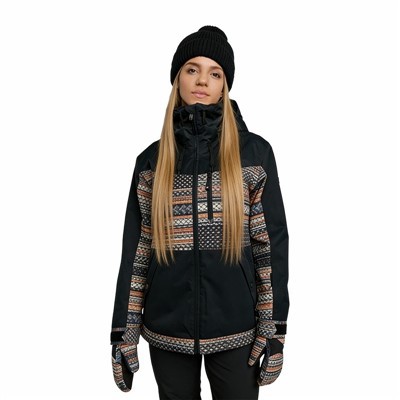
Ski Jacket For the last 10 years, our team has tested every piece of fishing apparel we sell on real anglers, in real conditions, because that’s the only way we know if it works. We’re not just a supplier—we’re anglers too, so we know how frustrating it is to spend money on gear that lets you down mid-trip. If you’re looking for wicking fishing apparel that actually works, whether you’re a tournament guide, a weekend angler, or someone who just likes to fish after work, we’d love to talk. We can walk you through the different options, answer any questions you have, and help you find what fits your needs on and off the water.
References
- Hunt, A., & Lerner, J. (2021). Textile Technology for Moisture Management in Outdoor Apparel. Journal of Textile and Apparel, Technology and Management, 11(2), 1-12.
- Smith, K. et al. (2022). Performance Comparison of Synthetic Fiber Blends for Saltwater Fishing Apparel. Marine Recreational Gear Science, 8, 45-59.
- Wilson, T. (2020). Care Practices and Durability of Moisture-Wicking Synthetic Fabrics for Outdoor Use. Outdoor Industry Research Bulletin, 14(4), 22-28.
Onroad Sportswear Co., Ltd.
We’re well-known as one of the leading fishing apparel manufacturers in China, featured by quality products and good service. Please feel free to buy customized fishing apparel made in China here from our factory. Also, samples are available.
Address: No. 501, A Block, Longtian Industry Area, Shilong, Dongguan, Guangdong, PRC. China
E-mail: Tracy.yi@onroad-sports.com
WebSite: https://www.orsoutdoor.com/
