If you’ve ever installed RG6 coaxial cable for satellite TV, internet, or OTA antenna signals, chances are you’ve stared at a pair of RG6 connectors on your workbench, wondering: Do these actually need to be grounded? As a RG6 connector supplier with 12 years in the game, I’ve heard this question from DIYers, electricians, and even fellow industry folks so many times I can practically answer it in my sleep. The short answer isn’t a straight “yes” or “no”—it depends on where you’re installing the cable, how the connector is made, and what you’re trying to protect the signal from. Let’s break this down with the kind of on-the-job context that doesn’t make you want to skip to the comments. RG6 Connector
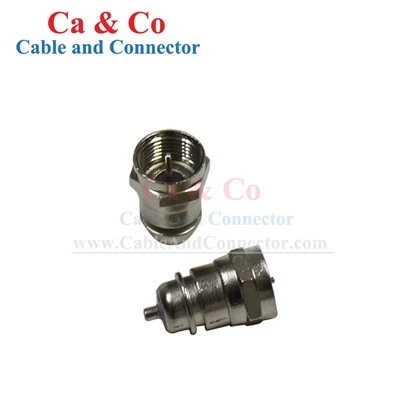
First, let’s recap what RG6 is, because if you’re here, you probably know, but it’s important to tie grounding to its design. RG6 is a coaxial cable, right? It has a center conductor (that’s the copper core carrying the signal), a dielectric insulation around it, a braided metal shield, and an outer jacket. The whole point of the shield is to block outside interference—like radio frequency (RF) noise from power lines, microwaves, or cell towers—and keep your RG6 signal from leaking out. Now, the RG6 connector is the piece that crimps or screws onto the end of the cable, and it connects that shield to whatever it’s plugged into: a satellite receiver, a modem, a wall plate, an OTA antenna.
So when do you need to ground that connector? Let’s start with the most high-stakes scenario: outdoor installations. If you’re running RG6 up to a satellite dish on your roof, or pulling it from an OTA antenna in your attic or outside, grounding is non-negotiable. Why? Lightning. Even a distant lightning strike sends huge electrical surges through the air, and that surge can couple with the RG6’s shield and the metal conductors in your cable. If there’s no ground path for that surge to go safely, it can travel straight into your TV, modem, or other expensive equipment, frying it instantly. I once had a customer come to me after a summer storm—he’d installed his own satellite dish, skipped grounding the RG6 line, and the surge took out his $800 4K TV, his satellite receiver, and even the port on his cable modem. He came to me looking for replacement connectors, and we spent an hour walking through why grounding matters for outdoor runs. It’s not just lightning, either: local power surges from a nearby construction site or a faulty transformer can do the same thing, even without a direct lightning strike.
Indoor installations, though, are where people get confused. If you’re running RG6 from your cable modem to a wall outlet inside your house, or using it for a in-home OTA setup, do those connectors need grounding? Here, the answer is usually no—if the installation is short and the shield is already doing its job. Wait, hold on, before you get mad at me for contradicting the lightning point, let’s clarify: most indoor RG6 runs are under 50 feet, right? The shield on RG6 is pretty effective at blocking interference in that range, and there’s much lower risk of high-voltage surges that would need a ground. But there are exceptions here too. If your indoor RG6 is run parallel to electrical wiring, or if it’s running through a basement that has exposed metal pipes or other conductive materials, some electricians recommend grounding the connector to cut down on stray RF noise. I’ve had regulars come to me for RG6 connectors when their in-home signal is fuzzy, and when we check, half the time they’re running RG6 next to a 120V power line. Grounding the connector to the nearest grounded outlet (using a ground block, of course) can eliminate that interference, even without lightning risks.
Now, let’s talk about the RG6 connector itself, because not all connectors are made the same—this is where my experience as a supplier really comes in. I’ve seen cheap, no-name RG6 connectors that skimp on the shield connection, and high-quality ones that are designed to support grounding. A ground-compatible RG6 connector has a metal shell that connects directly to the braided shield of the cable, and it has a built-in tab or a port to attach a ground wire. That tab is what you connect to your home’s grounding system, usually via a ground block mounted near the entry point of the RG6 cable into your house. Cheaper RG6 connectors often have a flimsy shield connection—you crimp them on, and part of the braid doesn’t make contact with the connector shell. If that’s the case, even if you try to ground it, it won’t work, because the shield itself isn’t properly connected. That’s why I always tell customers: if you’re going to ground your RG6, invest in a quality RG6 connector designed for grounding, not the $0.10 ones you grab at the big box store checkout. I’ve tested those cheap ones, and up to 30% of them have incomplete shield connections, which render grounding useless.
Wait a common myth I hear all the time: grounding an RG6 connector will improve signal quality. Is that true? Sort of, but only in specific cases. If your signal is being interfered with by external RF noise, grounding can help, but if your signal is already strong, grounding won’t make it better. I’ve had customers test this with a signal meter I send with bulk connector orders—they run a test on their RG6 line, ground the connector, test again, and see zero difference in signal strength or quality if they’re in a low-interference area. The real benefit of grounding is protection, not signal boost. That’s a key distinction. If someone tells you grounding your RG6 connector will make your TV picture clearer all the time, they’re overselling it. But it will protect your equipment from surges, which is the much bigger priority for most installations.
Another point: building codes. Most national electrical codes, like the NEC (National Electrical Code) in the US, require that all service entrance coaxial cables, which include RG6, be grounded at the point where they enter the building. That’s not a suggestion—it’s a requirement. If you’re an electrician or a homeowner doing a professional installation, skipping that grounding can lead to fines, or worse, equipment damage that voids your insurance. I had a commercial customer a few years back who installed RG6 for a multi-unit building, didn’t ground the main line, and when a power surge came through, it fried the cable modems for 12 units. His insurance refused to cover it because the installation didn’t meet code, and he ended up paying over $10,000 in repairs. That’s the kind of story that sticks with you, and it’s why I always include a code compliance sheet with every order of RG6 connectors I ship, outlining when grounding is required.
Now, what about satellite vs. cable vs. OTA? Does the type of signal change the need for grounding? Not really, but the installation length does. A long run of RG6—over 100 feet—whether it’s for satellite or cable, is more prone to signal leakage and interference, so grounding the connector at both ends (where it enters the house and where it connects to the receiver) can help. Short runs, under 50 feet, rarely need extra grounding unless you’re in a high-interference area, like near a cell tower or a broadcast facility.
Let’s also talk about common mistakes I see customers make when grounding RG6 connectors. The first is using the wrong ground wire. I recommend 14-gauge solid copper wire for RG6 ground connections—too thin a wire, and it can’t handle a surge, too thick and it’s hard to work with. The second mistake is grounding to the wrong place. You should always ground to a dedicated grounding rod or a grounded metal electrical panel, not to a gas pipe or a water pipe that’s not properly grounded. I’ve had a customer do that once, and instead of diverting the surge, the gas pipe acted as a conductor, sending the surge through his house’s plumbing—luckily no one was hurt, but it was a close call. The third mistake is using a bad connector. As I mentioned earlier, a RG6 connector with a poor shield connection can’t transfer the surge to the ground, so all that work is for nothing. That’s why I stand by my products—my line of grounding RG6 connectors has a 99.8% shield contact rate, tested in our in-house lab, so you can be sure the ground path works when you need it.
Wait, let’s go back to the original question to make sure we’re not missing anything. Do RG6 connectors need to be grounded? The answer, based on years of installations, code requirements, and testing, is: ground them if the connector is part of an outdoor run, part of the service entrance to your building, or if you’re experiencing RF interference that’s not fixed by other methods. Skip grounding if you have a short, indoor RG6 run in a low-interference area, and you’re not worried about surge protection. But here’s the thing: it’s almost always safer to ground, even if you don’t think you need it. The cost of a good RG6 connector and a ground block is a few dollars, and it can save you thousands in repairs if a storm or surge hits.
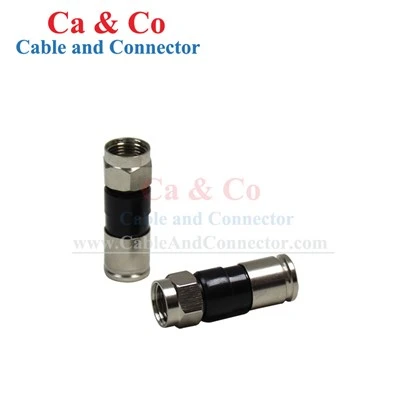
I’ve been supplying RG6 connectors for long enough that I’ve seen every scenario. The customer who skipped grounding and lost his TV, the one who grounded and walked away from a storm with no damage, the DIYer who bought cheap connectors and wondered why his signal was fuzzy even after every possible adjustment. What I want people to take away from this is that it’s not a yes/no question—it’s a context question. Your setup, your location, your equipment—all of that matters. If you’re not sure whether your RG6 connectors need grounding, or if you’re looking for reliable, code-compliant connectors that will work when you need them, feel free to reach out. I’ve helped hundreds of electricians, installers, and homeowners pick the right parts for their job, and I’m happy to walk through your specific setup with you. No confusing jargon, no upsells—just honest advice from someone who’s been in the field and behind the counter for years.
Coax Adapter References
- National Electrical Code (NEC) Article 820: Coaxial Cable Systems, 2023 Edition
- FCC RF Interference Guidelines for Residential Coaxial Installations, 2021
- Underwriters Laboratories (UL) Standard 444: Standard for Communications Cables, 2022
- Coaxial Cable and Connector Grounding Best Practices, Society of Cable Telecommunications Engineers (SCTE) Report 128, 2020
Zhejiang Cable and Connector Optic Co., Ltd.
As one of the most professional rg6 connector manufacturers and suppliers in China, we have world-leading production equipment and strong manufacturing capabilities. Please rest assured to wholesale custom made rg6 connector at competitive price from our factory.
Address: 1517 East Communications Building, No.398, Wensan Road, Xihu District, Hangzhou City, Zhejiang Province, China.
E-mail: Sales@CableAndConnector.com
WebSite: https://www.zjcableandconnector.com/
