If you’ve ever stood in a Suzuki service bay, watching a mechanic pry off a rusted, warped brake disc that’s turned your smooth drive into a shaky, nerve-wracking experience, you’ve probably asked the same question: “How much is this going to cost me?” As a supplier focused exclusively on brake discs for Suzuki, I field that exact question a dozen times a day—from individual Suzuki owners pulling up to my warehouse door, to small independent garages ordering bulk stock, to even a few large fleet managers maintaining a line of Suzuki commercial vans. The answer isn’t a single number, though. It depends on a handful of factors that are specific to Suzuki vehicles, the condition of your current parts, and the kind of brake disc you choose. Let’s break it down like I’d break it down for a customer walking through my loading dock, no confusing jargon, no hidden fees. Brake Discs for Suzuki
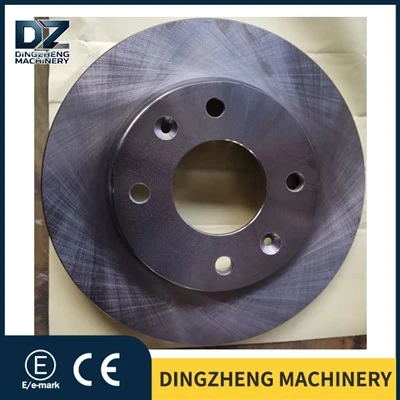
First, let’s talk about why Suzuki brake discs aren’t interchangeable with other brands, because that’s a mistake I see all the time. Suzuki designs its brake systems to fit the weight and performance needs of each model—whether it’s a compact Swift, the robust Vitara SUV, the ubiquitous Ciaz sedan, or the tough Jimny 4×4. A brake disc for a Swift is smaller, thinner, and designed for lighter city driving, while a disc for a Jimny has to handle more off-road torque and heavier loads. Trying to use a disc from another brand not only won’t fit, but it can throw off the brake balance, leading to longer stopping distances or uneven wear, which ends up costing you more in the long run. That’s why when someone calls me asking for “a cheap brake disc for my Suzuki,” I always start by asking for their model year and exact model—there’s no one-size-fits-all here.
Now, let’s get into the actual cost. For individual owners, the total expense of a brake disc replacement is split into three parts: the cost of the disc itself, the cost of labor, and any additional parts that might need replacing at the same time. Let’s use common Suzuki models as examples, since that’s what most of our customers drive.
For a Suzuki Swift, which is the best-selling model globally, the average cost for a single high-quality brake disc from our warehouse is around $35 to $50. If you need to replace both front discs (you almost always replace them in pairs, by the way—uneven wear on one disc will throw off your braking), that’s $70 to $100 for the parts. Now, labor: most independent mechanics charge between $50 and $80 per hour, and replacing two front discs takes about an hour and a half. That works out to $75 to $120 for labor. Add in any taxes or shop fees, and total for Swift front disc replacement is roughly $100 to $220. Rear discs for the Swift are a bit thinner and simpler, so parts cost is $30 to $40 each, making total parts $60 to $80, plus labor of $70 to $100, for a total of $130 to $180 for rear replacement. That’s a range that makes sense for a compact city car, which is built for affordability.
Next, let’s move up to the Suzuki Vitara, a compact SUV that’s popular for both family driving and light off-roading. Vitara’s front brake discs are larger and thicker to handle extra weight, so our parts cost for a pair of front discs is $60 to $85. Labor here is a tiny bit more, because the Vitara’s wheel wells are a bit tighter, making it slightly harder to access the brake components. Labor is around $80 to $110 for an hour and 45 minutes, so total front replacement is $140 to $235. Rear discs for the Vitara are also designed for heavier loads, so parts are $50 to $70 each, total parts $100 to $140, plus labor $80 to $100, for rear total of $180 to $240. That’s a jump from the Swift, but it’s in line with what you’d expect for a small SUV.
Now, the Suzuki Jimny, which is the model we get the most questions about because it’s built for off-roading and has a loyal, passionate owner base. Jimny brake discs have to withstand rough terrain, mud, and repeated hard stops from off-road speeds, so they’re made with higher-grade cast iron than most other Suzukis. A pair of Jimny front discs from us runs $75 to $100, and because Jimny’s brake system is built for heavy duty, replacing discs takes a bit longer—around two hours. Labor is $90 to $120, so total front replacement is $165 to $220. Rear Jimny discs are similar in quality, so pair cost is $70 to $90, plus labor $90 to $110, for rear total of $160 to $200. The good news for Jimny owners is that even with the higher-grade parts, the total cost isn’t drastically higher than the Vitara, which is a win for a vehicle that’s often modified for tough use.
But here’s the thing: those numbers are for standard, OE-equivalent brake discs. That’s the part we specialize in, the same quality as the original discs that came on your Suzuki when it rolled off the factory line. But if you’re looking for performance or budget options, there are other choices, and they come with different price tags. Let’s talk about budget options first—those generic aftermarket discs you can find online for $20 each. I don’t carry those for a reason. They’re made with lower-grade cast iron, they warp faster, they wear unevenly, and they can cause vibration or noise that makes driving unpleasant. I’ve had customers come back to me a month after buying a cheap set complaining that their steering wheel shakes when they brake—because a cheap disc warped almost immediately. In the long run, that’s a false economy: you’ll end up replacing them twice as often, and you might even have to pay extra to fix damage to your brake calipers or rotors from the poor fit.
On the other end of the spectrum, performance brake discs for Suzuki—those cross-drilled or slotted ones popular with car enthusiasts—cost $90 to $150 per disc, so a pair would be $180 to $300. They’re designed for better heat dissipation, which is great for people who do a lot of hard braking on back roads or track days. But unless you’re an enthusiast who’s pushing your Suzuki to its limits, you don’t need these. They’re more expensive, and they don’t last any longer than OE discs for normal city driving. So unless you have a specific reason to upgrade, sticking with OE-equivalent discs is the best balance of cost, reliability, and safety.
Now, there are other factors that can push your replacement cost up or down. First, do you replace the discs in pairs? I can’t stress this enough. If only one front disc is worn, replacing just that one might save you a few bucks upfront, but the other disc is almost guaranteed to have uneven wear, which will throw off your brake balance. That means your brakes will work less effectively, and you’ll end up replacing the other disc in a few months anyway. Plus, many mechanics charge more per disc if you only replace one. So even if it’s a bit more expensive now, replacing discs in pairs will save you money and hassle in the long run.
Second, what condition is your current brake system in? When you replace brake discs, mechanics will usually check your brake calipers and brake pads at the same time. If your brake pads are worn down to the metal, they can scratch your new brake discs, making them wear out faster. If your calipers are sticking, that can cause uneven pressure on the discs, leading to warping. So if your mechanic finds that you need new pads or calipers at the same time as your discs, that will add to the total cost. Brake pads for Suzuki are around $25 to $40 per axle, so adding that on would be $50 to $80. A new brake caliper is around $40 to $60 each, so if you need two, that’s $80 to $120. It’s an extra cost, but it’s a necessary one to keep your brakes working safely.
Third, where you get the work done matters. If you go to a Suzuki dealership, labor is usually higher—they might charge $100 to $130 per hour, so total cost would be 30% to 50% higher than an independent mechanic. But some dealerships offer warranties on parts and labor, which can be a plus if you want that peace of mind. Independent garages, like the ones that are regular customers of mine, usually have lower labor rates and are more flexible, and many use OE-equivalent parts like the ones we supply. For individual owners doing the work themselves—if you’re handy with tools and have a jack and stands—you can save entirely on labor. A lot of our customers buy parts from us and install them themselves, bringing the total cost down to just the price of the discs: $70 to $100 for Swift front discs, $140 to $170 for Jimny front discs, etc. That’s a great option for people who like to do their own maintenance.
I also get a lot of questions about whether you can resurface (or turn) your old brake discs instead of replacing them. Resurfacing is a process where a mechanic machines the surface of the disc to smooth out warping or grooves. It’s cheaper than replacing, usually around $20 to $30 per disc. But there’s a catch: you can only resurface a disc a certain number of times before it’s too thin to be safe. Every brake disc has a minimum thickness stamped on it, and if you machine it down below that, it can crack under pressure, especially when braking hard or at high speeds. Most Suzuki brake discs can be resurfaced once or twice, but if they’re already worn or grooved badly, resurfacing isn’t an option. That’s why it’s often better to replace them with new, reliable discs like the ones we supply, rather than risking a resurfaced disc that might fail.
Now, let’s talk about long-term cost, not just the upfront price. A lot of customers look at the cost of a brake disc and think, “That’s a lot of money.” But consider this: a set of OE-equivalent discs from us will last between 30,000 and 70,000 miles, depending on your driving style. A cheap aftermarket disc might last 15,000 to 25,000 miles, so you’ll be replacing them two or three times as often. Over the course of 100,000 miles, that adds up. For a Swift, cheap discs would cost you $200 to $300 in parts over 100,000 miles, plus extra labor each time, while OE discs would be $350 to $500—yes, more upfront, but no extra labor, no hassle, and a much lower risk of brake failure, which is the most important part. Brakes aren’t something to cut corners on; their job is to keep you and your family safe.
As a supplier that only works with Suzuki brake discs, we don’t carry parts for other brands, so I know exactly what each model needs. We source our discs from ISO-certified manufacturers that use the same high-grade cast iron that Suzuki uses for original equipment, so you get the same fit, performance, and durability as the disc that came in your car. We ship directly to garages, individual owners, and fleet managers, and we offer bulk discounts for anyone ordering 10 or more discs at a time. We also provide a 12-month warranty on all our brake discs, so if there’s any defect or issue, we’ll replace it for free—something you won’t get with generic cheap parts.
I’ve seen first-hand what happens when someone tries to save a few bucks on brake discs. A few months ago, a customer came to me with a Suzuki Swift that had a shaking steering wheel every time he braked fast. He’d bought cheap discs from an online marketplace for $20 each, and they warped after just 3,000 miles. When he pulled them off, I could see they were made of thin, low-quality cast iron with uneven grain, which is why they warped so fast. He ended up buying our OE discs, paying for the labor to replace them, and also had to get his brake pads checked because the bad discs had worn them unevenly. All in all, he spent almost twice as much as he would have if he’d just bought the right parts in the first place. That’s the mistake so many people make—looking only at the upfront cost, not the total cost over time, or the safety risk.
Another customer was a fleet manager who maintained 20 Suzuki Ciaz sedans for a delivery company. For years, they’d bought cheap bulk discs online, but they were replacing sets every 15,000 miles, with labor costs adding up to hundreds of dollars a month. They switched to our OE-equivalent discs, and now they’re replacing sets every 45,000 miles. The initial cost was a bit higher per disc, but over a year, they saved over $1,200 in labor and replacement parts. That’s the kind of result we’re proud to deliver, working directly with fleet and garage customers to get reliable parts at a fair price.
So, to wrap this up, there’s no single “cost of brake disc replacement for Suzuki” because it depends on your model, the type of disc you choose, whether you replace in pairs, and where you get the work done. For most individual owners doing the work themselves, it’s between $60 and $150 for a pair of OE-equivalent discs. For someone hiring an independent mechanic, it’s $130 to $250 for front replacement, $100 to $220 for rear. For Suzuki dealership work, add 30% to 50% to those ranges. For off-road models like the Jimny, add a bit more for the higher-grade parts, and for performance enthusiasts, you’ll pay more for upgraded discs. The biggest mistake you can make is choosing cheap, generic parts to save a few bucks—you’ll end up paying more in the long run, and putting yourself at risk.
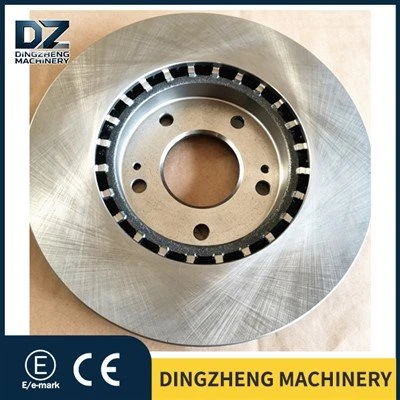
If you’re a Suzuki owner needing brake disc replacements, or a garage or fleet manager looking for a reliable supplier of genuine OE-equivalent brake discs, reach out to us to discuss your needs. We can provide model-specific pricing, bulk discounts, and help you figure out the right parts for your driving style and budget. We don’t just sell brake discs—we specialize in Suzuki, so we know exactly what your vehicle needs to stay safe and perform well. Whether you need a single pair for your Swift or a bulk order for a fleet of Vitaras, we’re here to help.
Mazda Vehicle Brake Discs References
- Suzuki Motor Corporation. (2022). Suzuki Vehicle Brake System Specifications: A Global Overview. Suzuki Technical Publications.
- National Highway Traffic Safety Administration (NHTSA). (2021). Brake Component Replacement Best Practices for Passenger Vehicles and Light Trucks. NHTSA Vehicle Safety Standards.
- Automotive Aftermarket Suppliers Association (AASA). (2023). Brake Parts Cost and Performance Report: OE-Equivalent vs. Generic Aftermarket Components. AASA Annual Industry Report.
- Brake Manufacturers Association. (2022). Guidelines for Brake Disc Resurfacing and Replacement Thickness Requirements. BMA Technical Bulletin.
- Jimny Off-Road Enthusiast Association. (2023). Maintenance Guide for Suzuki Jimny Brake Systems in Off-Road Applications. JOEA Off-Road Safety Series.
Laizhou Dingzheng Machinery Co., Ltd.
As one of the most professional brake discs for suzuki manufacturers and suppliers in China, we’re featured by quality products and good price. Please rest assured to buy cheap brake discs for suzuki for sale here from our factory. We also accept customized orders.
Address: Luan Jia village, Tushan town, Laizhou city, Shangdong
E-mail: AMY@cndingzheng.com
WebSite: https://www.dingzhengbrake.com/
