As someone who’s spent the last decade working as an electric bicycle supplier, I’ve lost count of how many times people ask me a single question: “Are e-bikes actually cheaper than driving for day-to-day transportation?” It’s a fair question—when you’re used to filling up a gas tank, paying for monthly insurance, and shelling out for oil changes and tire replacements, the sticker price of a new e-bike can feel like a steep up-front cost. But over the years, I’ve watched hundreds of customers shift from commuting by car to e-bikes, and almost every single one of them reports a noticeable drop in their monthly transportation expenses. Let’s break this down with real numbers, real scenarios, and the kind of practical insights only someone who sells (and rides) e-bikes can share. Electric Bicycle
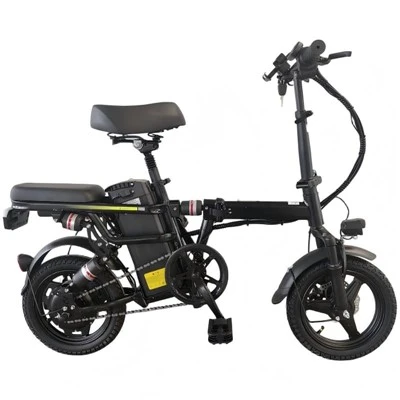
First, let’s get the basics out of the way: what does it actually cost to operate a car versus an e-bike in the average U.S. city? According to the American Automobile Association’s (AAA) 2024 annual “Your Driving Costs” study, the average cost of owning and operating a new car is just over $12,000 per year. That breaks down to about $1,000 a month, and it includes everything: depreciation, gas, insurance, maintenance, registration, and even a small allowance for parking. If you drive a used car, that number drops a bit, but even a 5-year-old sedan costs roughly $8,500 a year to run, per AAA. Now, compare that to the e-bike numbers.
When it comes to an e-bike’s operating costs, the numbers are shockingly low. Let’s start with the most obvious one: electricity. A typical e-bike battery (400Wh, or watt-hours) will power a 20-25 mile ride. If you fully drain that battery once a day, every day, it will take about 18 days to use a kilowatt-hour (kWh) of electricity. The average U.S. residential electricity rate is around 15 cents per kWh, so charging your e-bike for a full month would cost you roughly 17 cents. That’s not a typo—$0.17 a month for power. Even if you ride it every single day, that’s only $2.04 a year in electricity costs.
But wait, there’s more to transportation costs than just fuel. For cars, you’ve got insurance, maintenance, and parking. Let’s talk about insurance first. The average annual car insurance premium in the U.S. is about $1,700, according to the National Association of Insurance Commissioners (NAIC). For e-bikes, most homeowners or renters insurance policies will cover your electric two-wheeler for a nominal extra fee—usually around $50 a year, or sometimes even less if you already have a rider policy. That’s a difference of $1,650 a year right there.
Next, maintenance. A car needs oil changes every 3,000 to 5,000 miles, new tires every 40,000 miles, brake replacements every 20,000 miles, and a host of other small repairs—from alternators to battery replacements (for the car’s 12V system, that is). The average driver spends about $1,000 a year on regular car maintenance, per AAA. For an e-bike, maintenance is drastically simpler. You’ll need to inflate tires every few weeks, replace brake pads once a year (max), and maybe adjust the chain occasionally. There’s no engine, no transmission, no exhaust system. A good e-bike’s annual maintenance cost rarely tops $100, and that’s even if you ride it heavily. That’s a $900 annual difference in maintenance costs.
Then there’s parking. If you live in a city with paid street parking or a monthly garage spot, that’s another expense. In New York City, for example, monthly parking can cost $300 or more. Even in smaller cities, it’s not unusual to pay $100 a month for parking. E-bikes, on the other hand, can be parked in your home, apartment hallway, or a public bike rack for free. Some cities even offer secure, covered bike parking for residents at no cost. I’ve had customers in Chicago tell me they saved $150 a month on parking alone by switching to e-bikes—enough to cover the cost of a monthly gym membership and a coffee budget.
Let’s do a side-by-side comparison for a typical commuter. Suppose someone drives 20 miles round trip, 5 days a week, to work. The average car gets 25 miles per gallon, so that’s 520 gallons of gas a year. At $3.50 a gallon, that’s $1,820 a year in gas alone. Add in insurance, maintenance, parking, and registration, and that’s $8,000+ a year for car commuting. For an e-bike commuting the same 20 miles round trip: electricity is $2 a year, maintenance is $100 a year, insurance is $50 a year, and no parking costs. Total annual transportation costs: $152. That’s a savings of $7,848 a year. If you’re a student, a parent dropping kids at school, or someone who runs errands on weekends, those savings add up even more—no more spending $40 to fill up your tank twice a month, no more surprise repair bills.
But wait, what about the up-front cost of an e-bike? I get it—you might be thinking, “A good e-bike costs $1,500 to $3,000, which is more than a cheap used bike, but less than a car.” Let’s do a quick payback calculation. If you spend $2,000 on a mid-range e-bike, and you’re saving $650 a month (about $7,800 a year) compared to driving, you’ll recoup that up-front cost in just over 3 months. After that, every dollar you spend on the e-bike is pure savings. And unlike a car, which depreciates 20% as soon as you drive it off the lot, e-bikes hold their value well—people will happily buy a used e-bike in good condition for 70% of its original price, even after 3 years of heavy use.
Of course, there are caveats. E-bikes aren’t for everyone. If you need to haul a large cargo load, commute 50 miles each way, or live in a rural area with no bike lanes, a car might still be your best bet. But for 80% of urban and suburban commuters who travel less than 40 miles a day, have access to bike infrastructure, and can handle the physical activity of riding, e-bikes are a no-brainer for saving money.
Another often-overlooked financial benefit of e-bikes: they reduce other hidden costs of driving. Think about traffic tickets—running a red light or parking illegally on a street can cost $100+ a pop. Or the cost of stress-related health issues from sitting in traffic: studies have linked long daily commutes by car to higher rates of anxiety, hypertension, and obesity, which can lead to higher health insurance premiums and medical bills. E-bike commutes, by contrast, get you moving—you’ll get 30 minutes of gentle exercise every day, which can lower your healthcare costs over time. I’ve had several customers tell me their health insurance premiums went down a little after switching to e-bikes, thanks to the activity.
I’ve also seen e-bikes cut costs for small business owners. Local café owners, for example, use e-bikes to make deliveries instead of gas-powered vans. A delivery van can cost $15,000 a year to operate, while an e-bike delivery setup costs less than $500 a year. One of my regular clients, a bakery in Portland, switched two of their delivery drivers to e-bikes last year and saved $12,000 in a single 12-month period—enough to hire a part-time baker and expand their menu. That’s the kind of real, tangible impact e-bikes have on small businesses’ bottom lines.
Now, let’s address a common myth: “E-bikes are just a luxury for people who don’t want to exercise.” That’s not true. Most e-bikes have a pedal-assist mode, which gives you a boost when you need it—going up a steep hill, or when you’re tired from work. You can ride an e-bike as little or as much as you want; if you’re feeling energetic, you can turn the assist way down and get a full workout. I ride my e-bike 5 days a week to work, and I’ve actually gotten fitter since I started—something I never would have done if I was driving, because I never felt like making the effort to go to the gym after work.
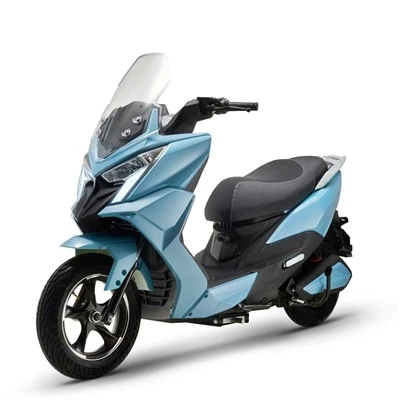
So, if you’re ready to make the switch and start saving, there’s no better time than now. Our team works with commuters, small businesses, and everyone in between to find the right e-bike for their needs, whether you’re looking for a sleek city commuter, a cargo e-bike for errands, or a rugged model for longer rides. We offer flexible financing options, so you can get the e-bike you want without breaking the bank, and our after-sales support team is here to help with maintenance, repairs, or any questions you have along the way. If you’re tired of throwing money at gas, insurance, and car repairs, and you want a more affordable, convenient way to get around, reach out to our team today to talk through your transportation needs and find the perfect e-bike for you.
Electric Motorcycle References
AAA. (2024). Your Driving Costs: 2024 Edition. American Automobile Association.
National Association of Insurance Commissioners. (2023). Auto Insurance Report.
U.S. Department of Energy. (2024). Electric Vehicle Charging Cost Calculator.
League of American Bicyclists. (2023). E-Bike Cost Savings Analysis for Urban Commuters.
Linyi Lanshan Merco Electric Bicycle Factory
Linyi Lanshan Merco Electric Bicycle Factory is one of the most professional electric bicycle manufacturers and suppliers in China, also supports customized service. Please feel free to wholesale CE approved electric bicycle made in China here and get pricelist from our factory. 1 years warranty is available.
Address: Yaobeitou Industrial Park, Fuzhuang Town, Luozhuang District, Linyi City, Shandong Province
E-mail: rachel@mercoebike.com
WebSite: https://www.mercoebike.com/
