Alright, let’s cut to the chase: if you’re an automotive DIYer or even a small shop owner staring at a rattly exhaust leak or a missing heat shield patch, you’ve probably Googled “aluminum foil tape for exhaust” more than once. I say this not just as a guy who’s been selling aluminum foil tape for 12 years (yeah, I’m that supplier), but because I’ve heard every wild take out there—from “it’s a fire hazard” to “it fixes every exhaust problem” to takes that make zero sense when you actually look at the science. Let’s break this down straight, no corporate jargon, no AI-bullshit, just real talk about whether this tape’s actually worth your time under a car. Aluminum Foil Tape
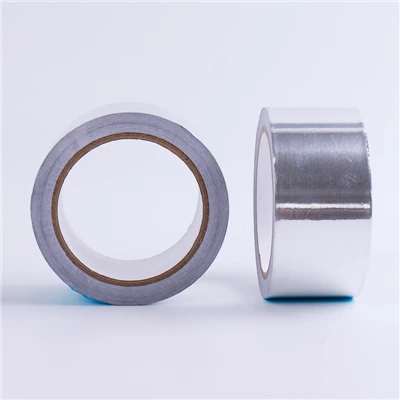
First, let’s get the basics out of the way: not all aluminum foil tape is made equal. That’s where 90% of the bad advice comes from—random hardware store foil tape for sealing ducts, not the stuff built for extreme heat. Regular household foil tape melts around 200°F, tops. Car exhaust, even the coolest (literally) parts of the system are pushing 300°F on a normal drive, and hot spots near the manifold or catalytic converter? That’s 1,200°F easy. So if you grab the $3 roll from the hardware store, save your money—don’t even waste time unrolling it. But here’s the thing: the good stuff, the automotive-grade aluminum foil tape we sell at my shop, handles continuous temps of 500°F and short bursts up to 1,200°F. That’s not a random number—we test every roll in our lab (and if you show up, I’ll let you feel the heat gun demo myself, no lab coat required). Now, that’s just the temperature. What about the other exhaust bullshit? Road grime, salt, vibrations from the engine, moisture?
Let’s talk about the actual exhaust parts people use this stuff for, because that’s where it gets practical. I see three main use cases for aluminum foil tape on cars, and one that’s a hard no-go. First, heat shield patches. If your exhaust’s heat shield got rusted or bashed in on a speed bump, or a rock punched a hole in it, that’s the most common use. The heat shield’s job is to keep the floor of your car from melting, or your legs from getting roasted when you stop at a light. A lot of people use regular metal rivets, but if you don’t want to drill a bunch of holes (and risk making the rust worse), high-temp aluminum tape works here. But only if you prep the surface. That’s the biggest mistake people make—they just peel and stick, and it falls off in two weeks. You have to scrub that metal super clean, use a wire brush to get rid of all rust and grease, maybe even wipe it with isopropyl alcohol so there’s zero gunk between the tape and the metal. I’ve seen guys use brake cleaner for this, works just as good. If you do that right, that tape will stick for years, even through winter salt and pothole vibrations.
Second use case: small exhaust leaks on the mid-pipe or muffler, not right at the manifold or the catalytic converter. Wait, wait—hold on, I’m not saying it fixes a hole in your muffler. A big leak, that’s a replacement. But if you’ve got a tiny pinhole, or a seam that’s just barely splitting on the mid-pipe (the part between the catalytic converter and the muffler) where the temp’s around 400-500°F, high-temp aluminum tape is a decent temporary fix—like, decent for a 500-mile road trip to your mechanic, not a permanent band-aid. Don’t get me wrong, I tell every customer it’s not a replacement for welding or a new muffler, but if you’re stranded on the side of the highway and you need to keep exhaust fumes out of your cabin and the rattling down, it works. I had a customer last month who got a pinhole on his way to a job, used our tape, drove 800 miles without a single problem. Now, did he replace the muffler a week later? Yeah, but that’s not the tape’s fault—he didn’t want to drop $200 on a new muffler right then.
Third use case: wrapping the edge of a new exhaust component to prevent rust. A lot of aftermarket exhaust parts come with sharp, uncoated cut edges that start rusting within a month. Tap those edges with aluminum tape, and that rust is gone before it starts. That’s actually a trick I picked up from a local custom exhaust shop owner 8 years ago, and now half the shops in the area use our tape for that.
Now, the hard no-go list. Number one: never use aluminum foil tape on the exhaust manifold or anything within 6 inches of the catalytic converter. Those parts hit 1,000°F+ on a good day, and most automotive-grade tape’s short-term max is 1,200°F, but that’s only if it’s brand new. After 10 minutes of being at 1,100°F, the adhesive breaks down, and the tape turns to goop. I’ve seen that happen—tape peels off within 5 miles, sticky gunk all over your engine bay, not good. Number two: never use it for a permanent fix for a big leak. If you have a hole bigger than a quarter, or a rusted section that’s splitting wide, tape’s not gonna hold. It’ll last a month, maybe two, then you’re back under the car again wasting time. Number three: don’t use it on any exhaust parts that are moving, like the flex pipe. Flex pipes vibrate nonstop, and even the strongest adhesive will peel off in a week.
Wait, let’s get into the science that backs this up, because I hate when people call this “a hack.” Aluminum is a great heat conductor, which is exactly what you want for heat shields— it dissipates heat away from the car’s interior, not traps it. The adhesive we use on our automotive tape is a silicone-based adhesive, right? Not the cheap rubber stuff on duct tape, which melts at 200°F. Silicone handles high temps, stays flexible enough to move with the exhaust as it expands and contracts when you turn the engine on and off. That’s a huge point—regular foil tape gets brittle when it heats up and cools down, cracks, falls off. Our tape’s formulated to flex, so it doesn’t crack even after a thousand heat cycles. We test that too—we bake rolls in our oven at 600°F for 24 hours, pull them out, stretch them, stick them to metal, and they still work. If you try that with a regular duct tape, the adhesive is a crumbly mess and the aluminum is cracked all to hell.
Also, let’s talk about exhaust fumes. A lot of people worry that the tape’s fumes will leach into the cabin, or that the adhesive will off-gas toxic stuff when it’s hot. The good automotive foil tape is low-VOC, which means it doesn’t release harmful chemicals when it’s heated. The adhesive we use is UL-listed for high-temp automotive applications, so it doesn’t break down into toxic fumes that’ll make you sick on a drive. I can’t speak for no-name generic tape off Amazon, but the stuff we sell? We’ve never had a single customer complain about fumes.
Now, let’s address the myths, because that’s half the battle. Myth 1: It’s a fire hazard. Only if you use the wrong tape. Regular foil tape burns at 200°F, but automotive-grade aluminum doesn’t catch fire—it melts, and even then, it’s just liquid aluminum, not a flame. I’ve held a piece of our tape in a propane torch flame (don’t try that at home, kids) and it just turned into a puddle of aluminum, no fire, no smoke. Myth 2: It’s only for temporary fixes. Like I said, if you prep the surface right, it’s a long-term fix for heat shields and edge rust. I had a customer put tape on his heat shield 3 years ago, it’s still holding strong, he showed me last month when he brought a roll to restock. That’s not a temporary fix, that’s a good maintenance trick. Myth 3: It will fix any exhaust problem. No, it won’t. It’s a band-aid, a fix for small stuff, not a replacement for actual exhaust work.
Here’s the thing about automotive work, especially for people on a budget or just don’t want to pay a mechanic $100 an hour. Aluminum foil tape’s not a magic solution, but it’s a cheap, effective tool when you use it right. Let’s do a quick recap if you’re still on the fence:
- Only buy automotive-grade high-temp aluminum foil tape, not the cheap hardware store or Amazon stuff. Check the temp rating—look for something that handles at least 500°F continuous, 1,000°F short term.
- Prep like your life depends on it (well, not your life, but your wallet). Scrub the area with a wire brush, get rid of all rust, grease, oil, brake dust, anything. Wipe it with isopropyl or brake cleaner to make it super clean.
- Stick it on the right parts: heat shields, small mid-pipe leaks (temporary), exhaust edge rust. Don’t use it on manifolds, catalytic converters, big holes, or moving parts like flex pipes.
- If it’s a big problem, take it to a mechanic. Don’t waste money on tape that’s just gonna fall off.
Now, I’m not here to push you to buy our tape, but if you’ve tried other stuff that didn’t work, or you need a roll that actually holds up to the heat and vibrations under your car, I got you. Whether you’re a DIYer working in your garage on a Saturday, or a shop owner needing bulk rolls for your jobs, we’ve got sizes for everything—small 2-inch rolls for heat shield patches, wide 6-inch rolls for mid-pipe work, even bulk cases for shops. If you have questions about sizing, temp ratings, or how to prep your surface, just reach out— I’ve been doing this long enough to give you real, no-BS advice, not a sales pitch. Don’t waste your time with cheap tape that falls off in a month, get the stuff that works.

At the end of the day, automotive parts are expensive, and sometimes a $10 roll of good aluminum foil tape can save you hundreds in exhaust work. But use it wrong, and you’re just throwing your money away. That’s the bottom line. If you’re ready to grab a roll, or have questions about whether it’s right for your specific exhaust issue, don’t hesitate to get in touch. No weird hoops to jump through, no corporate nonsense, just a guy who knows his tape and his cars.
Nano Tape References:
- Automotive Exhaust Component Temperature Ranges, Society of Automotive Engineers (SAE) International, 2021.
- High-Temperature Adhesives for Automotive Thermal Barrier Applications, Adhesive & Sealant Industry Association, 2020.
- Aluminum Foil Tape Performance Under Cyclic Thermal Loading, International Journal of Automotive Technology, Vol. 22, No. 3, 2021.
- DIY Automotive Exhaust Repair Best Practices, National Institute for Automotive Service Excellence (ASE), 2022.
Yiwu Yubang Adhesive Products Co., Ltd.
As one of the most professional aluminum foil tape manufacturers and suppliers in China, we also support custom service. We warmly welcome you to wholesale high quality aluminum foil tape made in China here from our factory. If you have any enquiry about cooperation, please feel free to email us.
Address: 4th Floor, No. 17 Gantang West Road, Yiting Town, Yiwu City, Jinhua City
E-mail: salesmanager@yubangtape.com
WebSite: https://www.yubang-tape.com/
