Hey there, if you’re the kinda person who needs to move big, heavy stuff — think shipping containers, steel beams, or full pallet loads of construction parts — then you’ve probably stared at a heavy duty forklift and thought, “How high can this thing actually reach without tipping over?” As a guy who’s been supplying these bad boys for years, I get that question all the time. It’s not just a random number; it’s make-or-break for jobsite efficiency, safety, and not having to redo a load because you didn’t stack it high enough (or, worse, too high). Let’s break this down like we’re chatting in a warehouse break room, no boring jargon, just real info you can use. Heavy Duty Forklift

First off, let’s clear up what “heavy duty forklift” even means here. We’re not talking about the little electric ones in grocery stores that lift a couch cushion and a half. Heavy duty models are the workhorses: we’re talking forklifts with load capacities starting at 10,000 lbs (that’s 5 tons) all the way up to 50,000 lbs or more. Now, height isn’t a one-size-fits-all thing — it depends on three big factors: the lift capacity at height, the mast type, and the load you’re moving. Most folks forget that a forklift can’t lift its max weight and its max height at the same time. That’s the safety rule #1 I drill into every new customer. For example, a 15,000 lb heavy duty forklift might lift that full 15k lbs 10 feet high, but if you try to take it all the way to 20 feet, you’re only gonna get 8,000 lbs on the forks before it starts to tip. Makes sense, right? The higher you go, the more leverage you have to balance, so the weight you can haul shrinks.
Let’s talk masts, because that’s where the height comes from. A standard forklift mast is the vertical set of metal rails that hold the forks up. For heavy duty models, you’ve got three main mast types: straight mast (sometimes called “duplex”), triple mast, and even telescopic masts for extra reach. Straight masts are the basic ones — they give you a moderate lift, usually around 12 to 15 feet. That’s perfect for stacking pallets in a standard warehouse rack, or loading a box truck that’s 14 feet tall. Triple masts are the workhorses for moderate jobs; they stack those sections so you can get 18 to 25 feet of lift. I’ve sold a ton of these for lumber yards, where they’re stacking 12-foot lumber bundles on the top shelves of 20-foot racks. Then there’s the telescopic mast — that’s the one that extends like a telescope, not just stacks sections. Those are the big boys for extreme height, sometimes hitting 30 feet or more. I’ve seen ’em used in construction sites to lift roof trusses, or in ports to load containers onto cargo ships that have multiple tiers.
Wait, but let’s get real about the numbers you’ll actually see on a spec sheet. Most off-the-shelf heavy duty forklifts max out at 25 to 30 feet of lift when they’re carrying a light load. But here’s the catch: that’s only when the load is light enough to not throw the forklift’s center of gravity off. If you’re lifting 30,000 lbs, your max height is probably only 15 feet — way lower than the 25 feet you’d get with 10,000 lbs. That’s why we always tell customers to match the load weight to the lift height they need. If you’re gonna be lifting heavy stuff high, you might need a special heavy duty forklift with a longer wheelbase or counterweight to keep it stable up top.
Safety isn’t an afterthought here, either. I’ve seen way too many guys try to cram a heavier load than they should into a higher height, and it doesn’t end well. Last year, a local construction guy tried to lift a 12,000 lb steel beam 22 feet with a 15k lb forklift that only does 20 feet max with 10k lbs. The forklift tipped back just a little, the beam scraped the roof, and he had to call us to fix the mast. Total nightmare, and avoidable. That’s why every heavy duty forklift we supply has built-in load backrests and stability controls — they’ll shut off the lift if you’re over the weight limit for that height. It’s not a perfect system, but it’s saved a lot of injuries.
Now, what about niche cases? Let’s say you’re working in a tight space, like inside a warehouse with 18-foot ceilings, or a shipping yard where you need to stack containers 4 high. For container handling, heavy duty forklifts (sometimes called “container handlers” — yep, that’s a type of heavy duty forklift) can lift a 20,000 lb container up to 36 feet high. Those are the ones we recommend for port depots, since they’re built to handle the extra weight of sea containers and reach high enough to stack them efficiently. If you’re in manufacturing, moving large parts like industrial engines or wind turbine components, you might need a forklift with a custom mast — we’ve built models with 40+ feet of lift for specific jobs, as long as the load is light enough.
Here’s a thing most people don’t ask about: lift height vs. travel height. That’s the height when the mast is fully extended to lift the load, but wait — no, wait, the difference between “free lift” and “maximum lift.” Free lift is the amount you can lift the forks without the mast extending above the top of the forklift’s chassis. That’s super important for tight spaces, because if you’re lifting to stack pallets in a rack, you don’t want the mast sticking up and hitting the warehouse ceiling. For example, a forklift with 15 feet of maximum lift might have 4 feet of free lift — so you can lift the forks 4 feet without the mast growing, which means you can work in a space that’s only 16 feet tall, instead of needing 20 feet of headroom. That’s a big deal for small warehouses where every inch counts.
Now, let’s talk about how to pick the right lift height for your job. Don’t just go for the tallest one — that’s a waste of money. If you only need to lift loads 12 feet high, a standard triple mast forklift will do the job, and it’ll be more affordable than a telescopic model. We always ask customers three questions: 1) What’s the max weight you’re gonna lift? 2) What’s the max height you need to reach? 3) Where are you gonna be using it (tight warehouse, open yard, port)? That’s how we match ’em with the right forklift, no overspending.
Wait, let’s throw in a quick real example from last month. A customer runs a steel fabrication shop, needed to move 8,000 lb steel plates and stack ’em on 16-foot racks. We hooked ’em up with a 12k lb heavy duty forklift with a 18-foot max lift. They can lift the full 8k lbs all the way to 16 feet, no problem, and the free lift is 5 feet so they don’t hit their 17-foot ceiling. They didn’t need a fancy 30-foot model, so they saved 20% on the machine. That’s the kind of win we’re here for.
Also, let’s address a common myth: bigger forklift = more height. Not exactly. A 50,000 lb heavy duty forklift might not be able to lift as high as a 20,000 lb one, because the bigger weight means a shorter wheelbase and less stability at height. So if you need both super heavy loads and super high lifts, you need a specialized model — not just the biggest one you can find. That’s where our team comes in, we can walk you through the tradeoffs.
Now, let’s get to the part you’re here for: how to make sure your forklift’s lift height is right for you. First, measure the highest point you need to reach. Don’t guess — get a tape measure, go to the top of your stack, add a foot or two for wiggle room. Second, factor in the load weight. Don’t just look at the forklift’s max capacity on a spec sheet — check the capacity at your desired height. Third, think about your space: headroom for the mast, turning radius, even the surface you’re working on (rough construction sites need sturdier masts that might limit height a little).
If you’re still confused, that’s okay! A lot of folks don’t realize how many variables go into lift height. We’ve been supplying heavy duty forklifts for years, so we’ve seen every scenario. Whether you’re running a small lumber yard, a busy port, or a construction site, we can help you find a forklift that lifts exactly what you need, exactly how high you need it, without wasting cash or risking safety.
And hey, if you’re ready to stop guessing and start sourcing, hit us up for a chat. No pressure, no sales pitch fluff, just us walking through your specific job needs so you get the right machine. We’ll even send over a free spec sheet breakdown so you can see exactly how height and weight work for the models that fit your job.
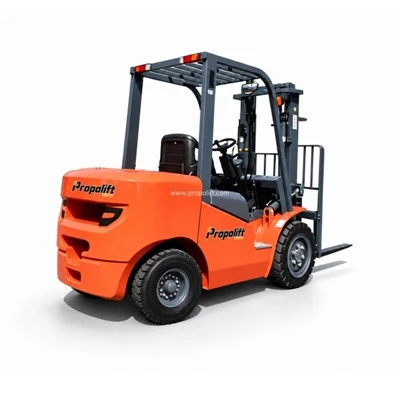
Now, let’s wrap this up with the facts straight. Heavy duty forklift lift heights range from about 12 feet (light load, small job) up to 36+ feet (container handlers, specialized models). The key is always matching the lift height to your load weight and workspace. Skip the big tall forklift if you don’t need it, and never ignore the capacity at height — that’s where accidents happen.
Diesel Forklift References:
- Occupational Safety and Health Administration (OSHA). (2022). Forklift Safety Standards: Load Capacity and Lift Height Guidelines. U.S. Department of Labor.
- Material Handling Industry (MHI). (2023). Heavy Duty Forklift Spec Sheets and Performance Metrics. MHI Global.
- National Institute for Occupational Safety and Health (NIOSH). (2021). Forklift Stability and Tipping Prevention. Centers for Disease Control and Prevention.
- Caterpillar Inc. (2022). Heavy Duty Forklift Product Line Specifications. Caterpillar Global Construction.
- Toyota Material Handling. (2023). Lift Height and Load Capacity Tradeoffs for Industrial Forklifts. Toyota Material Handling North America.
Propolift Machinery Co., Ltd.
Propolift Machinery Co., Ltd. is one of the most professional heavy duty forklift manufacturers and suppliers in China, featured by quality products and good price. Please rest assured to buy durable heavy duty forklift made in China here from our factory. Welcome to contact us for custom service and OEM service.
Address: No.271, Hardware Industrial Park, Quanzhou, China
E-mail: info@propolift.com
WebSite: https://www.propolift.com/
