Hey guys, let’s cut to the chase—if you’re running an auto parts shop, a fleet maintenance bay, or even just tinkering in your garage, you’ve probably stared at a worn brake drum and wondered, “Can I just resurface this instead of dropping cash on a new one?” As a brake drum supplier, I get this question all the time—customers come to me panicking because their old drum’s scored, warped, or looks like it’s seen better days, and they’re trying to save a buck. But here’s the thing: it’s not a yes/no answer. It’s way more nuanced than that, and I’ve seen way too many people mess this up (both the guys who resurface when they shouldn’t and the ones who buy new when they could’ve kept a solid part going). Automobile Brake Drum
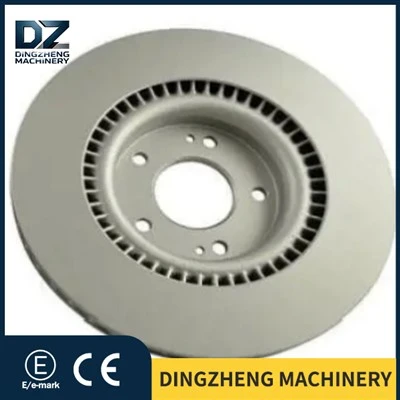
First, let’s do the quick science behind brake drums to set the stage, no boring textbook jargon, I promise. Brake drums are those heavy, round metal hat things that rotate with your wheel, right? When you hit the brakes, the shoes push outward, pressing against the inner surface of the drum. That friction slows your car down. Over time, that inner surface wears down, gets grooved, or heats up so much it warps (bad). The maximum thickness of a brake drum is super important here—every drum has that number cast right onto it, usually somewhere on the edge, like “Max Thickness: 10.0 mm” or whatever. You can’t remove metal beyond that max, because if you do, you weaken the whole drum. It’ll crack way easier under pressure, and that’s a huge safety risk. No one wants a brake failure on the highway because you cut a drum too thin.
So, when is resurfacing actually okay? Let’s start with the low-stakes stuff. If your drum’s only got light scoring—like, tiny surface scratches from dust, brake pad particles, or old pad material wearing off—resurfacing is totally fine. It’s basically smoothing those scratches out so the brake shoes make full, even contact. I’ve had customers with daily drivers come in with drums that have 0.2mm of light scoring, and we send them off to get turned on a brake lathe, and they’re good for another 50k miles easy. Also, if the drum’s slightly warped (you’ll feel this as a pulsing in the brake pedal when you stop hard), resurfacing can fix that too. Warpage usually happens from overheating—like riding the brakes downhill, or constant stop-and-go city driving for years—so taking a tiny bit of metal off the high spots evens it out. The key here is the amount of material you remove. If the lathe only takes off 0.1-0.3mm, that’s nothing, and it’s totally safe.
But here’s where a lot of people go wrong. If your drum’s already close to the minimum thickness (yes, there’s a min too—usually cast on the opposite side of the max mark, like “Min Thickness: 9.2 mm”), resurfacing is a hard no. Wait, why’s that min so important? Let’s break it down. Brake drums are made of cast iron, which is strong but can’t handle a lot of stress when it’s too thin. When you press the brake shoes outward, the drum flexes a little to transfer that friction. If it’s already at minimum thickness, removing even a little extra metal just makes it flimsy. Over time, that flex causes tiny cracks, and suddenly you’re driving with a drum that’s about to fall apart. I had a customer a few years back—he’s a fleet manager for a small delivery company—who tried resurfacing a drum that was already at 9.1mm (min was 9.2). A week later, one of his vans’ rear brakes locked up on a busy main road, and he totaled a side mirror and almost hit a cyclist. He came back to me red-faced, and I had to sell him four new drums for the whole axle. That’s the kind of headache we all want to avoid.
Also, if the scoring is deep—like, you can run your fingernail (or a coin, if you’re fancy) into the groove—resurfacing might not even work. Wait, why? Because if the groove is deeper than the material a lathe needs to remove to smooth the surface, you’d have to take off way too much metal. Let’s say you’ve got a groove that’s 0.5mm deep, and the lathe needs to remove 0.4mm to get a smooth surface. That would leave your drum at (max thickness) minus 0.4mm, which might put it below min. In that case, it’s not worth it. I always tell people: if the scoring is so bad that you can feel it running your hand over the inner drum surface, skip resurfacing. Buy new. You’re wasting time and risking safety for no reason.
Wait, another thing I see all the time: people resurface only one drum, not the axle pair. Brakin’ system balance is everything, right? If you resurface the left rear drum but the right rear is still thick and warped, the brakes will grab unevenly. That’ll pull your car to one side when you stop, or cause the brakes to wear unevenly too. I tell every customer: if you’re resurfacing, do both drums on the same axle. And make sure both are within tolerance. If one’s already below min, replace both—don’t half-ass it. That’s how you get expensive, avoidable problems.
Now, let’s talk about the myths. I hear so many people say, “Resurfacing is cheaper than buying new.” Yeah, sometimes. But not always. Let’s do the math. A brake drum resurface at a local shop is usually like $20-$30 per drum. New drum from us is, say, $40-$50 each. So for two drums, resurface is $40-$60, new is $80-$100. That’s a savings. But wait—what if your drum is already below min? Then you’re looking at $40-$60 for nothing, and you still have to buy new drums. So you wasted that resurface cash. Also, old drums—wait, should you resurface a used drum from a junkyard? No. Junkyard drums have no idea how much material’s already been removed. They could be at min thickness, and you’d have no way of knowing until you try to resurface them. I’ve had customers buy a “cheap used drum” for $10, try to resurface it, and the lathe stops halfway because it’s already at min. Total waste of $10 and the shop’s time. Not worth it.
Another myth: resurfacing makes brakes better than new. No. New drums are cast to exact specs, super smooth, no hidden porosity (tiny air pockets in the cast iron that can weaken it). When you resurface a drum, you’re cutting into the cast iron, so you’re removing the outer layer which is the hardest part. The new surface is a little softer, so it might wear faster. That’s why I always recommend resurfacing only when absolutely necessary, and for daily drivers that don’t do a lot of heavy braking. For trucks, vans, or cars that tow stuff, new drums are way more reliable. I had a tow truck owner come to me last year—he was resurfacing his drums every 20k miles, and he kept having brake fade when pulling heavy loads. Switched to new drums, and now he only has to replace them every 80k miles. Saved him money in the long run.
Wait, let’s get back to the science to make sure this isn’t just rambling. Cast iron brake drums are designed to have a specific surface hardness. The outer skin is quenched during manufacturing, so it’s hard and resistant to wear. When you resurface, you’re cutting away that hardened layer. That’s why a resurfaced drum’s inner surface might have a slightly different friction coefficient than a new drum. For passenger cars, that’s usually not a big deal. But for performance vehicles or heavy-duty applications, that tiny difference can add up to less stopping power. So that’s another thing to consider.
Also, what about rust? If your drum is surface-rusted, like a light coat after sitting in the rain or in a damp garage, that’s totally fine. A good resurface will remove all that surface rust, no problem. Deep rust that’s flaking or pitting, though—same as scoring. If the pits are deep, you’ll have to remove too much material, so skip resurfacing.
Okay, so let’s make a quick checklist so you don’t have to remember all this. When should you resurface a brake drum? 1. Light scoring only, no deep grooves you can feel. 2. Drum is above the minimum thickness (double-check that cast mark—measure it if you have a caliper, don’t just guess). 3. The drum isn’t severely warped (pedal pulse is minor, not violent). 4. You’ll resurface both drums on the same axle for balance. When should you just buy new? 1. Drum is at or below minimum thickness. 2. Deep scoring, grooves, or deep pits. 3. Severe pedal pulse, even after measuring thickness. 4. It’s a heavy-duty application (tow truck, work van) where new drums are more reliable long-term.
Now, as a brake drum supplier, I gotta be real with you. I don’t make more money if you buy new vs resurface. I make money when you need quality drums that are safe and last. So if you come to me asking whether to resurface or buy new, I’ll tell you the truth, not push the expensive option. I’ve seen too many people cut corners on resurfacing and end up back needing new drums anyway, plus dealing with safety issues. That’s not good for anyone—you, your car, or me as a supplier who wants repeat customers.
Wait, one last quick tip: if you do decide to resurface, make sure you take it to a reputable shop. A bad brake lathe job can mess up the drum. Like, if the lathe isn’t calibrated right, it’ll make the surface uneven, which will cause more brake pulsation. I had a customer who resurfaced his drums at a cheap shop, and now his brake pedal pulses worse than before. He had to come buy new drums anyway because the shop messed up the resurface. So don’t just go to the cheapest place—go to someone who knows their way around brake systems.
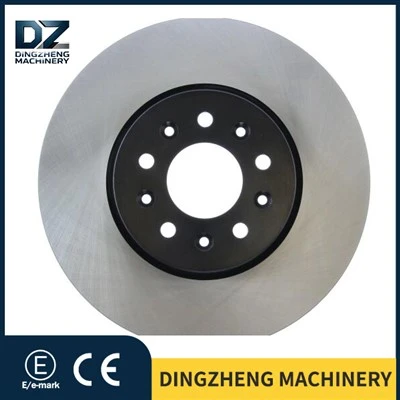
At the end of the day, brake drum resurfacing isn’t a magic fix. It’s a tool, like any other auto part repair. It works in the right scenario, and it’s a waste (and risk) in the wrong one. If you’re not sure whether your drum is resurfaceable, hit us up—we’re here to help, no pressure. We can answer your questions, give you specs, and make sure you make the safest, most cost-effective choice for your vehicle. Don’t gamble with your brakes.
BYD Series Brake Discs References:
- Automotive Brake Systems: Design, Selection, and Performance, 2nd Edition, SAE International
- Brake Technology: A Guide to Light Vehicle Brake Systems, Institute of the Motor Industry
- Consumer Reports, “Brake Repair: When to Resurface Drums or Replace Them”
Laizhou Dingzheng Machinery Co., Ltd.
As one of the most professional automobile brake drum manufacturers and suppliers in China, we’re featured by quality products and good price. Please rest assured to buy cheap automobile brake drum for sale here from our factory. We also accept customized orders.
Address: Luan Jia village, Tushan town, Laizhou city, Shangdong
E-mail: AMY@cndingzheng.com
WebSite: https://www.dingzhengbrake.com/
