If you’re involved in machining, you’ve probably heard the term “thread cutting” thrown around on shop floors, but if you’re new to CNC lathes, it can feel a little overwhelming to break down exactly what it means and why it matters. As a CNC lathe supplier, I’ve worked with thousands of machinists—from small job shop owners just starting out to production managers at large manufacturing facilities—and the number one question I get when it comes to threading is: Why do I need a dedicated CNC lathe process for this, instead of just drilling and tapping by hand? Let’s walk through it, step by step, no jargon overload, just real-world insight from someone who’s sold, serviced, and stood behind CNC lathes every day. CNC Lathe
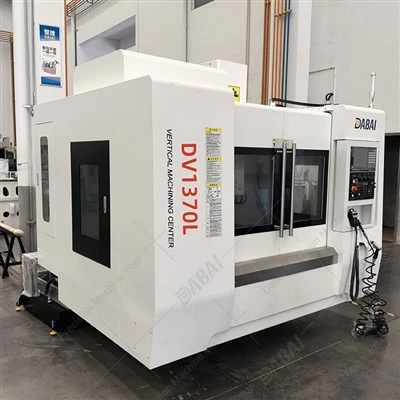
First, let’s start with the basics: Thread cutting is the process of creating a helical ridge on a cylindrical external (like a bolt) or internal (like a nut) surface to form a screw thread. On a manual lathe, this was done by adjusting gears to match the thread pitch you needed, hand-feeding the tool, and relying on your operator’s experience to avoid errors. But with a CNC lathe, this process is automated, consistent, and far more precise. That’s the big difference, and it’s why most manufacturers now switch to CNC for all high-volume or high-precision threading work.
I remember a customer a few years back, a small aerospace job shop, who was cutting threads on 100 alloy steel bolts a day with a manual lathe. They were spending extra time rethreading 10 to 15 bolts every shift because the pitch would shift mid-cut, or the tool would wear unevenly, leading to mismatched threads that couldn’t mate with standard fasteners. They reached out to us because they needed a lathe that could handle their threading without the downtime. After we set them up with a basic CNC lathe and walked their operators through the threading cycle, they cut their scrap rate to less than 1% and increased their daily production by 30%. That’s the kind of real impact thread cutting on a CNC lathe has, and it’s not just for aerospace—we’ve seen the same results in automotive, plumbing, even consumer goods manufacturing.
Now, let’s get into how thread cutting works on a CNC lathe, because it’s not just “running a tool around a cylinder.” The core of it is the CNC’s ability to synchronize two things: the rotation of the workpiece (the spindle) and the linear movement of the cutting tool (the X and Z axes). This synchronization is non-negotiable. If the spindle turns one full revolution, the tool has to move exactly one pitch along the Z axis. Pitch, by the way, is the distance a thread advances in one full turn of the workpiece—so for a 1/2-13 UNC thread, that means the tool moves 1/13 of an inch every time the spindle spins once. If that synchronization is off, you get a mismatched thread, called a “jump,” and the whole part is ruined.
CNC lathes do this with something called a position feedback system, usually encoders on the spindle and the axes. When you program a thread cut, you input the pitch, the type of thread (UNC, UNF, metric, etc.), the depth of each cut, and whether it’s external or internal. The controller takes that data and tells the spindle exactly how fast to spin, and how far the tool has to move along Z to match each spin. There’s no guesswork, no gear adjustments like on manual lathes—you just input the numbers, and the machine does the work. That consistency is why CNC thread cutting is so valuable for production: every thread on every part will be identical, even if you run 10,000 parts.
Wait, a common mistake new machinists make with CNC threading is trying to cut the full depth of the thread in one pass. Let me tell you from experience—don’t do that. Threads have a defined profile, usually a 60-degree angle for standard UN threads, and the depth (called the minor diameter) depends on the thread size. If you try to plunge the tool straight into the full depth in one cut, you’ll put way too much pressure on the tool, it will bend or break, and you’ll get a rough, inaccurate thread. Instead, CNC threading uses multiple “passes,” each a little deeper than the last. The tool will make a roughing cut, then a few finishing cuts to clean up the profile, each time adjusting the Z axis to avoid collision at the start and end of the thread.
That’s where another key feature comes in: the “threading lead in” and “threading lead out.” At the start of the thread, before the tool reaches the workpiece, the spindle is already spinning at full speed, and the tool is moving along Z to catch up. That lead in gives the controller time to synchronize the spindle and tool movement, so the first cut is accurate, not off. At the end of the thread, you need a lead out: a small distance where the tool can stop moving forward, retract a little, and pull away from the workpiece without crashing into the thread’s end face. A lot of new operators forget to program these, and they end up with a short, uneven thread that doesn’t meet specifications.
Now, let’s break down the two main types of thread cutting on a CNC lathe: external and internal. External threads are the ones you see on bolts, shafts, or pipes—cut on the outside of a cylindrical part. They’re usually a little easier because the tool is moving outward as it cuts, and there’s less risk of chip buildup getting trapped. Internal threads, though, cut on the inside of a hole, like a nut or a threaded boss in a engine block, are trickier. The tool is working inside a confined space, chips can get stuck, and you have to make sure the hole is the right size before you start—too small, and the tool can’t get in; too big, and the thread will be too shallow. We always recommend that new machinists practice internal threading first on a test workpiece, because it’s easy to damage the tool or the part if you don’t get the program right.
Another thing that sets CNC thread cutting apart is its ability to handle different thread types easily. If you need a metric M10x1.5 thread one day, and a 3/8-16 UNC the next, you don’t have to change any gears or adjust anything—you just update the pitch in your program. That flexibility is a huge benefit for job shops that run small batches of different parts, or custom manufacturers that need to produce one-off parts with unique thread profiles. We’ve had customers bring us custom drawings for things like specialized pipe fittings with non-standard threads, and with a CNC lathe, we can program that thread in a matter of minutes, where on a manual lathe it would take hours to adjust gears and test cuts.
Now, let’s talk about tools, because a bad tool will ruin even the best CNC thread cutting process. For external threading, you use a threading insert, usually made of carbide, since carbide is tough enough to handle the pressure of cutting into metal repeatedly. For internal threading, you need a smaller insert, often with a longer shank to reach into the hole. Tool material matters too—if you’re cutting a soft material like aluminum, a high-speed steel insert works, but for tough materials like stainless steel or titanium, you need a coated carbide insert to resist wear. We always supply our CNC lathe customers with a starter set of threading tools, and we offer training on how to choose the right insert for their material, because even a small mistake here can lead to broken tools, scrap parts, and downtime.
I also want to address a common myth: some people think CNC thread cutting is only for high-volume production, but that’s not true. Even if you only need 50 parts, CNC threading is faster and more accurate than manual. We had a customer a few months ago who was making custom bike parts, and he only needed 20 threaded axle shafts for a prototype. Using his old manual lathe, it took him 2 hours to make each shaft, with a few that were too uneven to use. With his new CNC lathe, he programmed the thread in 10 minutes, and all 20 shafts were perfect in under an hour. That’s the kind of time savings that adds up, even for small batch runs.
Now, if you’re thinking, “This sounds great, but how do I get started with CNC thread cutting?” The first step is making sure your CNC lathe is set up properly. Most modern CNC lathes come with a dedicated threading cycle, called a G-code (like G76 for canned threading, which is the standard cycle for multi-pass thread cuts). If your machine is older, you might need to update its software to support that, or work with a service technician to calibrate the spindle encoder for accurate synchronization. That’s one of the things we offer as a supplier: not just the machine, but installation, calibration, and operator training to make sure you’re getting the most out of your thread cutting capabilities.
One mistake I see a lot is machinists not maintaining their CNC lathe’s thread cutting system. The encoders, the tool holders, and the spindle bearings all need regular maintenance to keep synchronization accurate. If an encoder is worn out, it might not track the spindle rotation correctly, leading to thread jumps. If a tool holder is loose, the tool will vibrate, leading to a rough thread. We tell all our customers to do monthly checks on their threading setup: inspect the inserts for wear, tighten tool holders, and test a sample thread every few shifts to make sure everything is still aligned. It’s a small step, but it prevents a lot of headaches down the line.
Let’s wrap this up with why thread cutting on a CNC lathe matters for your business. Whether you’re making bolts for construction, engine parts for cars, or custom fasteners for medical devices, thread quality is non-negotiable. A faulty thread can cause a fastener to loosen, leading to equipment failure, or a part to not fit, leading to scrap and lost time. CNC thread cutting eliminates the human error that comes with manual threading, increases production speed, and reduces scrap rates. That’s why so many manufacturers—big and small—are switching from manual lathes to CNC models for their threading work.
If you’re currently struggling with inconsistent threads, high scrap rates, or slow production on your threading jobs, we can help. Our team works with machinists of all experience levels, from first-time CNC users to seasoned production managers, to match you with a CNC lathe that fits your needs, whether you’re running small prototype batches or high-volume production runs. We also offer ongoing support, training, and replacement parts to make sure your thread cutting process runs smoothly every day. Don’t let threading be a bottleneck in your shop—let us help you upgrade your setup and see the difference precise, consistent CNC thread cutting can make.
CNC Lathe References
- Smid, P. (2010). CNC Programming Handbook (3rd ed.). Industrial Press.
- DeGarmo, E. P., Black, J. T., & Kohser, R. A. (2012). Materials and Processes in Manufacturing (11th ed.). John Wiley & Sons.
- National Aerospace and Defense Contractors Accreditation Program (NADCAP). (2021). Special Process Requirements for CNC Machining.
- Machine Metrics. (2022). “Thread Cutting Accuracy in Manual vs. CNC Lathes”. Machining Science Journal, Vol. 45, No. 2, pp. 78-85.
- Sandvik Coromant. (2023). Threading Tool Selection Guide for Turning Operations.
Dabai Precision Machine Tool (Jiangsu) Co., Ltd.
As one of the most professional CNC lathe manufacturers and suppliers in China, we’re featured by quality products and good price. Please rest assured to buy advanced CNC lathe for sale here from our factory. We also accept customized orders.
Address: No. 66-1, Zhenhu North Road, Hudai Town, Binhu District, Wuxi City
E-mail: elaine@dabaicnc.com
WebSite: https://www.cnc-dabai.com/
