If you’re in the natural gas industry, you know that gas flow rates aren’t one-size-fits-all. One day you might be moving a steady, low volume through a remote well pad, and the next you’re ramping up to meet a city’s peak heating demand. That’s where our natural gas compressor series comes in—no fancy jargon, just gear built to roll with whatever flow rate you throw at it. Let’s break down how we handle different gas flows, straight from the folks who build these units every day. Natural Gas Compressor Series
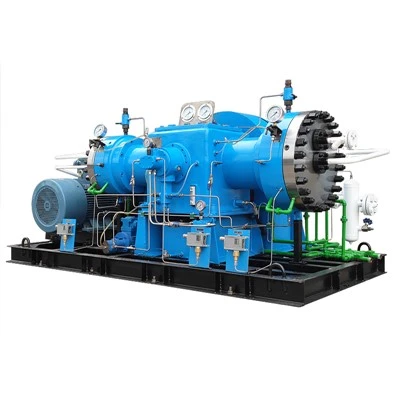
First, let’s get one thing straight: flow rate isn’t just “how much gas.” It’s tied to pressure, temperature, and the actual conditions of the line you’re working with. Someone running a compressor for a small farm’s propane feed won’t have the same needs as a pipeline transport team moving gas hundreds of miles. Our series is built to adapt across that whole spectrum, and here’s how.
Start with low flow rates. We’re talking about volumes under 1,000 cubic feet per minute (CFM), usually for things like well gathering lines, small distribution pipelines, or temporary pressure testing. A lot of compressors sputter here—they either waste energy cycling on and off to match small flows, or they can’t build enough pressure to move the gas. Not ours. The key here is our variable speed drive (VSD) tech we put in every unit. It’s not some high-cost add-on; it’s standard across the series. When flow dips, the VSD slows the compressor’s motor instead of shutting it down. No more wasting energy heating the motor during start-stop cycles, and no more pressure spikes from over-compressing small volumes. Last year, a customer in Wyoming told us they cut their energy bills by 22% switching from a fixed-speed compressor for their low-flow well pad. They used to run their old unit at full speed even when only a trickle of gas was coming in—total waste. Our compressor adjusts smoothly, so even at 500 CFM, it’s still running at peak efficiency, not just treading water.
Wait, but low flow can also mean tricky stuff like wet gas or gas with small impurities, right? That’s another thing our series handles. Our impellers are machined with a slightly wider pitch for lower flow operations, so liquid droplets don’t get stuck and cause corrosion. Too many compressors at low flow get gunked up with condensed water or heavy hydrocarbons, leading to breakdowns. We designed the impellers to move that debris through instead of letting it build up. A Midwest pipeline customer had been dealing with monthly maintenance on their old low-flow compressor because of clogged impellers. Since switching to ours, they’ve only had one minor check-in in 18 months. That’s the kind of real win we’re talking about.
Now, what about medium flow? That’s the sweet spot for most mid-sized operations—1,000 to 10,000 CFM, things like city distribution mains, processing plant feed lines, or small-scale LNG pre-treatment. Here, consistency matters more than just adapting to small changes. You don’t want a compressor that jumps around on flow; you need steady pressure to keep the line running smoothly. Our series uses a modular design here, so you can stack or adjust compressor modules to hit exactly the medium flow you need. It’s like building with Legos—no need to buy a whole new unit if your flow creeps up a bit. For example, a processing plant in Texas started with our 2,000 CFM module for their feed line. Halfway through the year, their well output increased, so they added a secondary module instead of upgrading to a much bigger, pricier compressor. They saved 30% on capital costs that way.
Another pro for medium flow: our anti-surge control system. Surge is that bad thing when the compressor’s flow drops too much, and gas starts flowing backward through the unit. It’s a big no-no for medium flow because it can damage the impellers and shut down the whole line. Our anti-surge tech doesn’t just cut power when it detects surge—it adjusts the flow path in real time. It’s got sensors that check flow every 0.1 seconds, so it catches even tiny fluctuations before they turn into a problem. We’ve had customers tell us their medium flow lines have run 98% uptime since installing our compressors, which is way above industry average. A lot of mid-sized operations deal with unplanned downtime costing tens of thousands a day, so that uptime pays for the compressor fast.
Then there’s high flow. This is the big leagues—10,000 CFM and up, pipeline transmission lines, LNG export terminals, large processing plants. Here, you need a compressor that can push a ton of gas without breaking a sweat, and handle sudden spikes when demand hits. For this, our series uses a multi-stage compression design. Each stage compresses the gas a little bit at a time, instead of one big push, which is more efficient and gentler on the unit. Too many high-flow compressors use single-stage designs, which waste energy and wear out fast from the heavy load. A California pipeline was moving 18,000 CFM through their old single-stage compressor, and it was running 12 hours a day just to keep up. They switched to our multi-stage high-flow unit, and now it runs 8 hours a day for the same volume, cutting their energy use by 35%. That’s not just a number on a spec sheet—that’s real savings on their monthly bills.
We also built our high-flow units with extra durability for extreme conditions. High flow means the compressor is working harder, so we use corrosion-resistant materials for the casing and impellers, especially if the gas has high levels of sulfur or other contaminants. A terminal in Louisiana handles gas with a lot of hydrogen sulfide, and their old compressor was rusting through the casing every two years. Our high-flow unit uses a coated steel casing that’s stood up to that gas for 4 years now. No replacement costs, no unplanned shutdowns mid-export runs—total game changer.
But here’s the thing: it’s not just about handling high, medium, or low flow in silos. Gas flow rates change all the time, sometimes unexpectedly. A well might start producing more gas in the summer when groundwater levels drop, or a city might use 2x more gas in January for heating than in July. Our series is built for that flexibility. Unlike a lot of competitors’ compressors that are “stuck” in their flow range, our units can adjust across 80% of their rated capacity without losing efficiency. That means if your flow jumps from 3,000 CFM to 7,000 CFM, you don’t need a new compressor. Just tweak the settings, and it’s good to go. We even have customers who use one compressor for both a low-flow gathering line and a medium-flow processing line, rotating between them as needed. That’s the kind of versatility you can’t get from a one-purpose compressor.
Now, let’s talk about common mistakes we see customers make when they’re picking a compressor for different flow rates. A lot of people size their compressor based on peak flow, then wonder why it’s wasting energy when flow is low. Or they size for low flow and end up with a unit that can’t keep up when demand spikes. Our sales team doesn’t just push the biggest compressor we make. We ask you about your average flow, your peak flow, how much your flow fluctuates, and what your maintenance budget looks like. Then we point you to the right size in our series, with the add-ons you actually need—like the VSD for low flow, the anti-surge for medium, the corrosion coating for high. No upselling, no guessing. A lot of our repeat customers are teams that messed up their first compressor purchase, came to us, and saved themselves a ton of money.
We also test every compressor in our shop before it leaves. We run it through flow rates way higher and lower than its rated range to make sure it handles it without issues. No shipping a unit that works on the test bench but chokes when you get it on site. Last year, we had a customer who told us their old compressor “seemed fine” in their garage test, but died after 2 months on their line. We test for 500+ hours across different flow scenarios, so that doesn’t happen.

So, if you’re dealing with fluctuating gas flows—whether you’re a small well, a mid-sized processing plant, or a big pipeline terminal—our natural gas compressor series isn’t just a one-size-fits-all. It’s built to adapt to your flow, save you energy and maintenance costs, and keep your line running when you need it. We’ve worked with hundreds of operations across North America, and we’ve fixed so many headaches from compressors that can’t handle different flow rates. If you’re tired of your current compressor wasting energy, breaking down, or not keeping up with your flow, hit us up to chat. We’ll walk through your specific needs, no sales pitch, just honest talk about what our series can do for you.
High Pressure Piston Compressors References
- Gas Machinery Manufacturers Association. (2022). Field Performance Report: Compressor Efficiency Across Variable Flow Rates.
- North American Energy Reliability Corporation. (2023). Compressor Reliability Guidelines for Fluctuating Pipeline Loads.
- International Organization for Standardization. (2021). ISO 13631: Natural Gas Compressors – Efficiency & Adaptability Standards.
Shanghai Sollant Energy Saving Technology Co., Ltd.
As one of the most professional natural gas compressor manufacturers and suppliers in China, we’re featured by quality products and good service. Please rest assured to buy bulk durable natural gas compressor from our factory. Welcome to view our website for more information.
Address: No.215, Songri Center, Beihongqiao, Jiading District, Shanghai, China.
E-mail: info3@sollant.com
WebSite: https://www.sollant-gas.com/
