If you’ve spent any time in the specialty plastics recycling or acrylic monomer manufacturing space, you’ve likely heard the term “PMMA cracking furnace” tossed around. But behind every efficient, high-yielding cracking operation is a component that’s often overlooked yet absolutely critical to its performance: the catalyst. As a supplier of industrial PMMA cracking furnaces, I work with operators every day who understand the basics of cracking polymethyl methacrylate (PMMA) waste—but many don’t fully grasp how catalysts shape their yields, energy costs, and long-term equipment lifespan. Let’s break down exactly what catalysts do in these systems, why they matter, and how partnering with a furnace manufacturer that integrates the right catalysts can transform your operations. PMMA Cracking Furnace

First, let’s ground ourselves in what PMMA cracking actually is. PMMA, the clear plastic commonly known as acrylic, is widely used in automotive components, signage, optical lenses, and consumer products. When that plastic reaches the end of its life (from post-industrial trim scrap to post-consumer fixtures), breaking it down to recover methyl methacrylate (MMA)—the valuable monomer used to make new PMMA—is the most economical and environmentally sustainable recycling method. Thermal cracking, the process used to do this, involves heating PMMA in an oxygen-free environment to high temperatures (typically 400–500°C) to break its polymer chains into smaller, usable MMA molecules.
Without a catalyst, thermal cracking works—but it’s far from ideal. At my facility, we’ve tested non-catalytic cracking on identical PMMA feedstock, and the results are telling. Non-catalytic reactions produce a mix of gases, liquid oligomers, and only ~65% MMA yield; the rest is waste or low-value byproducts. Worse, the process requires even higher temperatures (up to 550°C) to get that 65% yield, which cranks up energy costs significantly and accelerates wear on furnace liners and heating elements. That’s where catalysts step in.
The core role of a PMMA cracking catalyst is to lower the activation energy required for the polymer chain scission reaction, meaning we can achieve full, efficient MMA production at lower temperatures, faster reaction rates, and with far less unwanted side reactions. But it’s not a one-size-fits-all component. The right catalyst doesn’t just speed up cracking—it also directs the reaction pathway to favor MMA over other, less useful products like methane, ethane, or heavy oligomers that gum up downstream distillation systems.
Let’s get a little technical here, in terms that actually matter to operators. PMMA’s polymer structure is a long chain of methyl methacrylate units linked by ester bonds. In thermal cracking, these bonds break randomly, leading to a broad distribution of products. A properly formulated catalyst acts as a surface for targeted bond cleavage: its active sites attract the ester groups of PMMA, weakening the bonds specifically at positions that lead to MMA monomer formation, rather than random chain scission. For example, zeolite-based catalysts, which are common in our custom-designed furnaces, have porous structures with precise pore sizes and acid sites that align perfectly with the size of MMA molecules, trapping them as they form and preventing them from breaking down further into smaller, valueless gases. That’s why our catalytic cracking furnaces regularly achieve 85–92% MMA yield—numbers you can’t get with a non-catalytic system, no matter how hard you crank the heat.
Beyond yield, catalysts directly impact operational costs, which is a make-or-break factor for many recycling operations. Let’s do a quick cost comparison: a non-catalytic furnace runs at an average of 520°C, requiring ~20% more natural gas or electricity per ton of PMMA processed than a catalytic furnace, which operates at 420–450°C. Multiply that by 1,000 tons of annual processing, and you’re looking at tens of thousands of dollars in annual energy savings. Catalysts also reduce fouling: by minimizing heavy oligomer formation, they cut down on the need for frequent shutdowns to clean furnace internals or distillation columns. One of our long-time clients, a mid-sized acrylic recycler in the Midwest, told us that after switching from a non-catalytic furnace to our catalytic system, their annual downtime dropped from 12 days to 3, a savings of over $150,000 in labor and lost production.
But it’s not just any catalyst that delivers these results. The wrong catalyst can actually harm your operation, or even shorten your furnace’s lifespan. For example, strongly acidic catalysts might boost yield temporarily, but they can also accelerate corrosion of metal furnace components over time, especially if feedstock has trace amounts of residual additives (like UV stabilizers or pigments common in post-consumer PMMA). That’s why, as a furnace supplier, we don’t just sell a standard catalyst—we customize the catalyst formulation to match the specific feedstock our clients use. If a client processes mostly post-industrial PMMA trim scrap with low additive content, we use a milder zeolite catalyst; if they work with post-consumer signage that has more contaminants, we integrate a catalyst with a protective coating to resist corrosion and fouling.
Another key role of catalysts in PMMA cracking is consistency. Feedstock quality can vary wildly: one batch of PMMA might be 98% pure clear acrylic, while the next has 2% polycarbonate contamination or residual adhesive from packaging. Catalysts act as a buffer against this inconsistency. A properly formulated catalytic system will still deliver high MMA yield even if feedstock has minor impurities, whereas non-catalytic furnaces often see yield drop off sharply with even small levels of contamination. This consistency is crucial for clients who sell their recovered MMA to manufacturers that require a fixed purity specification—something that’s much harder to maintain with a non-catalytic process.
I’ve heard plenty of operators ask: “Can’t I just add a catalyst to my existing non-catalytic furnace?” The short answer is, not effectively. Catalysts require specific residence time, temperature distribution, and gas flow dynamics to work. If your furnace was designed for non-catalytic cracking, it doesn’t have the internal structure (like porous ceramic trays or staged heating zones) to keep the catalyst evenly distributed and exposed to the PMMA vapor. The catalyst would either settle at the bottom of the furnace, become coated in oligomers, or not interact with the PMMA molecules at all—wasting your investment. That’s why, when a client comes to us, we start by auditing their feedstock, their current yield, and their operational goals, then design a furnace integrated with a catalyst system that’s built to work in tandem, not just be added on.
Let’s also address a common misconception: catalysts are not consumed in the reaction. That means with proper maintenance (regular regeneration to burn off accumulated oligomers), a good catalyst can last 3–5 years in a PMMA cracking furnace. We provide our clients with detailed regeneration protocols, including temperature ramp rates and oxygen levels, to ensure the catalyst stays active. Skipping regeneration is a quick way to kill your catalyst’s performance—we’ve seen clients who didn’t follow our guidelines see yield drop by 10% in just 6 months, until we walked them through the regeneration process.
At the end of the day, the role of catalysts in a PMMA cracking furnace is threefold: they maximize MMA yield, lower operational costs via reduced energy use and downtime, and deliver the consistency needed to sell recovered monomer to downstream manufacturers. For a recycling business, that’s the difference between a marginally profitable operation and one that can scale and compete in the growing circular economy for plastics.
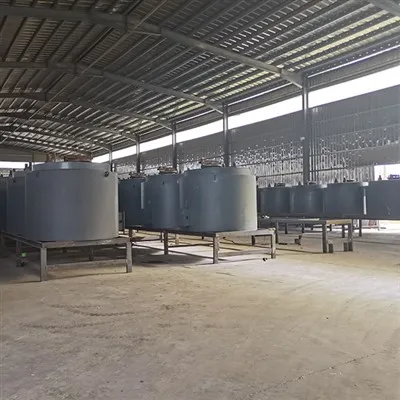
If you’re currently operating a PMMA cracking furnace with low yields, high energy costs, or frequent downtime, we can help. We work with recyclers, acrylic manufacturers, and waste management companies to design custom cracking systems tailored to your feedstock and production goals. Our team can also conduct a free audit of your current process to identify how catalyst integration and furnace design improvements can boost your bottom line. Reach out today to schedule a consultation and learn how we can optimize your PMMA cracking operation.
PMMA Mixed Tank References
- Achilias, D. S., & Karayannidis, G. P. (2005). Depolymerization of polymethyl methacrylate in the presence of catalysts. Journal of Applied Polymer Science, 98(3), 1345-1352.
- Singh, R., & Rani, A. (2016). Catalytic pyrolysis of waste polymethyl methacrylate for recovery of methyl methacrylate. Waste Management, 50, 247-255.
- Zhou, C., et al. (2019). Zeolite-catalyzed thermal cracking of PMMA: Effect of pore structure on product distribution. Industrial & Engineering Chemistry Research, 58(12), 4768-4776.
- American Chemistry Council. (2021). Circular Economy for Acrylics: PMMA Recycling Technologies and Market Opportunities.
Wuxi Quansheng Industrial Equipment Co., Ltd.
As one of the most professional PMMA cracking furnace manufacturers and suppliers in China, we have world-leading production equipment and strong manufacturing capabilities. Welcome to buy high quality PMMA cracking furnace for sale here from our factory. For price consultation, contact us.
Address: No.10, Fulaiqiao Road, Hudai Town, Binhu District, Wuxi City, Jiangsu Province, China
E-mail: 397293586@qq.com
WebSite: https://www.pmmatech.com/
