If you’re running a PVC hose production line or just scaling up, one of the biggest headaches I see as a PVC hose machine supplier is this: half the time, even a top-tier machine will underperform because the operators running it don’t know what they’re actually doing. I’ve been in this game for 12 years now, and I’ve watched new teams fumble through basic stuff that leads to wonky hoses, wasted raw material, and downtime that eats into profits like nothing else. PVC Hose Machine
Training operators for PVC hose machines isn’t just about “showing them how to push buttons.” It’s about breaking down the science of what the machine’s doing, so they can problem-solve on their own instead of calling you at 2 a.m. when a kink pops up mid-run. Let’s get real—your operators are the backbone of your production, and a good training program will cut your waste by 30% or more, I’ve seen it firsthand. So here’s how I’d structure it, if I was sitting right in your break room with a coffee.
First off, start with the “why” behind every part of the machine, not just the “what.” I can’t tell you how many times a new operator will crank the temperature dial on the extruder all the way up because they think “hotter = better fusion,” and end up burning the PVC, leaving black specks all over every hose. PVC is finicky—it’s a thermoplastic, so it melts at a specific range, and crosslinking (the part that makes the hose flexible and durable, not brittle) only happens if you hit that sweet spot, not cook it.
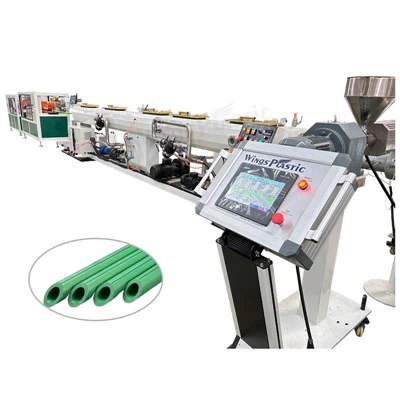
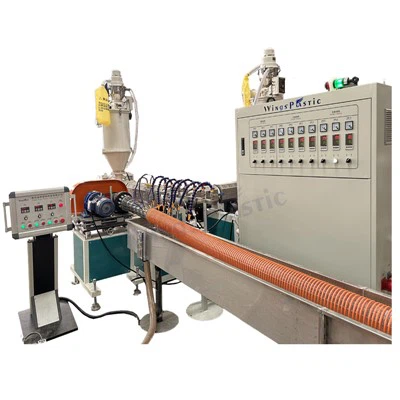
So week one should be all about learning the machine’s anatomy, and the science of PVC itself. Don’t just hand them a manual (I know everyone hates those). Sit them down next to the machine, point to each part, and explain: this is the extruder barrel that melts the PVC resin, this die is what shapes the hose’s inner and outer layers, this cooling bath is what locks in that shape before it gets drawn, and this take-up unit is what controls how fast the hose comes out.
For the science part, keep it simple. PVC isn’t just plastic—it’s mixed with stabilizers, plasticizers, and pigments, right? Each component affects how the machine runs. Too much plasticizer and the hose gets too soft, stretches too much when you pull it, and can kink. Too little and it’s brittle, cracks when you bend it. Operators need to know that the mix they’re using that day isn’t generic, so they can adjust their settings accordingly. I always give new operators a quick cheat sheet taped to the control panel: for standard garden hose PVC, extruder temp zones are 165°C, 175°C, 185°C, 190°C at the die. Not a number they have to memorize, but a reference. That’s way less scary than a 50-page manual.
Next, hands-on practice with a mentor, not just the new guy shadowing. I see so many places pair a new operator with a veteran who’d rather be scrolling TikTok than teaching, and that’s a disaster. Assign a mentor who’s good at explaining, not just good at running the machine. Have the new operator do small, low-stakes runs first. Like, instead of jumping into a 1000ft batch of hose that takes two hours, start with a 50ft test run. They get to watch the extruder feed, adjust the temp if it’s coming out lumpy, see how the cooling bath affects flexibility, and adjust the take-up speed so the hose doesn’t stretch or bunch.
Wait, take-up speed is huge. If the hose comes out of the die at, say, 10ft per minute, and the take-up pulls it at 12ft per minute, you’ve got a hose that’s too thin, stretched out, and weak. If it pulls at 8ft per minute, it’s too thick, lumpy, and will kink. Operators need to feel that, not just read about it. My team runs a little drill for new folks: they start the machine at a medium speed, and we throw a piece of scrap hose in the line. If it stretches 10% when pulled gently from the take-up, that’s a sign they need to slow the take-up. If it feels hard and won’t bend, they sped it up too much. No math required, just a quick hands-on check.
Then, the problem-solving part. This is where most training falls flat. Operators shouldn’t have to call you every time a small issue pops up. Let’s list the most common issues and how to fix them, so new operators can spot them fast.
First, die lines—those thin, straight marks running along the hose. 9 times out of 10, that’s a dirty die. PVC residue builds up in the die over time, and when molten PVC passes through, it picks up that old gunk, leaving lines. New operators might think it’s a temperature issue, but if they know to stop the line, loosen the die bolts, wipe the die with a brass brush (never steel, it scratches the die), and re-tighten, that takes 5 minutes instead of a 2-hour machine down call.
Another big one: black specks in the hose. That’s either burnt PVC from the extruder running too hot, or old resin that wasn’t mixed properly. I train operators to check the extruder barrel’s temperature every 30 minutes for the first 10 runs of a shift, and to check the raw material bags for clumps before loading them. Clumps in the resin won’t melt, so they get charred in the barrel, leading to specks. Easy fix, but only if they know to look for it.
Kinking in the hose line. Usually, that’s either the take-up is off, or the cooling bath isn’t cold enough, so the hose is still soft when it gets pulled. Operators can adjust the cooling bath’s water flow or lower the take-up speed slightly to fix that, no need for a full machine reset.
One thing I always emphasize: never make operators feel bad for messing up. I’ve had new operators waste 50ft of hose their first week, and that’s fine. The goal is to teach them so they don’t waste 500ft every week once they’re solo. I also run a “troubleshooting quiz” once a week for the first month—just casual, no pressure. I’ll ask, “If your hose is coming out wavy, what do you check first?” and they have to answer, not guess. If they get it right, we grab a soda together. If not, we walk over to the machine and figure it out. No egos, just learning.
Then, ongoing training, not just a week-long bootcamp. PVC recipes change all the time, right? If a customer switches from a garden hose formula to a reinforced hose, or a medical-grade PVC, the settings change. I make sure all my clients get a follow-up training session after the first 5000ft of a new order, so their operators get hands-on with the new mix. I also do quarterly refreshers for my regular clients—we bring a small portable extruder demo unit (I’ve got one in my truck at all times) and run through new issues, like how to work with bio-based PVC if that’s something they’re switching to.
Also, safety can’t be an afterthought. PVC fumes aren’t great, right? So operators need to know how to make sure the exhaust system is working, not just ignore it. The extruder gets super hot, so they have to know not to reach into the barrel while it’s running, and to lock out the machine before cleaning the die. I always tell operators: safety is non-negotiable, even if you’re in a rush to hit a production deadline. One burn or fume-related illness is way worse than missing a delivery by an hour.
Wait, let’s talk about common mistakes new operators make that I see all the time. Like, they don’t clean the die every shift. Every shift, when the line is done, they should run a small batch of clear PVC through to flush out the old resin, so residue doesn’t build up. If they skip that, the die lines start showing up by the third hour of the next shift, leading to bad batches. I even give my clients a small cleaning kit for the die, with brass brushes, non-abrasive wipes, and a torque wrench to re-tighten the die—so they don’t over-tighten it and crack it, which is an expensive mistake.
Another mistake: not measuring the hose dimensions regularly. When the hose comes out, it’s easy to assume it’s the right size, but PVC shrinks a little as it cools, right? So operators should measure the inner and outer diameter every hour with a caliper, not just at the start of the run. If it’s 1mm too big, they can adjust the take-up speed or the die gap to fix it, instead of running 1000ft of out-of-spec hose that has to be scrapped.
Let’s get real, this works. I had a client last year who was wasting 28% of their PVC resin before we adjusted their training program. After we did a 2-week on-site training, paired operators with mentors, and set up weekly troubleshooting check-ins, their waste dropped to 7%. That’s thousands of dollars a month they were leaving on the table, just because their operators didn’t have the right training.
If you’re still training operators by just handing them a manual and saying “figured it out,” you’re leaving money on the table, and your machine isn’t running at its full potential. I know every production line is different, so if you want to tweak this training program to fit your specific hose types, machine model, or production goals, reach out and we can work through it together. No sales pitch, just figuring out what works for your team.
At the end of the day, a PVC hose machine is only as good as the person hitting the buttons and problem-solving when things go sideways. Invest in good training, and you’ll see better quality hoses, less downtime, and happier operators who actually know what they’re doing.
Plastic Spiral Corrugated Pipe Machine References
- PVC Extrusion Technology and Process Optimization, 2021
- Operator Training Best Practices for Industrial Plastic Processing Equipment, Journal of Manufacturing Skills Development, Vol. 15, 2022
- Safety Protocols for Thermoplastic Extrusion Operations, Occupational Safety and Health Administration, 2023
- PVC Compound Formulation Effects on Extrusion Performance, Plastic Engineering Handbook, 7th Edition, 2020
Qingdao Wings Plastic Technology Co., Ltd.
As one of the most experienced pvc hose machine manufacturers and suppliers in China, we also support customized service. Please feel free to buy durable pvc hose machine made in China here from our factory. For price consultation, contact us.
Address: C02 Of Anshengyi Road, No.2 Fuan Industry Zone,Jiaodong Town, Jiaozhou City, Qingdao City, Shandong Province, China
E-mail: kelly@wingsplastic.com
WebSite: https://www.wingsextruder.com/
