Hey everyone, it’s [Your Name] here from the Vertical Conveyor Systems team – yeah, the folks who make those vertical lifters that make warehouses, factories, and even retail distribution centers stop losing pallets to bad floor layouts or slow moving stuff between floors. I get it, when you’re scrolling for info on vertical conveyors, you’re probably juggling a million things: your warehouse’s tight floor space, that annoying 3rd floor loading dock that’s been a bottleneck, and a budget that doesn’t stretch to a whole new custom setup. No one’s got time for generic sales jargon, so let’s cut straight to how you pick the right vertical conveyor for your spot – from someone who’s installed enough of these to know what actually works (and what’s just marketing fluff). Vertical Conveyor Systems
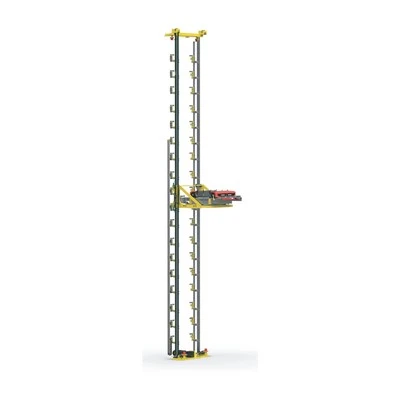
First off, let’s get one thing out of the way: not all vertical conveyors are the same. I’ve seen guys roll in a generic model that was too slow for a food processing plant that needed hourly batch transfers, and another that lacked the load capacity for a construction supply warehouse moving full pallets of bricks. So your first move isn’t to “look at systems” – it’s to map out your specific operation’s needs, not just what someone tells you you “should” buy.
Let’s break down the big four factors that actually make or break your choice, no fluff included.
1. What are you actually moving? (Load type and size, duh)
This isn’t just “do you move boxes or pallets” – it’s way more detailed. I once had a customer who swore they needed a standard pallet vertical conveyor, but when we dug in, they were moving half-pallets of frozen veggies, each weighing only 50 lbs, every 2 minutes. A standard pallet conveyor (built for 2,000 lb loads) would’ve been overkill, more expensive, and slower at handling small, frequent drops. Let’s get specific:
- Load weight: Most of our vertical conveyors handle anywhere from 50 lbs per unit up to 10,000 lb pallets, but if you’re moving something extra heavy – like metal coils or construction beams – you can’t skimp on the frame or drive system. Cheap systems tend to skip reinforced steel here, which means you’ll be doing emergency repairs 6 months in, not saving money.
- Load dimensions: Oversized items (think large appliance boxes, industrial parts bins) need a conveyor with wider belts or extended carriages, while tiny, irregular stuff (small electronics components) might work better with a belted vertical conveyor instead of a pallet-style one. I’ve also had clients with fragile goods (glass bottles, packaged meds) – so you need a system with gentle stops and starts, not the jolting ones that damage half your inventory on the first run.
- Environment: This is the part people forget. If you’re in a food processing facility (think meat packing, baking), you need a conveyor that’s food-grade – no crevices where bacteria can hide, easy to sanitize, maybe even corrosion-resistant from constant washdowns. If you’re in a cold storage warehouse (0°F or lower), standard lubricants freeze, so you need a system with cold-rated components or a sealed drive unit that doesn’t fail when the temp drops. For dusty factories (car parts, lumber), dust can jam gears, so sealed motor housings and self-lubricating chains are non-negotiable.
I’ve seen so many folks skip this step, and 9 times out of 10, they end up having to replace their conveyor in a year because the standard model couldn’t handle their environment. Don’t be that guy.
2. How fast do you need it to run? (Throughput requirements)
Throughput is just a fancy word for “how much stuff you need to move per hour, day, or shift.” If you’re a e-commerce warehouse processing 1,000 order boxes a day, you can’t have a conveyor that only handles 300 units an hour – that bottleneck will hold up your entire shipping line. But if you’re a manufacturing facility that only moves pallets between two floors once every hour, you don’t need a super high-speed system, which is just a waste of money.
Our vertical conveyors have speed ranges from 20 feet per minute (FPM) for fragile, low-volume loads up to 150 FPM for high-throughput e-commerce setups. But here’s the catch: speed doesn’t always equal efficiency. Some high-speed conveyors sacrifice accuracy – if you’re moving pallets, a jittery fast conveyor might knock a pallet off its edge, causing downtime. We recently installed a system for a Amazon seller that needed 120 FPM, but they also had a strict no-damage policy, so we adjusted the drive system to have soft starts and stops at the upper and lower levels, which kept damage rates at 0.2% – way below their industry average.
Also, think about your existing workflow. If your conveyor has to sync with other equipment (like a roller conveyor at the loading dock or a robotic pick station), you’ll need a system that can integrate with your current WMS (Warehouse Management System) or ERP software. A lot of off-the-shelf conveyors can’t do that, so you either have to retrofit them (which costs more) or get a custom-designed system that works with your tech stack.
3. Floor space and layout – this is make or break for small operations
I work with a lot of small to mid-sized businesses, not just huge corporate warehouses, and the number one complaint I hear is “we don’t have enough space.” Let’s be real: no one has extra floor space these days. So the biggest difference between a good vertical conveyor and a bad one is how well it fits your footprint.
There are two main types you’ll see here:
- Incline-style vertical conveyors (also called friction elevators): These are compact, take up less horizontal space, and are great for gaps between existing shelves or in tight corners. They work by gripping the sides of pallets or boxes and lifting them at a 45-degree angle up a shaft – perfect if you don’t have a lot of vertical clearance either? Wait, no – actually, they need at least 8 feet of vertical headroom, but they only need a small horizontal space, like 3 feet wide by 4 feet deep. I installed one last quarter for a retail distribution center that was squeezed between a storage wall and a loading door – it fit right in, no major renovation needed.
- Reciprocating vertical conveyors (or pallet lifts): These are taller, more stable, and can handle heavier loads, but they need more horizontal space for the carriages to move. They’re better for large pallets or high-volume operations, but if you’re in a 10×15 foot warehouse nook, they’re just not going to work.
Also, think about access points. If you’re loading and unloading at multiple floors, you need a conveyor that can stop at exactly the right height each time – no one wants a pallet that’s 6 inches off the dock door, making your fork drivers guess. Some cheaper conveyors have manual height adjustments, which means downtime when you switch products, while our systems have automated floor detection that’s accurate within ½ inch, so your drivers can just roll right on and off.
Pro tip: Measure twice, order once. I’ve had customers who measured their space at 10 feet wide, ordered a conveyor that’s 11 feet, and had to pay for a custom cut – avoid that by bringing a tape measure and mapping out any obstacles (pipes, electrical boxes, other equipment) near where you want to install it.
4. Budget vs. long-term value – don’t just go for the cheapest option
I get it, every business has a budget. But here’s the truth: a cheap vertical conveyor might cost $5,000 less upfront, but if it breaks every 6 months, you’ll end up spending way more on repairs and downtime than if you’d gone with a reliable system. Our vertical conveyors have a 10-year warranty on parts for standard models, and 15-year for industrial-grade – that’s because we build them to last, not just to sell.
Let’s break down the costs you should factor in, not just the sticker price:
- Upfront cost: This includes the conveyor itself, installation, and any retrofits to your existing equipment. Custom designs cost more, but if a standard model doesn’t fit your space, it’s worth it.
- Operational cost: Energy use – some conveyors are way more energy-efficient than others. For example, our inverter-driven models adjust speed based on load, so they use 30% less electricity than standard fixed-speed systems. Over a 5-year period, that adds up to thousands of dollars in savings.
- Downtime cost: If your conveyor breaks, how much does that cost you? For a manufacturing plant, that might mean $10,000 an hour in lost production. For an e-commerce warehouse, it could mean delayed shipping fees and unhappy customers. Reliable conveyors have less downtime, so even if they’re a bit more expensive upfront, they save you money in the long run.
Also, don’t forget about maintenance. Some cheap conveyors require monthly lubrication and daily checks, while our systems are low-maintenance – just a quarterly inspection and annual tune-up. That means less time spent on repairs, more time running your business.
Common mistakes people make (and how to avoid them)
I’ve seen so many bad choices over the years, so let’s call out the top three to watch for:
- Buying a conveyor just because it’s the “latest model”: A lot of customers get swayed by fancy tech, but if it doesn’t fit your load size or layout, it’s useless. I had a guy last year who bought a state-of-the-art high-speed conveyor because it had a touchscreen interface, but it couldn’t handle his 1,500 lb pallets – he had to return it and get a different one, costing him extra fees.
- Skipping a site assessment: You can’t just order a conveyor online and hope it fits. We always send a tech to your facility to measure space, check for power access, and talk through your workflow – that’s free, by the way. Skipping that step leads to fit issues, wrong speed, or compatibility problems.
- Ignoring future growth: If you’re a small business now, but you’re planning to double your inventory in 2 years, buy a conveyor that can handle that growth, not just what you need today. A modular conveyor system can be expanded or modified, so you don’t have to replace it in a year when your business grows.
At the end of the day, choosing the right vertical conveyor isn’t about picking the fanciest or cheapest one – it’s about matching it to your specific needs. Whether you’re a small retail shop moving boxes between two floors, a food processing plant needing sanitizable equipment, or a construction warehouse moving heavy pallets, we’ve got systems that fit.
Material Handling Equipment If you’re stuck, don’t guess – just reach out. We’ll do a free walkthrough of your facility, go over your load specs, throughput needs, and budget, and help you pick the exact system that works for you. No sales pitch, no pressure, just straight talk about what will make your operation run smoother.
References
- Material Handling Industry of America. (2022). Vertical Conveyor Selection Guide: Load Capacity, Throughput, and Environmental Considerations.
- Warehouse Education and Research Council. (2023). The Hidden Costs of Vertical Conveyor Downtime for Small to Mid-Size Businesses.
- Occupational Safety and Health Administration. (2021). Safety Standards for Vertical Conveyors in Industrial and Commercial Settings.
- Food and Drug Administration. (2020). Guidelines for Food-Grade Conveyor Systems in Food Processing Facilities.
Anhui Rayo Automation Technology Co., Ltd.
With abundant experience, we are one of the most professional vertical conveyor systems manufacturers and suppliers in China. Please feel free to wholesale advanced vertical conveyor systems in stock here and get quotation from our factory. All customized products are with high quality and competitive price.
Address: No.28 Yongzhen Road, Wuhu Area, China (Anhui) Pilot Free Trade Zone
E-mail: ahry@ahrayo.com
WebSite: https://www.rayosmart.com/
