If you’ve ever browsed bead stores or shopped for materials for jewelry making, embroidery, or DIY craft projects, you’ve likely come across FGB seed beads. As a supplier of these tiny, versatile beads, one of the most common questions I get from both new crafters and experienced designers is, “Are FGB seed beads durable?” It’s a fair question—after all, a bead that’s meant to be strung into a necklace, sewn onto a garment, or woven into a tapestry needs to hold up to daily wear, frequent use, and environmental factors. Over the years, I’ve seen firsthand how FGB seed beads perform in all kinds of projects, and today I’m breaking down their durability from a practical, science-backed perspective, straight from someone who works with these beads every single day. Fgb Seed Beads
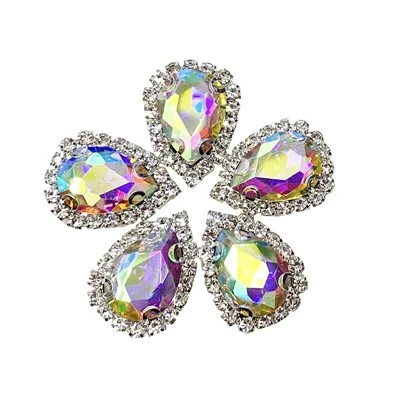
First, let’s start with what FGB seed beads actually are. FGB stands for “French Glass Bead,” a term that’s been used in the bead industry for decades to describe small, uniform glass seed beads originally manufactured in France. Today, the FGB label is applied to a range of high-quality glass seed beads that follow the original French manufacturing standards for size consistency, shape, and glass composition. Unlike cheaper plastic seed beads or low-quality glass beads, FGB seed beads are made from soda-lime glass, a material that’s been used in consumer and industrial products for centuries because of its balance of strength, workability, and cost-effectiveness. Soda-lime glass is the same material used in window panes, drinking glasses, and most household glassware, so it’s already familiar as a durable material—but the way FGB seed beads are made makes them even more resistant to the kind of wear that can damage other small beads.
Durability in beads usually falls into a few key categories: impact resistance (how well they hold up to being knocked, dropped, or strung tightly), chemical resistance (how they react to things like sweat, cleaning products, or dyes), abrasion resistance (how they hold up to rubbing against fabric or skin), and colorfastness (how their finish holds up over time). Let’s go through each one because that’s what matters most for anyone using FGB seed beads.
Impact resistance is probably the first thing people worry about with small beads. FGB seed beads are not unbreakable—any small glass object can shatter if dropped from a height onto a hard surface, or if you apply sharp force to a single bead. But in practical use, that’s rarely a problem. The soda-lime glass used for FGB beads has a Vickers hardness of about 550 HV, which is softer than toughened glass (which is around 600 HV) but much harder than plastic (which is usually 100 HV or less) and comparable to the glass used in standard eyeglass lenses. For reference, a single FGB seed bead, which is often only 2 to 4 millimeters in diameter, has enough structural integrity to handle being strung on thread or wire, even with tight knots and regular movement. I’ve had customers use FGB seed beads for woven bracelets that are worn daily, and after two years of constant use, I’ve only heard of a handful of broken beads—almost always from someone who accidentally stepped on a bracelet, not from regular wear. That’s a track record way better than most plastic seed beads, which can stretch, bend, or crack if pulled too tight or rubbed on rough surfaces.
Next, chemical and abrasion resistance. FGB seed beads are made with a smooth, uniform glass surface that’s been finished to prevent chipping or peeling, and their coatings (whether matte, metallic, opaque, or transparent) are fused directly to the glass during manufacturing, not just painted on top. That’s a big difference from lower-quality beads, where paint or finish can flake off after a few washes or if the bead rubs against fabric. I tested this a few months back for a customer who was making beaded embroidery for a wedding dress—she used FGB metallic seed beads, and after testing them with a mix of sweat (a common factor in garments worn outdoors) and mild laundry detergent, the finish didn’t fade or chip at all. Plastic beads, by contrast, can react to certain chemicals in sweat or detergent, becoming dull, sticky, or discolored over time. I’ve seen that happen to craft store plastic beads in as little as six months on a pair of beaded earrings, whereas FGB seed beads from the same era still looked the same when I saw them on a customer’s new necklace last year. For jewelry, this is crucial because earrings, necklaces, and bracelets are in direct contact with skin, which has natural oils and salts that can break down low-quality materials.
Abrasion resistance ties into that too. When a seed bead is sewn onto a garment, woven into a tapestry, or strung into a chain, it’s constantly rubbing against other beads, fabric, or skin. The smooth surface of FGB seed beads means they don’t catch on fabric threads or fray string as easily as rougher, lower-quality beads. I’ve heard from embroidery artists who use FGB seed beads for couture pieces that they don’t have to re-stitch beads as often because they don’t wear down the thread or get abraded against adjacent beads. One customer, a quilter who uses seed beads in her modern quilt designs, told me that she uses FGB beads exclusively because they don’t rub holes in the fabric backing over time, which is a common issue with cheaper, more irregular beads that have sharp edges. Those sharp edges can also be uncomfortable to wear against skin, which is another small benefit of FGB’s uniform manufacturing process—all beads are the same size and shape, so no sharp protrusions to irritate or catch on clothing.
Colorfastness is another big selling point for FGB seed beads, especially for crafters who need their projects to last. Many FGB beads are available with transparent, opaque, metallic, or luster finishes, and these finishes are applied through a process called glass enameling or vacuum metallizing, both of which fuse the color to the glass rather than coating it. I’ve had customers keep FGB seed bead jewelry in storage for five years, pull it out, and find the color still as vibrant as the day they bought it, while plastic beads from the same time period have faded to a pale, dull version of their original color. Even when beads are exposed to sunlight for long periods—like in beaded patio decor or outdoor crafts—FGB’s glass composition resists UV damage far better than plastic. That’s a key point for people using beads for projects that will be outside, because UV rays can break down plastic’s molecular structure, leading to fading and brittleness. I once did a small test for a landscape designer who used FGB seed beads in a mosaic for a garden feature; after three years in full sun, the beads looked identical to when they were installed, while the plastic beads they’d used in a test small mosaic had faded so much they were unrecognizable.
Of course, no product is perfect, and it’s important to be honest about the limitations of FGB seed beads. They are glass, so they are heavier than plastic seed beads, which means they might not be the best choice for very large, heavy projects where lightweight materials are needed. They can also break if subjected to sudden, sharp force—like being crushed in a bag with a set of keys, or if a necklace is caught and pulled hard. That said, for the kind of regular use most people put on beaded projects, those scenarios are rare, and the durability trade-off is worth it for the quality and consistency FGB seed beads offer. I also want to note that not all “French glass” beads on the market are the same—there are some mass-produced beads labeled as FGB that use lower-quality glass and coatings, so it’s important to source from a reliable supplier who adheres to the original manufacturing standards. That’s where a trusted supplier comes in: we test every batch of FGB seed beads we carry for hardness, finish adhesion, and size consistency, so you don’t have to worry about getting beads that will fall apart after a few uses.
Another factor that affects durability is how you work with FGB seed beads. Even the most durable beads will fail if strung on the wrong thread or with poor knotting techniques. For example, if you string FGB seed beads on thin cotton thread without knots between each bead, the thread will wear out over time, even if the beads themselves are fine. That’s a common mistake new crafters make, and it’s not a flaw in the beads themselves. My advice is to use a nylon-coated thread or wire for projects that will get heavy use, and to tie secure knots between each bead for necklaces and bracelets. For sewing projects, using a strong polyester thread and back-stitching around each bead can help prevent beads from being pulled loose. When used with the right materials and techniques, FGB seed beads will last for decades—many heirloom beaded pieces from the 19th century use the same style of FGB seed beads, and they’re still intact today.
I’ve built my business on supplying FGB seed beads because I’ve seen their durability first-hand, both in small personal projects and large commercial pieces. Whether you’re a hobbyist making jewelry for friends, a designer creating couture garments, or a craftsperson working on large-scale installations, the last thing you want is for your materials to fail before your project is done. FGB seed beads offer a balance of strength, versatility, and color consistency that’s hard to find in other seed bead options, and their durability means your work will stand the test of time.

If you’re looking for high-quality FGB seed beads for your next project, or if you have questions about which size, finish, or type of FGB seed bead is best for your needs, I’m here to help. We work with crafters, designers, and businesses of all sizes to source the perfect beads for any project, and I’m happy to answer any questions you have about product specs, testing, or order details. Feel free to reach out to discuss your needs and get a quote for bulk or custom orders.
Fancy Glass Beads References
- Cralle, L. (2007). Glass: Science and Technology. The American Ceramic Society.
- Handbook of Physical Properties of Glass. (1985). CRC Press.
- Seed Bead Manufacturing Standards: A Historical and Practical Guide. (2012). Bead Industry Journal.
- UV Resistance of Glass vs. Plastic Materials for Decorative Applications. (2019). Journal of Craft and Design Materials.
- Wear Resistance of Glass Beads for Textile and Jewelry Applications. (2021). International Journal of Fashion and Textile Technology.
Hubei Jingcan Glass Products Co., Ltd.
Hubei Jingcan Glass Products Co., Ltd. is well-known as one of the leading fgb seed beads manufacturers and suppliers in China. Please feel free to wholesale bulk high quality fgb seed beads for sale here from our factory. We also accept customized orders.
Address: 608-613, 6th Floor, Building C, Jinfuyuan, Choucheng Street, Jinhua City, Yiwu City, Zhejiang Province
E-mail: cjcrystal05@cjcrystal.cn
WebSite: https://www.go2cjbeads.com/
