If you’ve ever stopped mid-drywall taping job, or walked away from a fiberglass tape application on a composite repair, you’ve probably wondered the same question: how long does it take for fiberglass tape to actually dry? As someone who’s been in the fiberglass tape supply game for 12 years, I can’t tell you how many texts I get from contractors, DIYers, and marine repair guys panicking because their project’s schedule is hanging on this one tiny detail. The short answer isn’t as simple as a one-size-fits-all number, though. It depends on so many variables—stuff I’ve learned through late-night calls with customers, trial-and-error in our warehouse testing bays, and even the occasional botched job I’ve helped them fix. Let me break this down like I would for a customer standing at our loading dock, holding a roll of our standard joint tape, staring at a half-finished wall. Fiberglass Tape
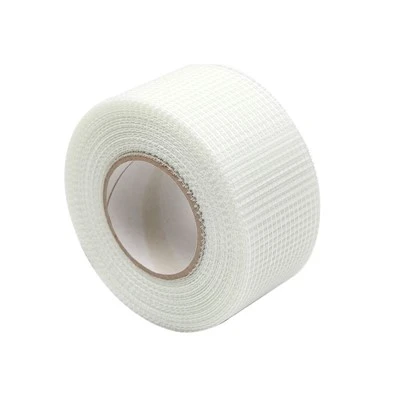
First, let’s get one thing straight: when people say “fiberglass tape dries,” they’re usually talking about two related but separate layers. There’s the fiberglass tape itself (the glass fiber mesh, which is inert by nature—it doesn’t “dry” in the same way paper tape does, it just holds its shape) and the compound that you embed it in—whether that’s joint compound for drywall, epoxy resin for marine or automotive work, or thinset tile mortar. That’s where the drying or curing actually happens, and that’s what everyone’s waiting on. The fiberglass mesh is just the structural backbone here, so once it’s embedded, its “dry time” is irrelevant on its own. That’s a key point I wish more people got straight. Paper tape absorbs moisture from joint compound and dries as that moisture evaporates, but fiberglass is non-porous and doesn’t swell or shrink the same way—so its only job is to prevent cracking, while the surrounding compound does the hardening.
Now, let’s talk about the most common use case: drywall joint compound and standard glass fiber joint tape, which is what most of our residential and light commercial customers buy from us. For this application, the drying time is almost entirely tied to the type of joint compound you use. Premixed all-purpose joint compound, the stuff you grab off the shelf at home centers, is the slowest. In ideal conditions—65 to 70 degrees Fahrenheit, 40 to 50 percent relative humidity, good cross-ventilation, no direct sunlight or draft blowing on it—it takes 4 to 6 hours to dry enough for a second coat. If you’re applying a finishing coat, that adds another 4 to 8 hours, total 8 to 14 hours for the full drywall tape and compound to be ready for sanding. But that’s only in perfect weather. If it’s a humid day—say, 70 percent humidity or higher—add at least 50 percent to that time. I had a customer last summer in Georgia who was on a tight timeline, tried to work during a 90-degree, 80 percent humidity heat wave, and his tape and compound took 22 hours to dry enough to sand. He texted me a photo of his sweat-stained shirt and a very frustrated meme, so I remember that one well. If it’s colder than 60 degrees, that slows it down too—joint compound’s cure time doubles if the temperature drops below 50, because the chemical reactions that evaporate moisture and harden the compound slow way down.
Then there’s setting-type joint compound, which is a different animal, and one of our more popular products for professional contractors. This stuff isn’t premixed; you mix it with water right before use, and it hardens via a chemical reaction, not just evaporation. For setting-type compound, fiberglass tape’s working time (how long you have to apply it before it starts to set) is only 20 to 45 minutes, depending on the type (20-minute, 45-minute, etc.). But the drying time—when it’s hard enough to sand—is way faster, usually 1 to 2 hours, even in slightly cooler or more humid conditions. I always tell contractors who use setting-type compound that fiberglass tape here is more about the mechanical bond than waiting on moisture, because the compound is curing chemically, not drying. That’s a big difference, and it’s why I always make sure to explain that when a customer orders both tape and compound from us. I had a framing contractor a few months back who ordered our 45-minute setting tape compound, and didn’t realize it cured chemically—he waited 6 hours like he would for premixed, and then got to sanding and realized it was way too over-set, hard as a rock and rough. I had to send him a sample of our tape and a small tub of the compound to test in his shop so he could see the difference. That’s the kind of thing that makes me want to write these posts, honestly—clear up the confusion so people don’t waste time or materials.
If you’re using fiberglass tape for something else—marine repair, automotive composite work, or tile setting with thinset mortar—dry time changes entirely. For epoxy resin, which is what you usually embed fiberglass repair tape in, the “dry” or cure time is based on the epoxy’s formulation. Slow-cure epoxy might take 24 to 72 hours to fully cure, but it’s tack-free in 1 to 2 hours. Fast-cure epoxy, used for small repairs, can be tack-free in 15 to 30 minutes, and fully cured in 2 to 4 hours. I worked with a boat repair guy last spring who was patching a hull; he used our bi-directional fiberglass repair tape with fast-cure epoxy, and thought it was dry enough to sand after 45 minutes, but it was still tacky, so he sanded and ruined the patch. He came to our warehouse the next day with the sanded spot, and we tested a small piece of our tape with the same epoxy to show him the tack-free time vs. full cure time. That’s a mistake only happens when you don’t know the difference between surface dry and fully dry. For thinset mortar, which is used to install tile over drywall or concrete, fiberglass tape is often used to reinforce corners or cracks before setting. Thinset’s dry time is 24 hours for a full cure, but it’s hard enough to walk on after 2 hours, so that’s another thing—what do you actually mean by “dry”? If you mean hard enough to apply a finish or next layer, that’s way different than fully cured.
Now, what factors actually affect this time? I’ve listed a few already, but let’s make them concrete, because these are the things that throw everyone off. First is humidity, that’s the big one for any moisture-based cure. The higher the humidity, the slower moisture evaporates from joint compound or epoxy, so longer dry time. Temperature is next—colder temps slow chemical reactions, hotter temps speed them up, but too much heat (above 90 degrees) can cause the compound or epoxy to skin over on the top while the middle is still wet, leading to cracking or bubbling. Air flow is huge too—if you’re working in a stuffy basement with no windows open, that moisture can’t escape, so it takes forever. I always advise customers to use a box fan, not pointed directly at the work, but blowing across the room to move the air without drying the surface too fast. Application thickness matters too—if you slather on a 1/4-inch layer of joint compound over your tape instead of the recommended 1/8-inch, that extra thickness will add hours of dry time, because there’s more moisture to evaporate. Even the type of fiberglass tape makes a difference: our standard all-purpose joint tape is thinner, so the compound over it is a thinner layer, compared to our heavy-duty tape for high-stress areas like ceiling joints or exterior walls. Heavy-duty tape’s mesh is thicker, so it might take 15 to 30 minutes longer to dry, just because the compound layer over it is slightly thicker.
I get asked all the time if there’s a way to speed up dry time. The short answer is, no, you can’t rush a proper cure. But there are things you can do to make it go as fast as possible without ruining the job. First, follow the manufacturer’s instructions for whatever compound, epoxy, or mortar you’re using—they print the dry time on the bucket or container for a reason. For drywall, don’t apply more compound than the recommended 1/8-inch layer over the tape; too much is a common mistake that adds hours of wait time. If you’re in a humid area, use a dehumidifier in the room—we’ve tested this in our warehouse testing bay, and a dehumidifier can cut dry time by 30 to 40 percent, even in areas with 60 percent humidity. For epoxy, use the right fast-cure formula for your job, not a general-purpose one. And never, ever try to speed it up with a heat gun held too close— that can cause the surface to dry too fast, trapping moisture underneath, leading to bubbles or cracking. I’ve seen that more times than I can count; a homeowner used a heat gun to dry their tape and compound overnight, and by morning, all their joints were cracked, because the top was hard but the inside was still wet.
Let’s talk about when fiberglass tape is actually “dry” enough to work on—because that’s what people care about most. For drywall sanding, you want the compound to be completely hard, no give when you press it with your finger. If it leaves an indent, it’s not dry. If you run your hand over it and it’s cool, that’s a sign moisture is still evaporating, so it’s not done. For epoxy, if it’s no longer tacky to the touch and you can drag a sharp tool across it without it smearing, it’s ready for sanding. For thinset, if it’s hard and you don’t see any wet patches when you run your hand over it, it’s ready for tiling. The worst thing you can do is go by the clock alone, because every job is different. I always tell customers to test it, not just wait the time they read online or hear from a friend. A friend might have done a job in perfect conditions, but yours might be in a closed garage, or it’s rainy outside, so your time is different.
As someone who’s been supplying fiberglass tape for over a decade, the biggest takeaway I want people to have is this: fiberglass tape itself doesn’t have a set dry time. The dry time you’re waiting for is the material you’re embedding it in, whether that’s joint compound, epoxy, or thinset. That’s the part that cures, and that’s the part you need to focus on, not the tape itself. I’ve had customers come to me saying “your tape takes way too long to dry” only to realize they used a premixed all-purpose compound in 70 percent humidity, when they should have used setting-type for a faster job. Or they used slow-cure epoxy for a small repair that should have used fast-cure. It’s not the tape’s fault—it’s understanding the material it’s paired with.
We’ve had guys on our team who started as contractors before they came to work for us, so I hear all the horror stories: jobs delayed because they guessed the dry time, materials ruined because they didn’t wait long enough, weekends wasted because they thought fiberglass tape dried in an hour when it actually took 10. That’s why we make a point to include a detailed data sheet with every roll of tape we sell, listing recommended dry times for common applications, plus tips for adjusting based on conditions. We also have a phone line our customers can call anytime with questions—no automated menus, just a guy who’s been in the field, who knows what it’s like to be on a job site staring at a half-done wall at 8 p.m. on Friday, wondering if they’ll make their deadline.
At the end of the day, fiberglass tape is a tool, and like any tool, its performance depends on how you use it and what you pair it with. The next time you’re working on a project and waiting for your tape to dry, stop and think about what compound or epoxy you’re using, check the conditions in your space, and test it instead of relying on a generic number. If you’re not sure, our team is here to help you pick the right tape and the right product for your job, and walk you through the dry time timeline specific to your conditions. No more guessing, no more botched jobs, no more frustrated weekends.
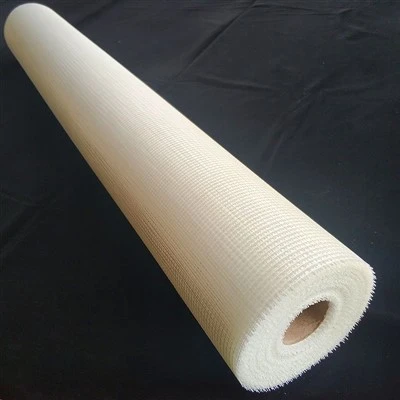
If you’re a contractor, DIYer, or marine repair person working on a project that needs reliable fiberglass tape, we’re here to supply you with high-quality products and the advice you need to get the job done right, on time. Reach out to discuss your project requirements and find the right solution for your needs.
Interior Wall Fiberglass Mesh References
- Gypsum Association. (2015). Gypsum Wallboard Interior Finishing Systems. GA-216.
- American Society for Testing and Materials (ASTM). (2020). Standard Specification for Fiberglass Mesh Joint Tape for Drywall. C1184.
- Society of the Plastics Industry (SPI). (2019). Epoxy Resin Formulations and Cure Time Guidelines for Composite Repairs. SPI-TR-12.
- Tile Council of North America (TCNA). (2021). Handbook for Ceramic Tile Installation. TCA-121.
Danyang Yonggu Building Materials Co., Ltd.
Danyang Yonggu Building Materials Co., Ltd. is one of the most professional fiberglass tape manufacturers and suppliers in China, featured by quality products and good price. Please rest assured to wholesale customized fiberglass tape made in China here from our factory.
Address: Danyang City, Jiangsu Province, P.R. China
E-mail: sales02@cnyongu.com
WebSite: https://www.ygfiberglass.com/
