Hey there, if you’ve ever shopped around for industrial rubber mats, you’ve probably seen two big buzzwords pop up: flame retardant and oil resistant. As a supplier of flame retardant rubber mats, I get so many questions about these two properties—usually something like, “Wait, if a mat says it’s flame retardant, does that mean it’s also oilproof?” or “Will my flame retardant mat even hold up around heavy machinery and hydraulic fluids?” Let’s cut through the confusion here because it’s not as simple as a yes or no, but there’s definitely a lot you need to know before you make a purchase. Flame Retardant Rubber Mat
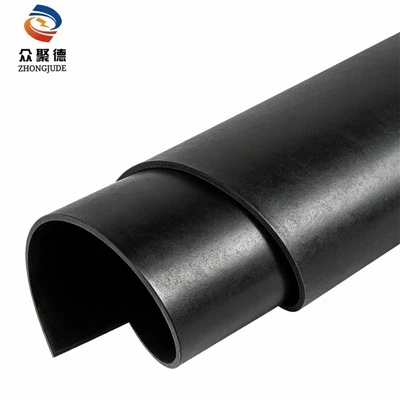
First, let’s break down what each term actually means, because a lot of folks mix them up. Flame retardant (let’s call it FR for short) rubber mats are designed to slow down or stop fire from spreading. That’s non-negotiable for places like warehouses, manufacturing floors, auto body shops, or even food processing plants where sparks, overheated equipment, or flammable residues are common. These mats get treated (or formulated with special chemicals) so they won’t catch fire easily, and if they do, they self-extinguish instead of feeding the flame.
Oil resistant rubber, on the other hand, is all about not breaking down when it comes into contact with petroleum-based oils, hydraulic fluids, diesel, or even lubricants. Regular natural rubber or standard neoprene mats will soak up oil over time, swell, crack, and fall apart within months. Oil resistant mats hold their shape, don’t get slippery, and don’t lose their texture even after constant exposure to fluids that leak from trucks, machinery, or storage drums.
Now the big question: Are FR rubber mats oil resistant? The short answer is: It depends. Not all FR mats are built with oil resistance in mind, but many of the good ones we supply are formulated to check both boxes. Let’s get into why that’s the case, and why some aren’t.
A lot of cheap, low-grade FR mats you’ll find online are made with basic rubber blends that only meet fire safety standards (like ASTM D4551 or NFPA 701, which are common for flame retardancy) but skimp on oil resistance. These might work if you’re just looking for a mat to put near a space heater or a small welding booth with no oil spills, but if you’re working around heavy equipment, trucks, or any fluid that drips, those will fail fast. We’ve had customers come to us after buying those cheap mats—they’d crack, turn slimy, or develop holes in 2-3 months, and they were back frustrated because they didn’t realize FR and oil resistance weren’t automatically paired.
But here’s the thing: We formulate our flame retardant rubber mats with nitrile rubber (NBR) for exactly that reason. Nitrile is legendary for oil resistance—way more so than standard neoprene or natural rubber. When we modify nitrile to add flame retardant additives, we’re not sacrificing the oil-resistant properties. The FR additives get mixed into the rubber blend evenly, so the mat doesn’t lose its ability to repel oil, and it still meets fire safety requirements. That’s the sweet spot we aim for, because most of our customers are in industries where they need both protection from fire and protection from slipping on oil.
Let’s talk about real-world performance to back that up. A customer who runs a fleet repair shop recently told me they used cheap FR mats for their bays where they change oil. Within a month, the mats had oil seeping through to the concrete underneath, and they were so slippery that two techs slipped and almost fell while working under trucks. They switched to our FR oil resistant mats, and 6 months later, they said the mats look almost the same as when we installed them—no swelling, no cracks, and even after spilling a full 5-gallon bucket of hydraulic fluid on one, it wiped right up with a rag. That’s exactly what you want.
But wait, no mat is 100% “oil proof” forever. Even the best FR oil resistant mats will degrade over extreme, constant exposure. If you’re leaving a mat submerged in oil 24/7 instead of just having occasional spills, you might see some wear over a year or two. The same goes for flame retardancy: if you’re regularly exposing the mat to extremely high temperatures (like 500°F or more) over long periods, the FR additives can break down, but that’s not a normal use case for most industrial settings.
Another common mistake people make is assuming any FR mat works for their environment. For example, if you’re in a food processing plant where oil is vegetable-based (not petroleum), you still need oil resistance, but you might also need FR additives that are food-safe (no toxic chemicals). We have a line of FR oil resistant mats that are FDA-approved for that exact use case, so they don’t leach chemicals into food or cleaning solutions. It’s not one-size-fits-all, and that’s why we ask customers about their specific use case before recommending a mat—there’s way more to it than just “I need flame retardant and oil resistant.”
Let’s also clear up a myth: Some people think oil resistant mats are always flame retardant, and vice versa. That’s totally not true. A mat that’s oil resistant might be made with nitrile, but if it hasn’t been formulated with FR additives, it will catch fire easily. And an FR mat made for, say, a garage with no oil exposure might be great at stopping fire, but it’ll get ruined if you spill motor oil on it. So it’s not a shared property—they’re two separate features that you have to actively combine in the rubber blend if you want both.
As a supplier, we’ve seen too many customers waste money on mats that don’t meet their needs. That’s why we make sure every customer gets a quick chat about their environment: Are they working around petroleum oils or just water? Do they need fire protection for welding sparks, electrical hazards, or something else? Do they have any other requirements, like being non-slip or easy to clean? Once we know that, we can point them to the right FR oil resistant mat (or adjust the blend if needed).
If you’re still on the fence, here’s a quick test you can do at home (or at your shop) to check if a mat is actually oil resistant, without waiting 6 months for it to break: Take a small piece of the mat, pour a bit of motor oil or hydraulic fluid on it, and let it sit for 24 hours. If it swells, gets soft, or changes texture, it’s not oil resistant. If it stays hard, doesn’t absorb the oil, and wipes clean easily, that’s a good sign. You can do the same for flame retardancy: Hold a lighter to a small edge of the mat for 10 seconds. If it burns quickly and keeps burning after you move the lighter, it’s not a proper FR mat. If it stops burning on its own, it meets basic FR standards.
But honestly, that test is just a quick check. For industrial use, you want mats that are tested to official standards. Our FR oil resistant mats are tested to ASTM D4551 (flame retardancy for rubber products) and ASTM D471 (oil resistance testing), so you know they won’t let you down. No cutting corners, no cheap additives that wear off in a month.

At the end of the day, if you need both flame protection and oil resistance for your space, there are definitely options that check both boxes. The key is not to buy the cheapest FR mat you can find, and not to assume any mat will work for both. If you’re shopping around and want to make sure you’re getting something that lasts, just reach out. I’d be happy to answer any questions, walk you through the different blends we have, or even send a sample if you want to test it yourself. Don’t waste money on mats that will fail when you need them most—let’s get you the right FR oil resistant mat for your needs.
References
Nitrile Rubber Sheet ASTM D4551, Standard Specification for Rubber Mats for Flame Resistance in Commercial and Industrial Applications.
ASTM D471, Standard Test Method for Rubber Property—Effect of Liquids.
NFPA 701, Standard Methods of Fire Tests for Flame Propagation of Textiles and Films.
Hebei Zhongjude Power Technology Co., Ltd.
With abundant experience, we are one of the most reliable flame retardant rubber mat manufacturers and suppliers in China. Welcome to buy bulk high quality flame retardant rubber mat for sale here and get quotation from our factory. For price consultation, contact us.
Address: Shenghe Plaza, No.88 Qilian Street, High-tech Zone, Shijiazhuang City, Hebei Province, China
E-mail: zhongjude@outlook.com
WebSite: https://www.zjdinsul.com/
